Eileen Collins
“It was a difficult mission… we were the first to see Mir”
Having served as both the first female pilot and first female commander of NASA’s Space Shuttle, Collins boosted the involvement of women in space exploration to a whole new level
Interviewed by Jonathan O’Callaghan
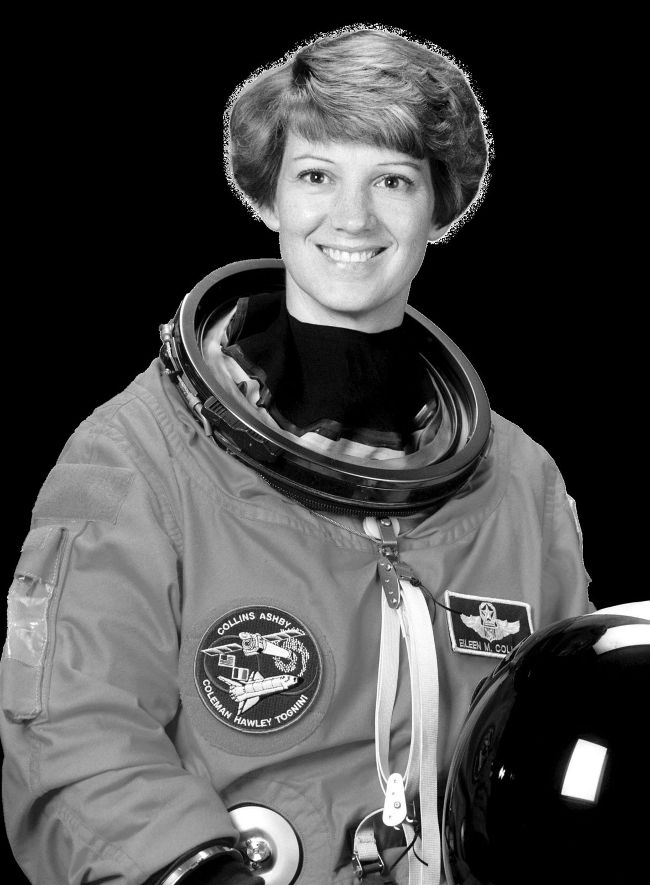
© NASA
BIO Eileen Collins
Born on 19 November 1956, Collins served as a pilot in the United States Air Force before becoming one of the most decorated astronauts in NASA history after her selection in 1990. She served on four separate Space Shuttle missions, including the first American rendezvous with Russia’s Mir space station and the returnto-flight mission after the Columbia accident. After completing over 872 hours in space, she retired from NASA on 1 May 2006 to pursue private interests, but retains an interest in space exploration to this day.
How did you become interested in space exploration?
It all started when I was nine years old; I was in fourth grade, reading an article in a magazine about the Gemini program. They were profiling the astronauts and the missions, and that was when I really – as far back as I remember – found myself very interested in the space program. While I attended summer camp as a child I would visit the glider field and we’d watch the gliders take off. So there was a little bit of aviation in my background, and I think that’s maybe the roots of my getting interested in aviation and space.
Were you proud to be selected as the first female Space Shuttle pilot?
Back in 1989 I interviewed for the job of Space Shuttle pilot, and in January of 1990 I talked to John Young and he told me that I was selected, and also I was going to be the first woman pilot. It was 16 January 1990 – I remember the date. I went through training from the summer of 1990 to the summer of 1991. It was September of 1993 when I was actually assigned to a flight, and then that mission didn’t fly until February of 1995.
Then, of course, there was a lot of attention. Was it a proud moment? I would say yes, but not for me as much as it was, I think, for the space program and for women in general. Even though women had flown in space as mission specialists, no women had flown yet as a pilot. I think it was a good step for women in general overall, and I’ve actually had women that worked in the Kennedy Space Center say to me that now that I’ve done what I’ve done they are getting more respect from their male coworkers.