STONEWALL
Accusations have been made that a new film about the Stonewall riots in 1969 whitewashes history. But why are some people attacking a film that nobody’s seen? We take a look at some of the facts and fables behind an event that went on to define the start of the modern gay liberation movement…
Words by David McGillivray
STONEWALL
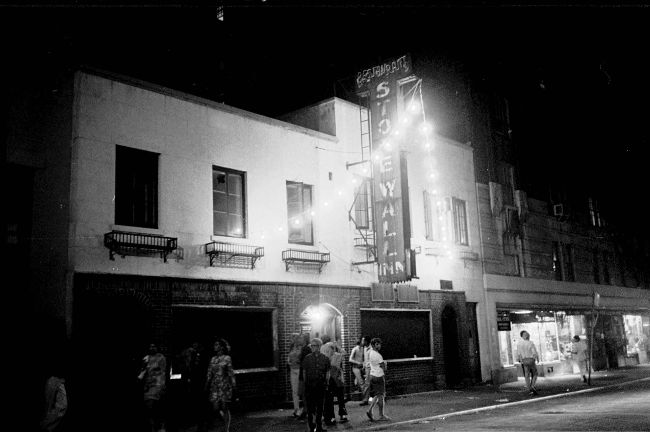
The boarded up Stonewall Inn after the riot the weekend of 28th June, 1969.
© Larry Morris / New york TiMes / redux / eyeviNe
Once upon a time we were written out of history. Now, we make history. But when a Hollywood film with a gay theme opens, more often than not, it hits the headlines for the wrong reasons. In the U.S., where gay liberation began, activists don’t take kindly to the way we’re represented on the big screen. In 1980 people took to the streets to protest the implication in Cruising that all gay men are sado-masochists. Hollywood’s first major film about AIDS, Philadelphia (1993), came under fire because the straight actors playing gay lovers (Tom Hanks and Antonio Banderas) never kissed. Now, organisations are calling for a boycott of Stonewall, a new film about the New York riots that gave birth to gay liberation, because people allegedly integral to the epoch-making event aren’t shown in pivotal roles. This is despite the fact that the film tells a fictitious story “inspired” by real events.
The spark that ignited this heated discussion was the film’s trailer. The day after it appeared online on 4th August, online newspaper The Daily Dot declared that “The LGBT community is not happy about the new whitewashed Stonewall movie”. Writer Mary Emily O’Hara objected to the trailer’s suggestion that the first brick on a summer’s night in 1969 was thrown by “a young, blond, cisgender white man” (played by British actor Jeremy Irvine). O’Hara also stated how the riots “are largely believed to have been led” by transgender women of colour and a butch lesbian drag king. Shortly afterwards, two petitions calling for a boycott of Stonewall upon its release in the U.S. on 25th September appeared. By the time Attitude went to press, one of these, organised by the Gay-Straight Alliance, had attracted around 25,000 signatures. The trailer had drawn around 1,500 comments on YouTube of which “This is bullshit. How about you focus on actual historical characters and not some whitewashed boy toy you created?” was typical.