RUTH HUNT
PEER REVIEW
Former Stonewall CEO, Oxford University Student Union president, and now Life Peer, Baroness Ruth Hunt speaks about “always being head girl”, why she came off Twitter for good, and her reasons for leaving Stonewall
Words Charlotte Manning
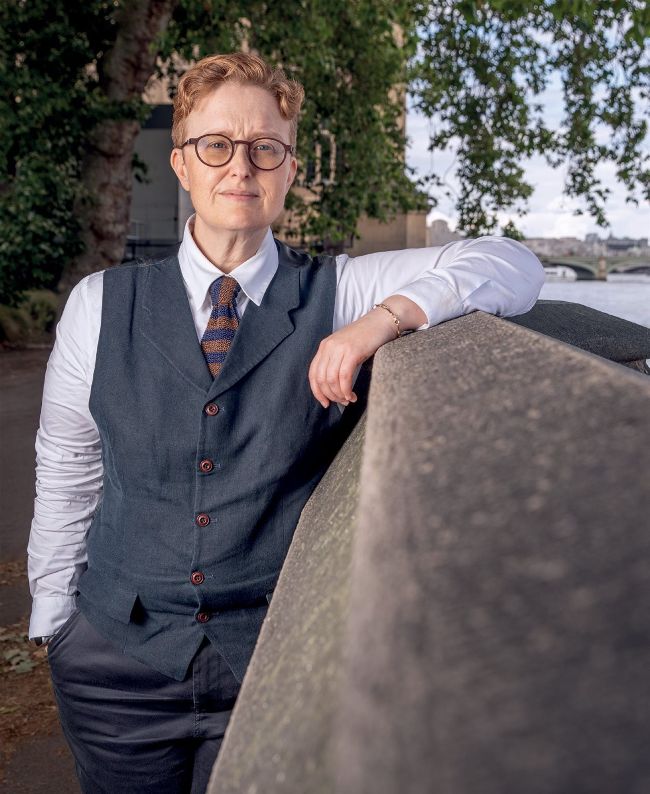
Photography Markus Bidaux
With the average age of House of Lords members currently at 71, it’s no surprise that Ruth Hunt — Baroness Hunt of Bethnal Green — felt “way too young” when she received the call to become a Life Peer at just 39.
Hunt, who is publicly gay, was nominated for the role in 2019 by Theresa May in her Prime Minister’s Resignation Honours. It came just months after Hunt stepped down from a five-year role as CEO at Stonewall. She had joined the charity in 2005, shortly after civil partnerships were made legal, and the transgender law group Press For Change successfully campaigned for the Gender Recognition Act. Both came into effect that same year. During her 14 years at Stonewall, she fought to “change hearts and minds”, tackling issues including homophobic bullying in schools and making effective interventions to improve the health of lesbian, gay, and bi people.
She resigned “after a growing protest by leading gay and lesbian supporters against her stance on promoting transgender rights”, according to the Sunday Times. However, in a very fancy room in the House of Lords, she tells me: “It’s not as simple as that. I’d already done nine years, and then I did five years as CEO. There was a bit of me that thought: ‘This needs a new way of thinking.’”
It’s easy to forget quite how dramatically the UK’s political landscape changed between 2014 and 2019. “When I was CEO, we had Theresa May in power, Justine Greening was our equalities minister, we had Margot James on the benches, Amber Rudd, David Cameron brought in same-sex marriage. There was a much more generous response to LGBT inclusion in all its forms.” But Hunt saw it change quickly post-Brexit. “I felt that I wasn’t the CEO to lead an organisation at that time and that it needed something else. It’s fair to say that the anti-trans rhetoric, that to my mind was always anti-LGB as well, became louder. Not necessarily bigger, but louder than we had anticipated. I just thought I wasn’t the person to lead it anymore.”