MUNROE BERGDORF
MAKING HERSTORY
Activist and model Munroe Bergdorf in conversation with BBC Radio 1 presenter Clara Amfo on standing against injustice, the power of sisterhood and the importance of allies
Words Cliff Joannou
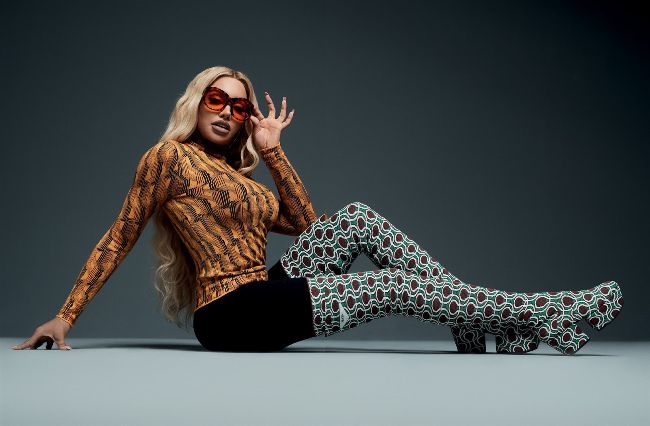
Munroe wears full look, by Prada
Photography Jordan Rossi Styling Mariam Taiwo Sonekan Fashion director Joseph Kocharian
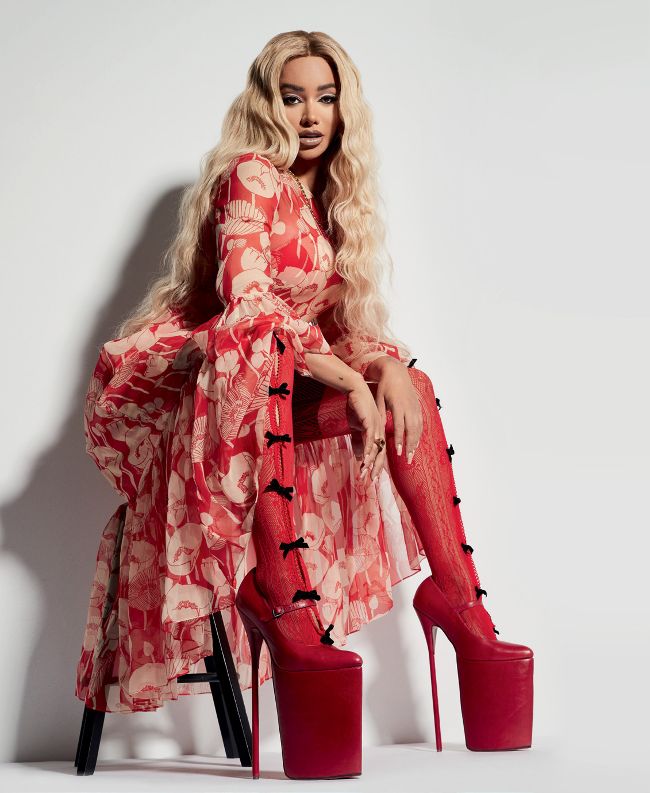
Munroe wears dress, by Gucci, tights, by NOdress, shoes, by Ilias Little Shoe Box, ring, by Stephen Webster
Doing the right thing is rarely an easy path to walk, especially for those whose every step can come with dozens (or hundreds, or even thousands) of voices shouting you down for speaking your truth.
Even as an openly queer adult, I have experienced times when I’ve dulled my identity. For example, when confronted by a group of loud straight men, I have in the past regretted wearing an outfit that made my ‘gayness’ seem so apparent. I’ve even dimmed myself in past situations to be more acceptably presented to a heterosexual male viewpoint. It’s not right, but that has been the case.
I do try not to compromise my identity, and these moments are thankfully few and far between. But the reality is that, as much as the world is a better place today than, say, 20 years ago, it’s still far from ideal for anybody who doesn’t fit into the dominant mainstream. I’m also acutely aware of my privilege. Although my maleness might not fit into a traditionally heterosexual expectation of masculinity, being male means I’m not a victim of misogyny. The fear I might feel when walking past a group of boisterous straight lads is not on the same level as that a woman may experience in the same situation. Also, my whiteness means I am not having to negotiate racial stereotypes, or in some cases profiling. These two factors are what we call white male privilege.
It’s not easy to discuss privilege, especially as gay men, because we too have often been the victims of a prejudiced society. But white (and gay) male privilege is real, and unless we talk about it, we can’t confront it, look to resolve it, and move past it towards a fairer world.
The past 18 months have highlighted the disparity in privilege between the haves and have-nots, whether it’s the mental health inequalities faced by LGBTQ+ people during the pandemic, or the fall-out from George Floyd’s murder —a situation that has been hundreds of years in the making, even if great strides forward have happened since then.
Four years ago, reacting to the Charlottesville white supremacy rallies, Munroe Bergdorf made international headlines when the Daily Mail took offence to her comments that white people benefitted from the privilege of whiteness, and that the traditional ways of viewing racism did not reflect the lived experiences of people of colour today. The newspaper — as it’s often inclined to do — took Munroe’s comments out of context, followed by (mostly white and male) commentators adopting the tone of the victim. Her comments sparked a debate about how the voices of Black and female and trans women are often silenced, while there is a tendency for the British right wing to defend free speech for white male opinions without fear of reprisal. (See Piers Morgan, Jacob Rees-Mogg, conversion therapist Mike Davidson, Nigel Farage, et al.)
“When you see something that isn’t right, stand up and speak out, especially if you’ve got a platform or some form of privilege”
Munroe Bergdorf
It was depressingly ironic that the situation resulted in Munroe being dropped from a L’Oréal campaign that claimed to celebrate diversity. Last year, when L’Oréal made a public statement in support of Black Lives Matter after George Floyd’s murder, Munroe called the brand out. The makeup giant recognised its epic past failure, and invited the activist to work with them on its new Diversity and Inclusion board. It was the kind of resolution we rarely see, but when we do it’s a win for Team LGBTQ+ and racial equality.