NATURAL BUILDING TECHNIQUES
Eco expert Nigel Griffiths looks at three natural, sustainable construction techniques that will help you minimise your project’s carbon footprint
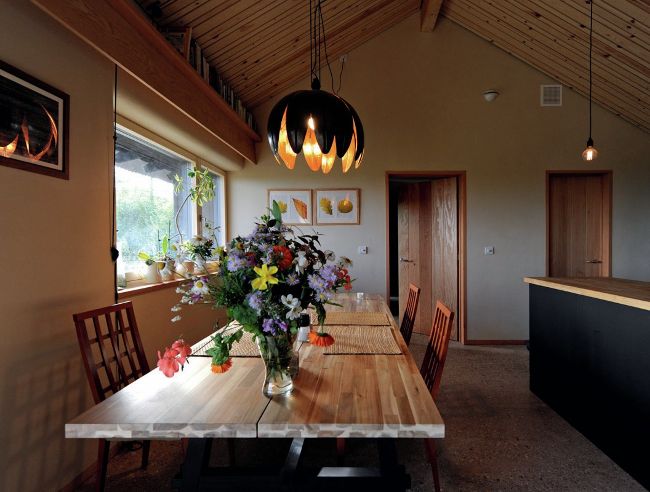
This 75m
2 Passivhaus was built using the Ecococon walling system, which features straw insulation and a woodfibre external layer. The house is clad in charred timber externally and finished with clay plaster inside. Find out more at
www.ecococon.eu Historically, all construction was carried out with natural building materials. People simply used what was readily available, typically stone, slate, timber, reeds clay or earth. In one sense, of course, all materials are natural – but it takes a great deal more effort, energy and ingenuity to abstract steel from iron ore than to harvest timber from the forest.
For our purposes, then, the best definition of natural is, perhaps, materials that are minimally processed. This is an important distinction to make. The Mesopotamians used unfired clay bricks in the third millennium BC, for instance, whereas the Romans fired theirs wherever they travelled (with each legion having its own imprint).
In this article, we will concentrate on unfired and largely unprocessed materials – though sometimes these are combined with processed binders, such as lime.
The interest in natural construction techniques arises in part because modern buildings typically contain such a large proportion of highly processed materials, like plastics, that they become somewhat alien to their inhabitants. These products aren’t much fun to look at or touch compared to the beauty and tactile qualities of, say, an elm windowsill set into a waxed earth wall.