Structural systems for beginners
Dipping your toe into the world of self building for the first time? Rebecca Foster rounds up the best construction methods available for your bespoke project
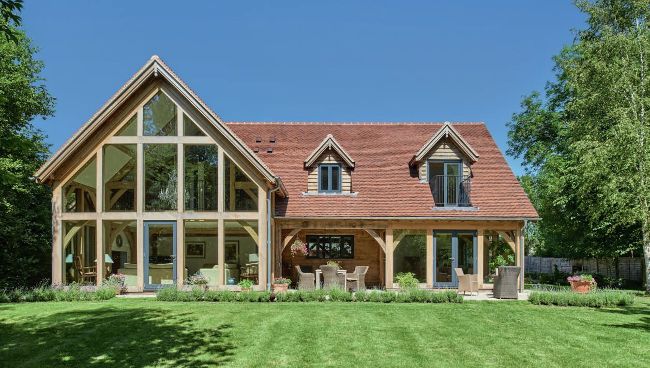
This oak frame house by Oakwrights oozes wow factor, showing how a traditional build method can be used to create a modern property
RICHARD KIELY
Choosing the structural system for your home is one of the biggest decisions you’ll make during your self build journey. Not only will it shape the result of the project and how the house performs upon completion, but it’ll also inform the twists and turns of the build process along the way. A lot depends on your overall objectives for the project and how you want to live in the finished abode. “Your choice could be influenced by factors such as location –a tight site, for instance, may not offer delivery options for large prefab structural walling,” says Johnny Lovett, director at Parkwood Builders. “Also, thermal efficiency requirements, planning limitations and budget constraints will come into play.”
Every build method comes with its own set of pros and cons, so it’s important to do your research before diving in. For newbies to the self build world, there will be additional factors to bear in mind. For example, is there an option that will give you leeway to make design changes on site? Which route allows you to load most of the heavy lifting onto the supplier? Here, I review the options from a beginner’s perspective.
Brick & block
This tried and tested method has plenty of pros for first-timers. Cavity wall construction is the conventional route – typically with an inner layer of blockwork, built up in courses, with an outer leaf of brickwork. The space left between the inner and outer face is filled with insulation for good thermal performance.
If you’re new to self build, one plus is that there’s many experienced contractors in the UK who can handle a brick and block build. It shouldn’t be difficult to get multiple recommendations for a firm you can rely on. “The works that take place post-construction are straightforward to manage with regards to trades and materials compared to some alternative systems,” says Johnny. Working with smaller construction units (bricks) comes with some some benefits compared to larger, prefabricated components made to specific dimensions offsite, too. The build-up of the structural shell is slower, allowing self builders more time and space to make design tweaks (and order last-minute materials) as the house evolves – this is not always viable if you’re erecting a timber frame that’s been made to match your foundations down the last millimetre.