HOW TO CREATE A FUTUREPROOF HOME
Anamika Talwaria looks at the key elements that go into designing and building a forever house that really can last your lifetime

The Warboys’ self build was designed by Potton and features a run of sliding doors with a flush threshold from Kloeber
Most self builders plan to live in their bespoke homes for as long as possible. So, it makes sense to create a space that’s flexible and can adapt to changes in your lifestyle without too much fuss. “People’s biggest mistake is not thinking about the future,” says Matt Higgs, director at Kloeber. “You need to consider your evolving lifestyle as well as the aesthetics of your forever home.”
But for a property to be truly futureproof, it needs to also account for environmental changes. A flexible, low-energy home should be properly equipped for both harsh winters and extreme summers – without having to consume tonnes of energy. Here, I’m looking at practical ways you can ensure your home is ready.
Design considerations
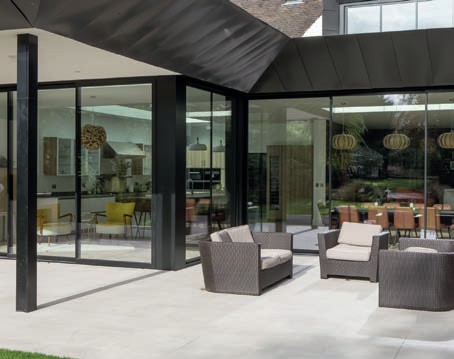
These glazed doors from IDSystems are shaded by a roof overhang, which prevents too much warmth from the sun penetrating the glass. As the weather gets hotter in the UK, measures like this will be extremely handy
Adaptability is the key to a long-term house. “People need spaces that are easy to change as the way they live develops,” says Lynn Palmer, owner of Lynn Palmer Architects. “That means making sure that rooms are actually large enough to be able to adapt them when needed.” When planning your home’s layout, make sure that you’re building in multifunctional zones. That doesn’t just mean an open-plan kitchen-diner. Consider how a home office could transform into a guest bedroom –