A tailor’s life for me
From bespoke garment-making in London’s well-to-do West End to the poor clothing sweatshops of the East End, Melody Amsel- Arieli investigates the working lives of tailor ancestors
Melody Amsel- Arieli
RICH SEAMS OF RESEARCH
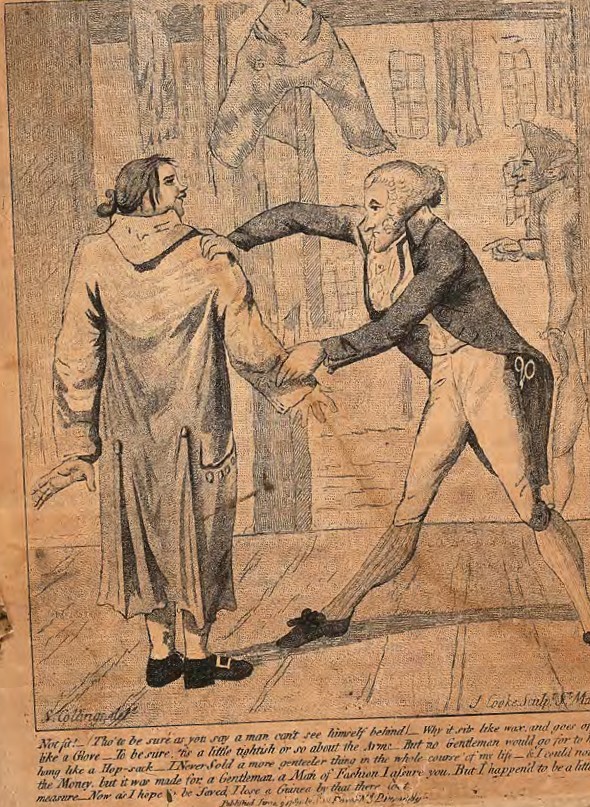
A tailor attempts to make a coat fit his customer when it is much too large (etching by J Cooke after S Collings, 1789)
The art of tailoring, constructing garments from patterns, developed gradually in Europe from the early Middle Ages. This craft as we know it, however, dates from the late 1700s. Though cloaks, capes, doublets, knee-length waistcoats, breeches and coats had long been created by hand, styles were changing. Garments were no longer mere necessities, but fashion, a way to express personal style and status. By the turn of the century, innovations, like the sewing machine, tape measure, and tracing paper, combined with more accurate cutting systems, changed garment construction even more. Moreover, gentlemen began eschewing breeches for longer, loose fitting pantaloons, fancy waistcoats, or tightly cut trousers. Their wives favoured formal, fashionably tailored side saddle riding habits and walking suits.
Bespoke tailoring
Though London’s poorest made do with homemade or secondhand clothing and others purchased standard-sized pieces off the rack,, those who could afford it still preferred bespoke, custom tailoring. This process, creating garments to a customer’s specific measurements and requirements, could take more than 50 hours of highly skilled hand work, along with a series of fittings. Bespoke tailors, who were generally based in London’s prestigious West End, created fashionably sculptured menswear through complex systems of measurement, keen observation, and skilful hands. Since their creations allowed for subtle differences in a client’s figure and posture, they were not only stylish and comfortable, but flattering.