RECONSTRUCTION TIME AGAIN
The loss of Andy Fletcher in June 2022 robbed DEPECHE MODE of their Mr Dependable and posed big questions about their future. How would their often-rocky relationship work without him? And could it survive the intervention of another, wholly unexpected third wheel? With a fascinating 15th album poised to emerge, they tell DANNY ECCLESTON, "We had to really decide, do we carry on?"
Portraits: ANTON CORBIJN.
And then there were two: Depeche Mode’s Martin Gore and Dave Gahan, New York City, 2022.
AntonCorbijn
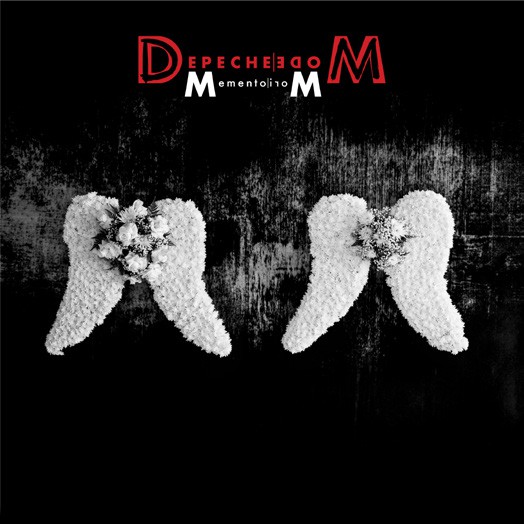
IN AQUIET ROOM AT THE Stalls level of Berlin’s Theater am Schiffbauerdamm, MOJO and Martin Gore are ensconced. We have escaped, briefly, from the hubbub of the auditorium, where journalists and camera crews from across Europe and beyond mill and chatter, gathered in this gilt and velvet relic of the 1890s to hear what, in Berlin especially, is big news: a new Depeche Mode album, their 15th, followed by a Depeche Mode tour – 45 arena and stadium dates globally, March to August – their first for five years. But the trumpeting is laced with muted notes, since Memento Mori – as the new album is called – comes soon after the passing of a much-loved mainstay of the band.
“I was in our hotel earlier,” Gore tells MOJO, with a glance at the window, “a hotel we’ve stayed at many times. And I looked over to the bar where normally I’d see Fletch and…” he pauses. “And he’s not there.”
Gore describes the death of Andy Fletcher, fellow founder member of Depeche Mode and his friend since he was 11, as “the biggest shock of my life”. Fletcher died suddenly of an aortic dissection at his London home on May 26, shortly before he was due to join Gore and singer Dave Gahan in Santa Barbara, California to begin work on the latest batch of Depeche Mode songs. After they’d picked each other up off the floor, the bereaved pair had a decision to make. “We kind of had to… to really decide, are we going to finish?” says Gore. “Or do we carry on?”
Fletcher was the barely-changing rock in a band whose dizzying rise, restless musical shape-shifting and notoriously intense rapport with their devoted fanbase, over 40-plus years, tested the sanity of them all. And while it’s broadly acknowledged that his musical input in Depeche Mode was not, in recent years, immense, his role in preserving the group’s fragile equilibrium remained crucial. In the most testing times – the group’s transformation, pivoting on 1990’s Violator, from an arena-level electro-pop unit into a global stadium rock band – Fletcher was not without his own wobbles; he bailed out on 1993’s Devotional tour early, citing nervous exhaustion. But with his bandmates increasingly unmoored – Gore dependent on alcohol; Gahan with a taste for something harder – he was the one who held the centre as things fell apart.
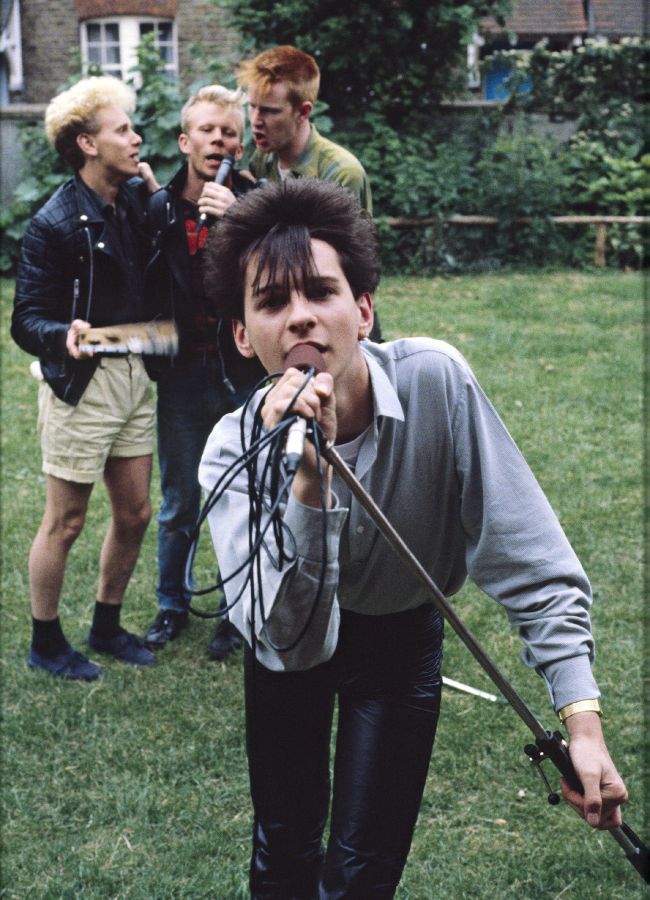
Boys say go: Depeche Mode Mk 1 (from left) Martin Gore, Vince Clarke, Andy Fletcher and (front) Dave Gahan, in the garden at Blackwing Studios, London, June 17, 1981.
Getty (2)
Depeche Mode’s progress in the 21st century – records-wise, a sustained return to the electronic source that birthed them – has been smoother, but not as smooth as it looked. Since the bottoming-out of Gahan’s heroin addiction and his return, quite literally, to life in the late ’90s, the singer has a new habit – of challenging what he considers the band’s status quo, lobbying for a bigger role in the songwriting and shots-calling. After Fletcher’s June 20 funeral, it was a theme to which he returned.
“Dave was very open with me, before we started the recording sessions,” says Gore. “He said he’d been talking to his therapist about how we were going to be. What our new relationship would be like.”
Depeche Mode were now a duo. But how, exactly, was that going to work?
IN AROOM IN DOWNTOWN MANHATTAN’S FOUR Seasons Hotel, a very dapper Dave Gahan picks lint off his slacks, his handsomely manicured hands clanking with rock’n’roll rings. On his feet: a pair of lipstick-red winklepickers that could take your eyes out.
A loud and engagingly performative speaker in a sui generis mix of Estuarine English and a dash of American, his voice softens when recalling the immediate aftermath of Fletcher’s death.
“I rang Mart,” he says. “We were both upset. My first thought was, I wish I’d been kinder…” Kinder? “Yeah. There are things that I wish I’d let Fletch know. Like, Hey, I know you don’t play anything, but fuck, I’m so glad you’re here. I don’t know what the fuck you do, but it’s something. And maybe it’s really, really important.”