PAUL DAVIES
In the first of a brand-new series, we interview the game journalists behind the most iconic gaming magazines of the past. We kick off by speaking to Paul Davies about his time as editor of CVG. We discuss the videogames that hooked him growing up, his time in the industry, and how he became an unlikely hero in revamping the iconic multiformat mag
Words by Stuart Hunt
THEN
After falling in love with gaming in the arcades and on home micros, Paul moved into videogame journalism. He started off working for EMAP, and the first magazine he ever wrote for was the acclaimed Mean Machines. He quickly graduated to become editor of CVG.
NOW
Paul has worked in a number of different roles since first leaving videogame mags, including a spell at Criterion and working as a freelancer on Retro Gamer. He’s consulted on projects like Life Is Strange and has most recently been working on art books for Disney.
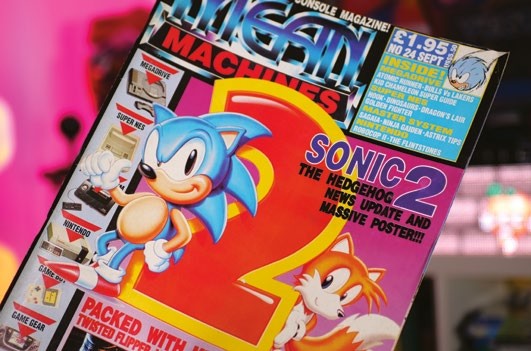
» The final issue of Mean Machines before it went full Sega. Also, the first magazine that Paul ever wrote for.
What was the first videogame you remember playing, Paul?
I remember my friend showing me Space Invaders in the lobby area of my local Tesco. I would have been around nine or ten years old at the time. I didn’t know about coin-ops, so remember peering into it and not knowing what to expect. That was the first game I saw that stood out. The way it looked, sounded, everything – not to mention the strangeness of it being in Tesco.
What home computers did you experience while you were growing up?
My mate had a Spectrum and an Atari VCS, so I played on those. But it was when the BBC Micro came out that me and my brother came up with a cunning plan to get one between us – we basically said we needed it for school because it had BASIC. We’d play stuff like Colossal Adventure, Twin Kingdom Valley, Frak! and Blagger, which was this Manic Miner-style platformer.
Did any other games leave their mark on you at an early age?
Pac-Man
was the first game that I thought was just awesome – with its cabinet artwork and funky look. I remember buying a paperback guide to get a high score on it. I learnt the names of the ghosts and even did a school talk on it. I even drew diagrams on the blackboard and stuff. I was that enthusiastic about
Pac-Man
that I thought everyone needed to know about it.
Sounds like your first bit of games reporting. Moving onto that topic, how did you get into writing?
I was never that academic, I was into drawing and art – that was my thing. The writing came later. In my early 20s I read quite a lot of fantasy and science-fiction books. I read all the Discworld stuff, and a series by Stephen Lawhead which was all based on Arthurian legend. In terms of writing, I worked as a care worker for nearly three years, and you had to write diaries for the people you were spending time with. And these needed to be particular to the person for it to be helpful. I used to invest quite a bit of time in that. I wanted it to be reflective of them and what was going on around them.
So how did that lead to a career in videogame journalism?
In the early Nineties I was buying Mean Machines, ZERO and CVG, and aspired to be on them. I wrote into Mean Machines when they were looking for a staff writer and this was around 1992. I didn’t get the job but did get a call later that year from Julian Rignall. He invited me back to discuss something they were planning – splitting up Mean Machines into Nintendo Magazine System and Mean Machines Sega.