Back on track
Running free
After being attacked while running in bushland, Sissy Austin thought she’d never run again. But with the help of her community, she’s reclaiming women’s right to run in safety and without fear.
WORDS by GENEVIEVE GANNON · PHOTOGRAPHY by JULIAN KINGMA
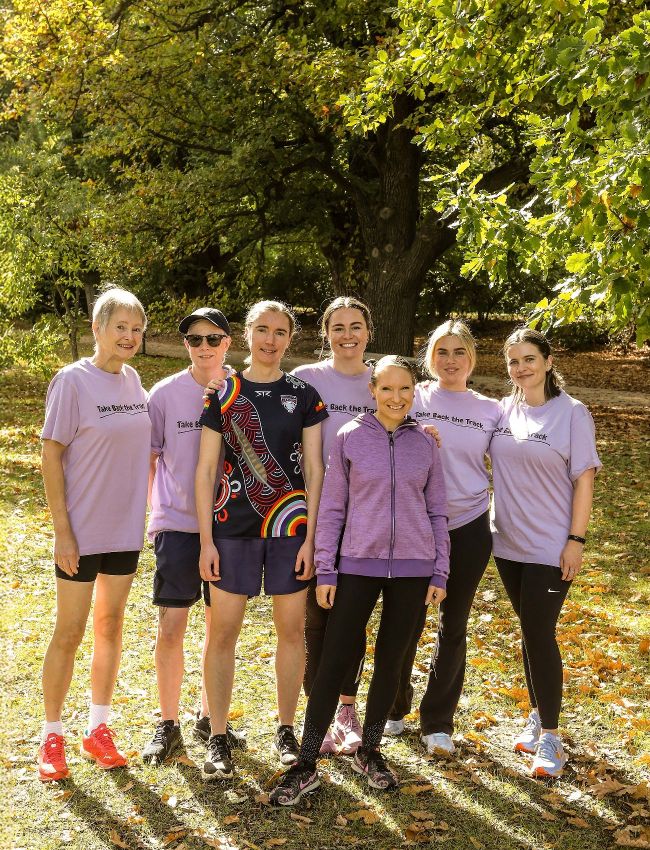
Sissy and fellow runners and supporters of Take Back the Track.
Sissy Austin has always loved to run. Feeling her feet and soul connect with Country has always been a pathway to calm. Sometimes, she’ll go for a run before work and see beautiful birds, black cockatoos and maybe even an eagle.
“That can all happen within a 40-minute run before your day starts. I love it,” says the Peek Woorroong, Keerraay Woorroong, Djab Wurrung First Nations woman.
“It just has a powerful form of spirituality, running,” Sissy continues. “Especially as an Aboriginal woman. When you’re doing the really long distances, and you feel like you haven’t got anything left to give for that run, you might see a black cockatoo, which is my totem, and think, ‘I can keep pushing myself’.”
One of her favourite places to run used to be the Lal Lal State Forest near Ballarat. She recalls one day during the summer of 2023 when her friend, Belinda Coates – then Ballarat’s Deputy Mayor – was having a tough day at the office. Sissy took Belinda to that special spot and said, “We need to set up chairs here so we can come here and just be, when everything feels too hard.”
At that time Sissy had just taken a huge step towards a long-held dream, by applying for the Indigenous Marathon Project (IMP). The IMP was founded in 2009 by champion marathon runner Robert de Castella when he trained four Indigenous men from remote communities to run in the world’s biggest marathon in New York. Each year, 12 young Aboriginal and Torres Strait Islander people are selected for the six-month health, wellbeing and leadership program that culminates in running the New York City Marathon. Sissy had never done a marathon, and she had always dreamed that she would.