You are currently viewing the United Kingdom version of the site.
Would you like to switch to your local site?
Latest Issue

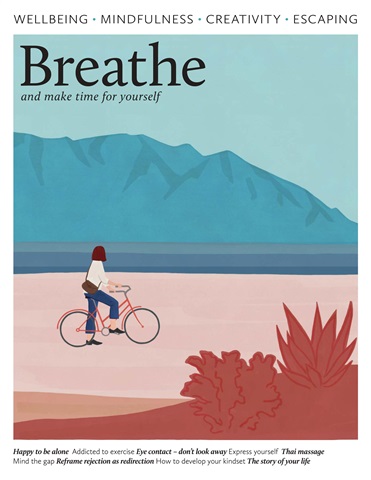
Breathe Magazine Issue 020 Back Issue

English
52 Reviews   •  English   •   Health & Fitness (Spirituality and Mindfulness)
Only £5.99
Solitary. In Western society, it feels a loaded word, pejorative even. In fiction, the image of a solitary house, be it on the moors, in a glen or sitting atop a cliff often provides the doorway to a wretched history and inhabitants who led the most miserable lives. Similarly, a person who stands, sits or dines alone, cutting that ubiquitous solitary figure, is one whose state isn’t the norm, isn’t the desired way to be. All too frequently, it’s used as a shorthand for lonely, friendless, unhappy – someone whose motives need to be prodded and whose life is to be pitied.
That’s (lazy) fiction. Yet such stereotypes and careless assumptions flourish in real life. Why is it, for instance, that so many struggle to believe that a friend genuinely loves and is happy living alone and doesn’t want to be in a relationship – ever? In a similar way, colleagues grapple with staff members who prefer to work alone, decline invitations to nights out and are perceived not to engage enthusiastically enough.
For those who have a non-fearful preference for solitude, however, time alone is a prerequisite for personal wellbeing, healthy self-esteem, emotional resilience and creative thinking. It also helps them to maintain and nourish the friendships and connections in their lives.
Indeed, under the right circumstances, many people could benefit from nurturing and enhancing their capacity to embrace solitude, whether
it’s spending a night in with a good book, going for a quiet walk in the park or mooching around a museum. It’s not the same as being lonely, which can be frightening and harmful, but a positive state that affords time to wind down, let go of some of life’s stresses and to reconnect
with thoughts and emotions.
Perhaps it’s time to leave the solitary stereotypes to fiction and embrace the many and varied forms of happiness to be found in real life, one of which is a preference for solitude.
read more read less
Breathe Preview Pages Breathe Preview Pages Breathe Preview Pages Breathe Preview Pages Breathe Preview Pages Breathe Preview Pages Breathe Preview Pages Breathe Preview Pages

Breathe

Issue 020 Solitary. In Western society, it feels a loaded word, pejorative even. In fiction, the image of a solitary house, be it on the moors, in a glen or sitting atop a cliff often provides the doorway to a wretched history and inhabitants who led the most miserable lives. Similarly, a person who stands, sits or dines alone, cutting that ubiquitous solitary figure, is one whose state isn’t the norm, isn’t the desired way to be. All too frequently, it’s used as a shorthand for lonely, friendless, unhappy – someone whose motives need to be prodded and whose life is to be pitied. That’s (lazy) fiction. Yet such stereotypes and careless assumptions flourish in real life. Why is it, for instance, that so many struggle to believe that a friend genuinely loves and is happy living alone and doesn’t want to be in a relationship – ever? In a similar way, colleagues grapple with staff members who prefer to work alone, decline invitations to nights out and are perceived not to engage enthusiastically enough. For those who have a non-fearful preference for solitude, however, time alone is a prerequisite for personal wellbeing, healthy self-esteem, emotional resilience and creative thinking. It also helps them to maintain and nourish the friendships and connections in their lives. Indeed, under the right circumstances, many people could benefit from nurturing and enhancing their capacity to embrace solitude, whether it’s spending a night in with a good book, going for a quiet walk in the park or mooching around a museum. It’s not the same as being lonely, which can be frightening and harmful, but a positive state that affords time to wind down, let go of some of life’s stresses and to reconnect with thoughts and emotions. Perhaps it’s time to leave the solitary stereotypes to fiction and embrace the many and varied forms of happiness to be found in real life, one of which is a preference for solitude.


SELECT FORMAT:
Instant Access

Available Digital Offers:

Single Digital Back Issue Issue 020
 
£5.99 / issue
This issue and other back issues are not included in a Breathe subscription. Subscriptions include the latest regular issue and new issues released during your subscription and start from as little as £4.33 per issue in the Cyber Week 2025 Big Annual Subscriptions Sale - Sports & Fitness offer. . If you're looking to subscribe please check out our Subscription Options
Savings are calculated on the comparable purchase of single issues over an annualised subscription period and can vary from advertised amounts. Calculations are for illustration purposes only. Digital subscriptions include the latest issue and all regular issues released during your subscription unless otherwise stated. Your chosen term will automatically renew unless cancelled in the My Account area upto 24 hours before the end of the current subscription.

Breathe issue Issue 020

Breathe  |  Issue 020  


Solitary. In Western society, it feels a loaded word, pejorative even. In fiction, the image of a solitary house, be it on the moors, in a glen or sitting atop a cliff often provides the doorway to a wretched history and inhabitants who led the most miserable lives. Similarly, a person who stands, sits or dines alone, cutting that ubiquitous solitary figure, is one whose state isn’t the norm, isn’t the desired way to be. All too frequently, it’s used as a shorthand for lonely, friendless, unhappy – someone whose motives need to be prodded and whose life is to be pitied.
That’s (lazy) fiction. Yet such stereotypes and careless assumptions flourish in real life. Why is it, for instance, that so many struggle to believe that a friend genuinely loves and is happy living alone and doesn’t want to be in a relationship – ever? In a similar way, colleagues grapple with staff members who prefer to work alone, decline invitations to nights out and are perceived not to engage enthusiastically enough.
For those who have a non-fearful preference for solitude, however, time alone is a prerequisite for personal wellbeing, healthy self-esteem, emotional resilience and creative thinking. It also helps them to maintain and nourish the friendships and connections in their lives.
Indeed, under the right circumstances, many people could benefit from nurturing and enhancing their capacity to embrace solitude, whether
it’s spending a night in with a good book, going for a quiet walk in the park or mooching around a museum. It’s not the same as being lonely, which can be frightening and harmful, but a positive state that affords time to wind down, let go of some of life’s stresses and to reconnect
with thoughts and emotions.
Perhaps it’s time to leave the solitary stereotypes to fiction and embrace the many and varied forms of happiness to be found in real life, one of which is a preference for solitude.
read more read less

First published in the UK in 2016, each issue has a thoughtful, seasonal theme, making Breathe magazine your digital dose of self-care. Its slogan: “Breathe and make time for yourself” tells you it’s time to switch off and enjoy some “you time” before you’ve even swiped onto the first page. 


Five years later and Breathe has established itself in the UK wellness space as the leading mindfulness magazine. Whether it’s through creative therapies, sleep assistance, idyllic retreats, mindfulness or superfoods, the holistic range of self-care topics covered is designed to help you cope with the pressures and anxieties of modern life.


The thought-provoking features are designed to offer advice and techniques for relaxation and mindfulness. Discover and take away simple ways to ease your mind, from their helpful guides to forgiveness, gratitude and freedom from worries, to healthy food plans and craft activities to focus your mind.


Whether you’re looking to calm your thoughts or energise your body and spirit, you’ll find everything you need to build a happier, healthier life in your annual Breathe digital magazine subscription - download the latest edition to your device today and make time for you!

A Breathe digital magazine subscription is your go-to for a more mindful, fruitful life:

  • The UK’s original mindfulness magazine
  • Insightful, thought-inspiring features
  • Five mindful sections including wellbeing, living, mindfulness, creativity and escape 
  • Beautiful, exclusive illustrations
  • Actionable tips to focus, calm and nourish your mind
  • Every issue delivered directly to your device

You'll receive 9 issues during a 1 year Breathe magazine subscription.

Note: Digital editions do not include the covermount items or supplements you would find with printed copies.

Your purchase here at Pocketmags.com can be read on any of the following platforms.


You can read here on the website or download the app for your platform, just remember to login with your Pocketmags username and password.

Apple Pocketmags Online Pocketmags Google Pocketmags
The Pocketmags app runs on all iPad and iPhone devices running iOS 13.0 or above, Android 8.0 or above and Fire Tablet (Gen 3) or above. Our web-reader works with any HTML5 compatible browser, for PC and Mac we recommend Chrome or Firefox.

For iOS we recommend any device which can run the latest iOS for better performance and stability. Earlier models with lower processor and RAM specifications may experience slower page rendering and occasional app crashes which are outside of our control.
4.7
/5
Based on 52 Customer Reviews
5
42
4
7
3
1
2
1
1
1
View Reviews

Breathe

the best wellbeing magazine ever Reviewed 18 August 2025

Given it by a friend

I'd never heard of Breathe before but a friend brought a few into the office and offered me one. Initially I said no thanks but she flicked through the pages and I was intrigued. I've spent an entire afternoon browsing through the "Breathe special Summer edition" and I'm thoroughly enjoying it. I know from experience that as soon as I subscribe to a magazine I lose interest in it so I won't subscribe but will probably pop in to buy a copy occasionally. It's a lovely magazine, and I think a digital version just wouldn't be as nice as the print version for me. I don't know if each of the nine in a year are similar to the Summer one, with puzzles and pages to add photographs, stories, sketches etc. I'd like to think so. Reviewed 07 July 2025

Breath of fresh air

Great for relaxation and mindfulness for all the family Reviewed 09 April 2022

One of the best

Always inspiring Reviewed 23 July 2019

Really inspiring

Well worth a look Reviewed 20 July 2019

Articles in this issue


Below is a selection of articles in Breathe Issue 020.

Issue 077 issue Issue 077 Issue 077 Buy for £6.99 View | Add to Cart
Issue 076 issue Issue 076 Issue 076 Buy for £6.99 View | Add to Cart
Issue 075 issue Issue 075 Issue 075 Buy for £6.99 View | Add to Cart
Issue 074 issue Issue 074 Issue 074 Buy for £6.99 View | Add to Cart
Issue 073 issue Issue 073 Issue 073 Buy for £6.99 View | Add to Cart
Issue 072 issue Issue 072 Issue 072 Buy for £6.99 View | Add to Cart
Issue 071 issue Issue 071 Issue 071 Buy for £6.99 View | Add to Cart
Issue 070 issue Issue 070 Issue 070 Buy for £6.99 View | Add to Cart
Issue 069 issue Issue 069 Issue 069 Buy for £6.99 View | Add to Cart
Issue 068 issue Issue 068 Issue 068 Buy for £6.99 View | Add to Cart
Issue 067 issue Issue 067 Issue 067 Buy for £6.99 View | Add to Cart
Issue 066 issue Issue 066 Issue 066 Buy for £6.99 View | Add to Cart
Issue 065 issue Issue 065 Issue 065 Buy for £6.99 View | Add to Cart
+
See All
Chat
X
Pocketmags Support