Novel approach
Notebook or laptop? Planner or free-flow? Writing that novel is doable when you get your strategies in place to keep you on track
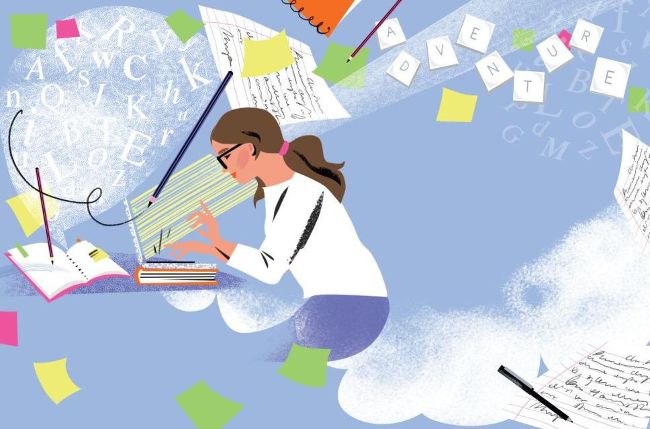
ILLUSTRATIONS: HOLLY ACLAND
Would you like to write a novel but feel daunted by the time and dedication involved? It’s not surprising, given that you’ll need to produce 70,000 to 120,000 words while crafting scenes of exposition and tension, spliced with revelations and twists. Into your main story, you’ll probably want to weave a few subplots, involving a variety of characters. You’ll also need to conclude your book in a satisfying way for the reader, drawing the threads together – or perhaps leaving some loose.
If you’ve ever wondered how authors manage to write while keeping all that detail in their heads – well, not all of them do. While it’s possible to compose a novel without making a single note on plotting, chronology or character, many writers do the opposite, planning everything in detail before they begin. And, at some point, most people find it useful to have a method of organising their ideas on paper or screen.
The good news is, there are many ways to manage your writing. Every author is different, and there’s no one rule that suits all. Some writers mix and match techniques, varying their method from draft to draft – and book to book. The even better news is that you don’t have to hack your way through the undergrowth alone. Read on to find out which methods appeal to you, along with extra tips for each, to help get that novel out of your head and on to the printed page.
Need more inspiration? Turn the page to discover the methods employed by some famous novelists in creating their masterpieces