Raise the roof
We explore the gardens bringing valuable pockets of nature to city skylines…
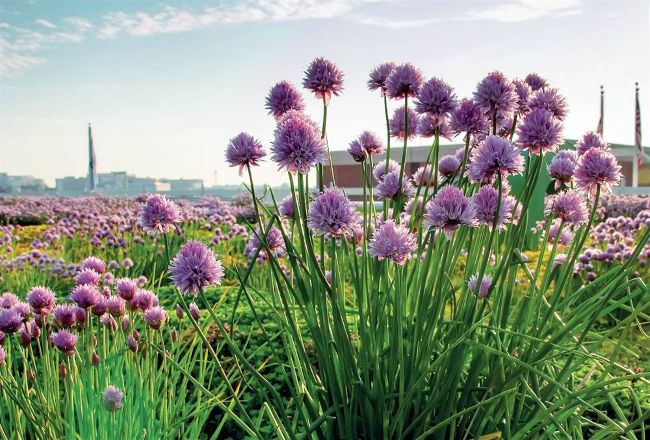
PHOTOGRAPHS: THE VANCOUVER CONVENTION CENTRE, WWF US/SCOTT FEARHEILEY
If you can see roofs from your office or home, the chances are they will be grey and lifeless. Some might have sprouted clumps of lichen or the odd dandelion, but most will be large expanses of sticky, black bitumen or slate, and very little else.
Fortunately, forward-thinking organisations and businesses are beginning to change this, and green roofs and roof gardens are on the increase. In the past 10 years in London, the number has more than doubled – and they’re common in countries such as Germany, Switzerland, the US and Canada. Factories, hospitals, hotels and universities are all seeing the benefits that these sky-scraping sanctuaries can bring.
The term ‘green roof ’ is used to describe both ‘intensive roof ’ parks, with deep soil, shrubs and trees, and ‘extensive roofs’, which have shallower substrates for naturalistic plantings, such as wildflowers or sedum. Both have a big impact on the urban heat-island effect. Plants absorb the sun’s energy and release it as moisture, which reduces the surrounding air temperature and helps to insulate buildings in winter. In the long term, this improves air quality because there’s less need for air-conditioning or heating. Living roofs also prevent flooding by soaking up excess rainwater that might otherwise end up in drains.
These rooftop oases also provide invaluable havens and green corridors between existing habitats that aid the movement of wildlife. Rare species of plants and lichen and large varieties of invertebrates have been found on many European green roofs. Recently, a colony of rare small-flowered tongue-orchids were discovered atop the London HQ of a Japanese investment bank.