Set in stone
Set in stone
An ancient art now recognised for its cultural importance, dry stone walling is an iconic feature of some of the world’s wildest landscapes
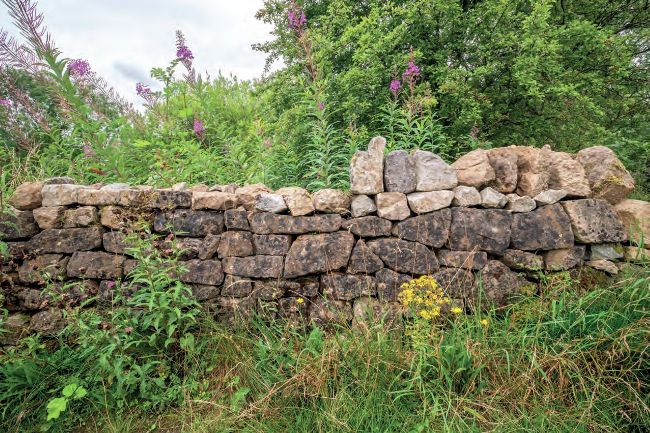
PHOTOGRAPH: (ABOVE) NATIONAL STONE CENTRE
In some of the most remote landscapes, it’s a source of wonder to find stone walls meandering for miles, almost stitched into the fabric of the hills and dales. Hunkered against the elements, they stand testament to the skill of those who laid them.
The technique of building walls from locally available stone – without mortar, just careful craftsmanship – dates back thousands of years. Dry stone walls are still a common feature of the countryside in Ireland, Scotland, parts of England including the Peak District, Lake District, Northumberland and Cornwall, and around the world in parts of Mediterranean Europe and the Americas. And the art of dry stone construction has now been recognised by Unesco. An iconic feature of the landscape they traverse and bisect, these enduring boundaries still serve a purpose to farmers and landowners today.
Bridges to history
Ramblers and hikers will be familiar with following the line of a dry stone wall along the footpath, scrambling over precipitous ladder stiles to reach the other side, but many of the walls you encounter today were laid by hands that are long gone: shepherds, farmers and communities who existed hundreds, sometimes even thousands of years ago. According to the Dry Stone Wall Association, dry stone walling in Britain dates back at least three and a half millennia, to the village of Skara Brae in the Orkneys, and Iron Age settlements in northern and western Scotland. Meanwhile in County Mayo, Ireland, there are field systems that have been carbon-dated to the Neolithic period. Legislation and advances in farming led to the creation of more fields and boundaries, and many of the dry stone walls seen across the UK today were built between 1750 and 1850 during the time of the Parliamentary Enclosure Acts.