Water source heat pumps
Eco homes expert Nigel Griffiths looks at how this heat pump tech works and whether it makes sense for self builders and renovators
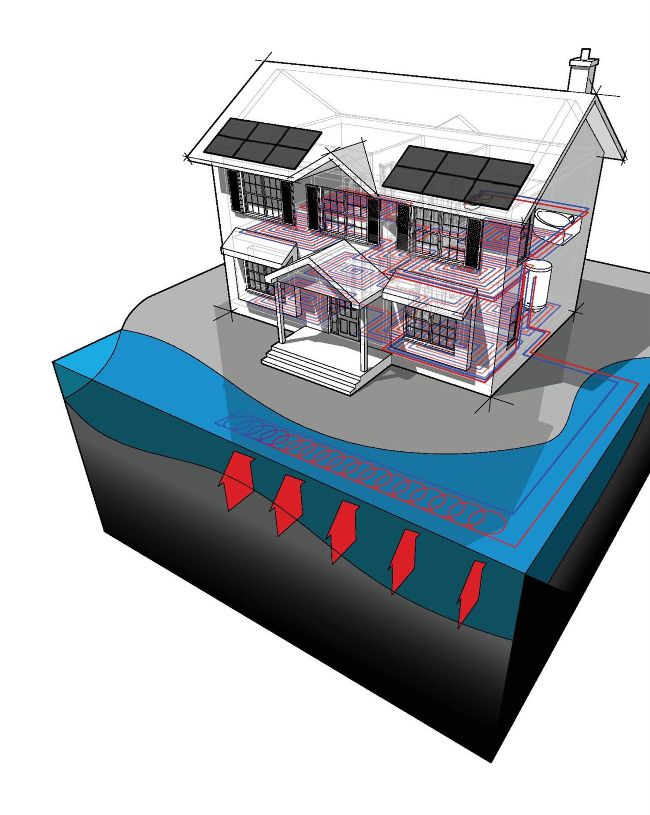
A water source heat pump collects warmth from a body of water, before compressing it to deliver efficient, low-carbon space heating and hot water
Heat pumps take heat from low-grade sources and compress it for use in space heating and hot water systems. The most common sources of the warmth they require to work ef fectively are the air and the ground, but heat can also be extracted from water – hence, water source heat pumps (WSHPs). The greatest attraction of water source heat pumps is that the temperature of the heat source is likely to be better than either the ground or the air during peak space heating season. The efficiency of air source heat pumps (ASHPs) drops rapidly during the winter, when the air temperature is at its lowest – particularly during periods where defrost mode is required. Similarly, after a ground source heat pump (GSHP) has been operating for some time, the temperature of the ground surrounding the collector loop will have fallen slightly – so, it won’t be operating at quite the same efficiency as at the start of the heating season.
Water source heat pumps can draw their heat from rivers, underground aquifers, lakes or even in the sea. Of course, the water temperature does drop during winter, but not as much as the air temperature. As water is a fluid, even in bodies of still water such as large ponds and lakes, the rate of heat recharge (to the area from which heat is collected) is likely to be more ef ficient than with a ground source heat pump, which draws its heat from static material with slower heat flows.