HOW TO GET PLANNING PERMISSION IN THE COUNTRYSIDE
From understanding the various ins and outs of rural policy, to crafting an application that’ll be well received by the council, Julia Riddle shares her expert advice
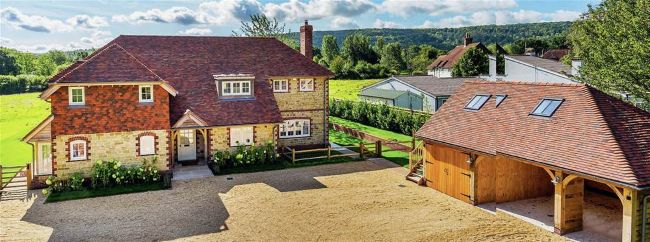
This timber frame home, by Scandia-Hus, enjoys a rural location on the edge of a village in West Sussex. The design went through several iterations before it was approved by the planners
SCANDIA HUS
Obtaining consent to create a rural home remains one of the biggest hurdles for budding self builders. In many ways, getting the green light for a single dwelling can be a greater challenge than seeking permission for numerous houses. This can seem frustrating when you’re trying to understand why one property is so difficult to achieve, but multiple homes have been permitted elsewhere in close proximity.
The basics
The first thing to get your head around is the definition of ‘countryside’ within the planning context, and whether your house is positioned within that zone. Essentially, the term covers land outside the settlement boundary of cities, towns and villages. Therefore, it’s the area that’s further from and less connected to facilities, services and transport hubs Outside the confines of a settlement, different planning policies and approaches apply, which ultimately define what’s possible in terms of what you can build.
The settlement boundary may be fairly obvious – for instance, you might physically see where development ends – but there may nevertheless be some established buildings already in the countryside. The dividing line should therefore be checked to confirm which side any potential plots are on. This is best done via your planning authority’s (ie the council’s) Local Plan, which will have a diagram that shows the relevant zones. From this, you can establish the polices which will apply to any development.