INDUSTRIAL CHARM
When Nick Rinylo and Lucy Christie decided to create a new home, they didn’t anticipate doing it during a global pandemic and with a baby on the way
WORDS & PHOTOS HEATHER GUNN
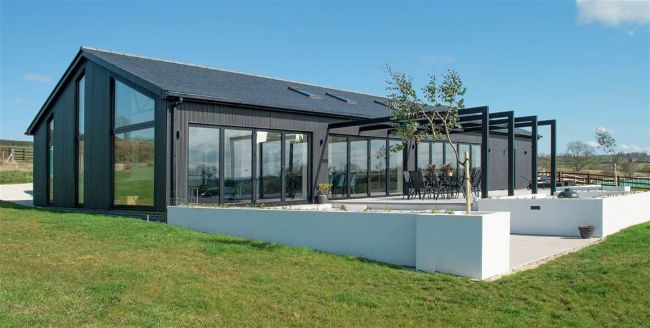
The composite clad barn faces due south and affords spectacular views over the surrounding countryside
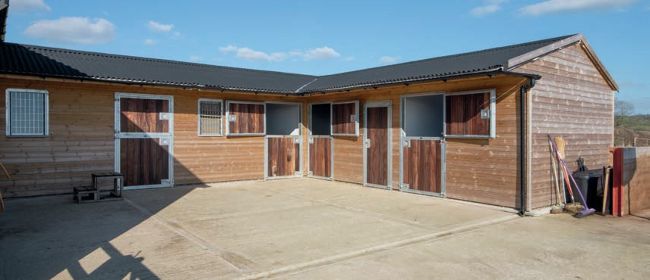
Lucy and Nick refurbished the outbuildings for their horses
FACT FILE
NAMES Lucy Christie & Nick Rinylo
OCCUPATIONS Global head of ecommerce & Owner of a digital marketing agency
LOCATION Warwickshire
TYPE OF PROJECT Conversion
STYLE Contemporary
PROJECT ROUTE Architect designed, owner project managed
CONSTRUCTION METHOD Steel frame & blockwork
HOUSE SIZE 380m2 (incl. 120m2 for the outbuildings)
PLOT SIZE 4.2 acres
PROPERTY COST £390,000
PROJECT COST £560,000
PROJECT COST PER M2£1,474
TOTAL COST £950,000
VAT RECLAIM £26,000
BUILDING WORK COMMENCED April 2020
BUILDING WORK TOOK 60 weeks
CURRENT VALU E £1,300,000
Nick Rinylo and Lucy Christie had been searching for a farmhouse for eight months. They wanted somewhere with sufficient land for their horses, and a chance conversation with an estate agent led them to a muddy field in Warwickshire. “The location was further away from our family and friends than we had wanted, and there wasn’t even a house there, just two slightly dilapidated old barns full of cows,” says Lucy. “But we were so totally captivated by the incredible views that we knew we just had to make it work. We hadn’t actually considered taking on such a major project before, but after a few days of working out what it would involve, we decided to go for it.”
Nick and Lucy bought the four-acre plot, which had Class Q planning consent already in place for the barns – this allowed for a change of use for the structures, from agricultural to residential. “The smaller brick cowshed was in quite good condition overall, even though it is over 200 years old. However, the roof was starting to cave in,” says Lucy. “The larger, steel frame barn was about 70 years old and only had a couple of walls and a corrugated iron roof. It was full of cows and mud! Until we saw the plans it was hard to visualise how it could possibly work as a house.”