CHOOSING A KITCHEN STYLE
Your kitchen’s cabinet doors will have a big impact on the look and feel of the space. Lindsay Blair looks at the different options and what unique characteristics each one could bring to your home’s design
Many homeowners begin their search for the ideal kitchen with a word or two: slick and contemporary, clean and light, classic and comfortable, homely, industrial, natural or statement – all provide a good starting point. When deciding what’s right for you, it’s wise to take cues from a property’s architecture, too: what period is the house? Is it afforded lots of light? What kitchen style and materials would be in keeping? Are there features that need to be incorporated, such as structural beams, columns, chimney breasts, glazing or archways, for instance.
While some decisions may seem more obvious – a minimal handleless kitchen within a pared-back, highly glazed extension where materiality and architectural detail are the focus, or a traditional in-frame design within a period property, for example. The breadth of door options now available mean there’s ample opportunity for experimentation and personalisation.
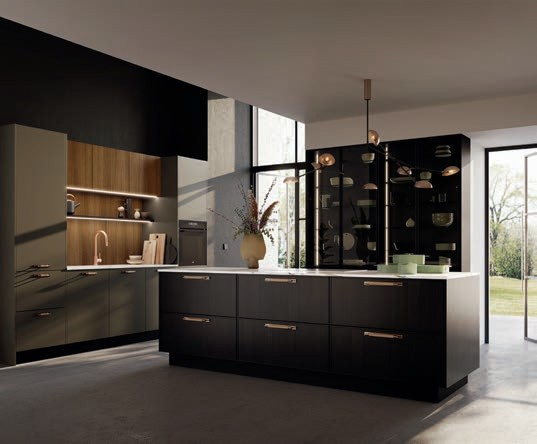
Zerox extreme matt, antifingerprint laminate furniture in Clay Dark & Loft Brown Oak, with Smala 12mm solid oak frame doors in black soft-coat lacquer finish and Buster + Punch knurled handles in solid brass. Rotpunkt kitchens start from £21,000
Innovations mean that classic Shaker doors can have the same slim appeal as a modern alternative and advancements in manufacturing have opened up opportunities for special finishes, glazed doors in an array of styles, hidden handles and a suite of door sizes and configurations. As a starting point, gather ideas for your moodboard to be discussed with a kitchen designer and use this as a guide to the most popular styles...
CLASSIC SHAKER
This ever-popular style originates from the simple, utilitarian designs of the Shaker community, who became known for their handcrafted furniture. These kitchens provide a timeless and simple door design that can be easily adapted through the choice of colour and detailing in many property types. While veneer and laminate options are available at a more affordable price point, solid wood Shaker units made by hand are in keeping with original manufacturing techniques but will come at a higher cost. These can be painted and further repainted should you wish to introduce a new colour in future.
A Shaker door is formed of a recessed central panel within a raised frame with the most classic setups featuring cup and knob handles, dovetail joints and wooden peg rails. While the core concept of symmetry remains, these days slim frame options offer a more modern look alongside options to recess handles and add or strip away detailed beading depending on preference. “Shaker kitchens are very versatile, but unless using a slim modern Shaker, I would steer away from this type of design for a new build, modern apartment or an Art Deco property,” says Kate Feather, founder of Kate Feather Kitchens. “You could couple plain Shaker cabinets with a contemporary colour palette, earthy wood texture, natural marble worktop and bronze accessories. You can use the Shaker kitchen as a base and work from there to add your own style and identity.”