DAYLIGHT V SUNLIGHT
Architect Julian Owen discusses the importance of designing your home with access to natural light and shares his tips for avoiding the effects of overexposure
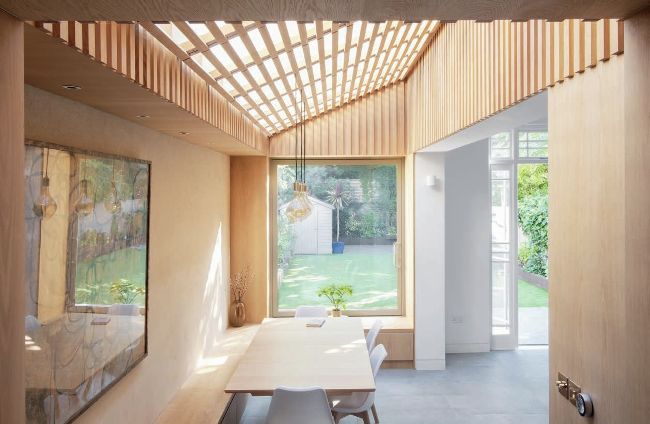
YARD Architects (www. yardarchitects.
co.uk) designed a fully-glazed roof with electrically opening rooflights for this extension, ensuring sufficient ventilation and light from above.
A series of bespoke internal oak louvres provide privacy and filter sunlight into the space, while creating a unique lookEMANUELIS STASAITIS
Daylight and sunlight are free natural resources that, if used in the right way, can transform the look and feel of your home. Understanding how light interacts with your space can help you to create a comfortable and satisfying environment for little to no extra cost. But getting the balance between these two forms of light wrong could land you with gloomy rooms that still overheat in the summer. Here are some ideas on how to get the best of both.
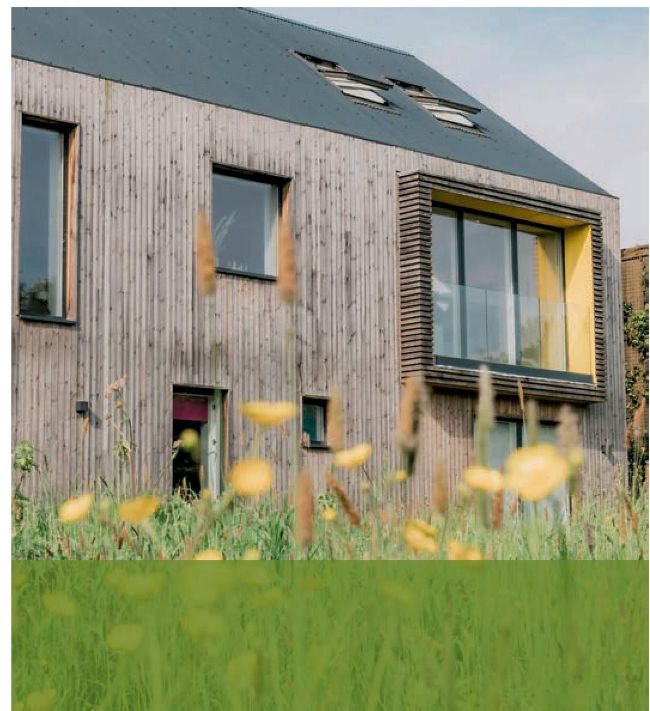
Artel 31 (
www.artel31.co.uk) designed and constructed this stunning eco-home in Wiltshire. Carefully positioned slim-frame windows allow for ample natural light to enter the home, while the recessed design acts as both an architectural feature and provides fixed solar shading
CHARLES EMERSON
Why is daylight important?
Plenty of daylight brings a great many benefits to your life. It offers practical support for your eyesight when you’re cooking, reading or indulging in hobbies such as sewing or model making, without the constant need for artificial light. It also has a profound affect on our mental health, often without us realising. Seasonal affective disorder (SAD), caused by the lack of daylight during winter can be counteracted by sustained exposure to higher levels of natural light.