Creating an eco-friendly kitchen
Want to make the hub of your home more sustainable?Nigel Griffithslooks at how to plan and realise a greener kitchen
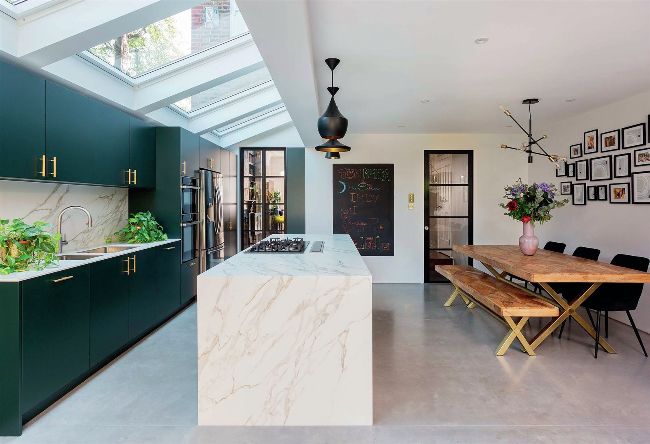
To reduce reliance on artificial illumination, a series of Velux rooflights bring natural daylight into the task zones of this stylish Hux kitchen, which is part of a sidereturn extension by Zulufish
Kitchens are probably the most resourceintensive room in the house to kit-out and use. They’re also the spaces we update and change most often, in part due to wear and tear. So, to reduce environmental impact, it’s important to get them right first time and give them as long a life as possible. If you just fancy a new kitchen every five years to keep up with the latest trends, it may be best to stop reading now!
Eco materials
The most significant environmental impact of a kitchen comes as a result of the materials we use to construct and furnish it. Here’s some alternative spec solutions:
Kitchen cabinets are conventionally made from chipboard, which is high in formaldehyde (a recognised carcinogen). They’re then coated in plastics, making a composite material that’s impossible to recycle. This needn’t be the case. Carcassing can be built using FSCcertified plywood, which is much lower in formaldehyde and easily recyclable. It’s also more durable and resistant than chipboard or MDF, in particular to water – and leaks sadly do occur in kitchens occasionally.
Worktops are another example of an item where composite materials are commonly used. Instead of melamine chipboard, consider natural stone or solid wood for worktops. Much stone is imported, of course, so this adds to embodied energy. It may, however, still be lower than alternative materials and, importantly, it will last much longer. Solid timber will need to be sustainably sourced, but as a worktop it has a warmth and beauty that’s hard to beat.