NEED TO KNOW
Underfloor HEATING
Find the best system for your project and discover what it will cost to install UFH
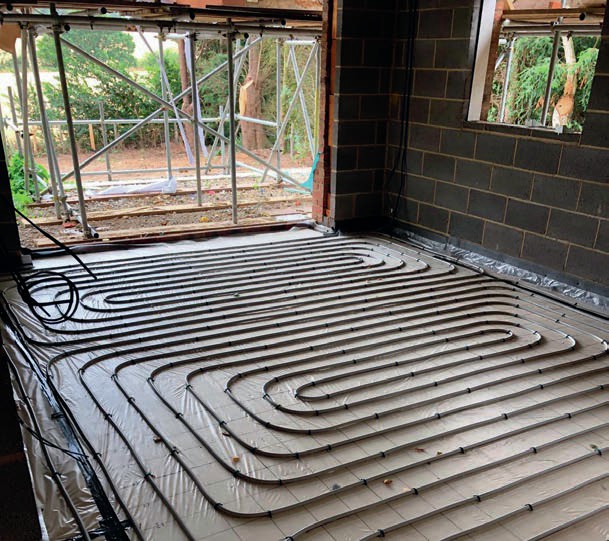
Robbens Systems' UFH pipework laid as part of a new build project, ready for screeding. Special pipe clips are used to hold the tubing in place on the insulation (which itself sits on a damp proof membrane)
Water-based underfloor heating (UFH) is the preferred choice for many self builders and renovators . This is a hidden heating system, located within the floor structure, so it reduces the need for wall-hogging radiators. That makes furniture placement easier and lends a sense of extra space, delivering the clean lines and open flow most homeowners want.
UFH’s low flow temperatures also marry up perfectly with renewable energy sources, such as heat pumps. “Typically, it will be approximately 10-20% more efficient then radiators,” says Matt Densham from Robbens Systems. Most of that saving comes down to the lower temperatures the UFH needs to work effectively. Standard boilers also achieve a 5% performance boost with UFH compared to radiators, helping to ensure lower energy bills in use. A home heated this way simply feels cosier, too, providing gentle all-over warmth, without the hot and cold spots you get with radiators.
How does UFH work?
Water-based underfloor heating is designed to transform your chosen flooring into a giant, low-temperature emitter. It works by pumping a controlled flow of warm water through tubing embedded in the floor. “The system is therefore heating an entire room evenly, which is more efficient than traditional radiators, where heat is lost by the hot air rising in only one area,” says Luciana Kola from Uponor UK.