readers’ homes
HIDDEN WONDER
From the street, you would be hard pressed to realise the extent of this new contemporary light-filled home from its subtle entrance
WORDS CAROLINE EDNIE
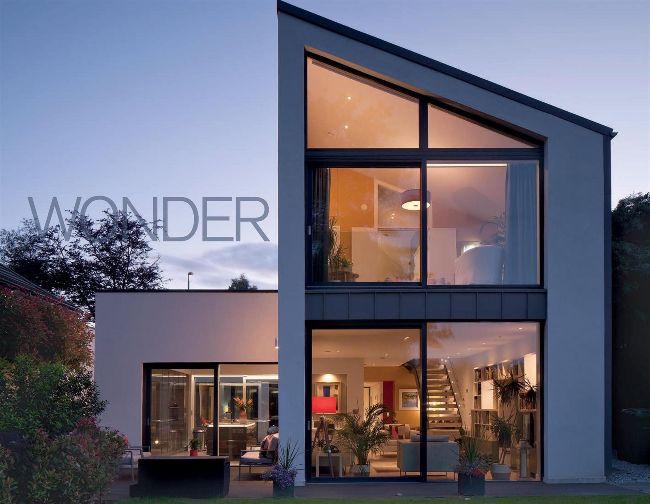
From the rear garden the property’s glazing makes a striking impact
PHOTOS DAVID BARBOUR
Ray and Ruth Davis had enjoyed living in the Glasgow suburb of Milngavie for over 30 years. When they felt it was time to downsize from their five-bedroom house, the garage and artist’s studio on their land was the ideal opportunity to tailor an existing building into a smaller home.
Ray, a retired architect, had previously converted the studio. “My daughter and her husband lived in there for a while, moving out when they needed more space,” he says. “I was thinking of extending the building to create a larger dwelling, but the local planners wouldn’t allow this. Instead, I thought we could knock down the studio and garage and build a new house from scratch; however, I was getting negative vibes from the planners about this, too. So I decided I had to be more distant from the planning department.”
New course
At this point the couple approached Glasgow-based architect Stuart Cameron of Cameron Webster Architects to come up with a fresh approach. “I liked his work and we spoke about me being more hands off with the planning,” says Ray. “I gave Stuart my draft plans just to show him the type of accommodation we were looking for, and I said not to hold to them religiously.”
Stuart Cameron’s design offered an ingenious solution to the site while still being mindful of the planning limitations. Effectively, the proposed house aimed to continue the street pattern where bigger properties are then followed by a smaller garage or studio building, forming a large (major) then small (minor) effect that follows on and on. As this property fell under the ‘small’ house positioning, the proposed design to replace the garage and studio needed to appear ancillary to the main house. To meet this requirement, the design sits low to the ground, with less than half of the footprint visible from the road. With its scale, form and appearance, the building maintains its secondary positioning. “The house is low, set back from the front boundary behind a screen of planting and the existing wall, meaning it appears as an outbuilding that isn’t out of keeping with the character of the area and doesn’t negatively impact on the street,” says architect Stuart Cameron.