HOW IT WORKS
UFH MANIFOLDS
This piece of equipment forms the heart of all water-based underfloor heating systems, acting as the distribution centre for pipework. Rebecca Foster takes a look at how it works
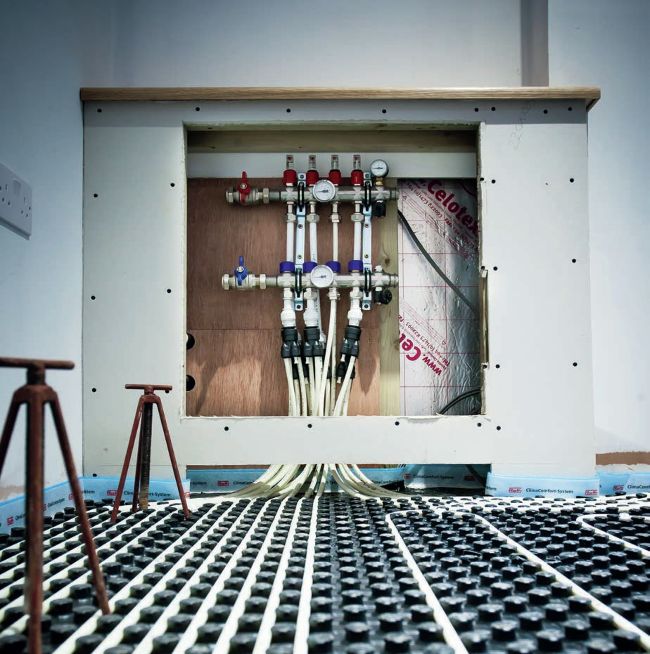
In this LoPro Max setup, supplied and installed by Nu-Heat, you can see the gradual curve of the UFH pipe loops as they are routed from the UFH panel and back to the manifold
Wet underfloor heating (UFH) circulates warm water through a network of pipes laid beneath the floor, transforming the entire surface into a radiant heat emitter and creating even coverage across the room. This setup is compatible with various heat sources, including gas boilers and air/ground source heat pumps. The manifold plays an important role in all water-based arrangements, connecting UFH pipes to the heat source and acting as the central distribution point for the floor conduits. It’s the central hub that each length of pipe goes out from and circles back to, and controls the flow rate of water through the pipes.
Manifolds regulate the temperature and pressure of the system. “Their main purpose is to distribute the large volume of water from the primary heat source into each UFH circuit – the loops of pipe that run under the floor,” says Brendan Hourican, managing director at Omnie. “Warm water enters the manifold and is mixed with cold water to achieve a safe temperature.” This prevents very hot water – which leaves conventional gas boilers as high as 70°C – from entering your UFH and potentially damaging the floor coverings above. The water flow for UFH typically runs between 35°C and 60°C. The manifold allows you to control room temperatures via a series of electronic actuators. These are connected to individual room thermostats, enabling you to manage the heating schedule within each distinct zone.