FILE UNDER...
Flame on!
With flash packaging and a title that meant “go to hell”, The Wailers’ Island debut was a bold opening shot. But did it find itstarget?
By Jim Irvin.
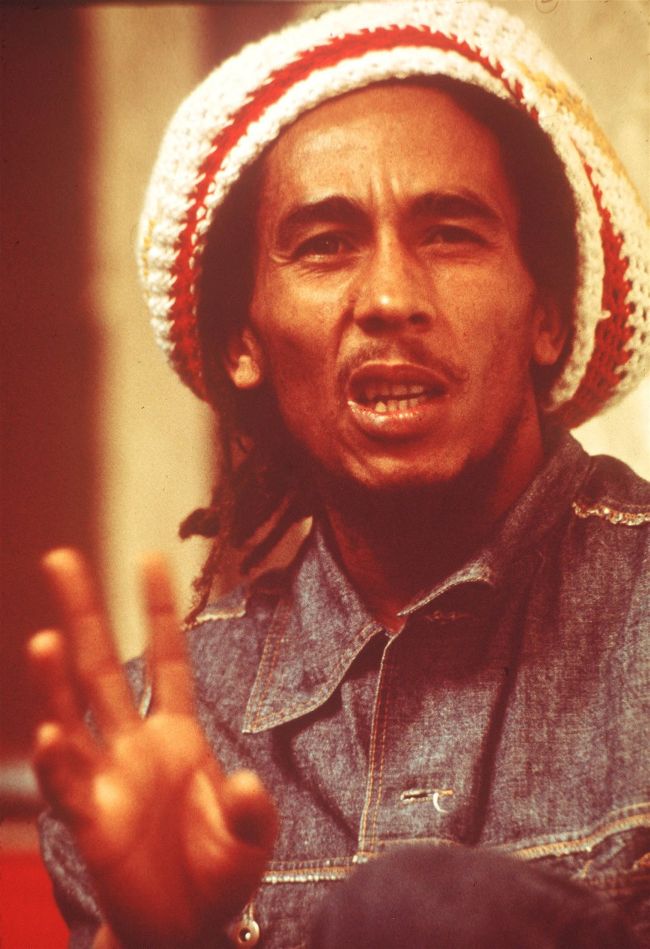
Fire in Babylon: Bob Marley & The Wailers blaze a trail on their 1973 Island debut.
Michael Putland/Retna/Avalon
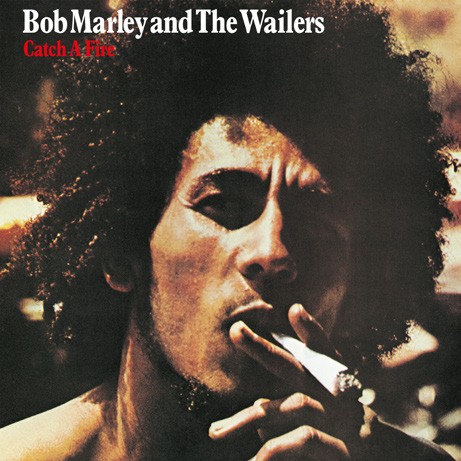
MONG SEVERAL ing The Wailers’ Catch A Fire myths surround ???? - - niversary three-disc sets on CD and vinyl – is that its sweetened, UK-centric mix led to the demise of the original trio, that Island’s Chris Blackwell had forced white musicians upon Marley and that he wanted the band credited as Bob Marley & The Wailers. The latter had already happened. Two Jamaican LPs produced by Lee Perry, Soul Rebels and Soul Revolution Part II, had been billed that way. If anything, at this point at least, Blackwell was keen to maintain the image of The Wailers as a rebel gang that might intrigue a rock audience. Also, Marley had already distanced himself from Wailers Peter Tosh and Bunny Livingston in 1971 when Johnny Nash’s manager Danny Sims took him to Sweden to write songs for a forthcoming Nash movie. Marley enjoyed Sweden. The soundtrack didn’t work out, but Nash took several of Bob’s songs for his debut CBS album, I Can See Clearly Now, including Stir It Up (written in 1967), a UK (and later US) hit. Sims landed Marley a deal with CBS too. Nash’s band included keyboard player John ‘Rabbit’ Bundrick, who’d also contributed songs to the album, they cut one Bob Marley 45 in 1972, Reggae On Broadway, which flopped. However, all this activity had broadened Marley’s horizons, showing him his music had international potential. Sims blew it by promising The Wailers a support tour with Nash, delivering only a lone show in Bexhill-on-Sea in Sussex, then leaving the band stranded in London (having locked away their passports) while he and Nash flew to the US. Marley and The Wailers were understandably pissed off. They turned to tour manager Brent Clarke, who suggested they meet Chris Blackwell. Coincidentally, Blackwell’s dream of a reggae rebel he could sell to rock audiences had just walked out when Jimmy Cliff unexpectedly left the label. When The Wailers walked in, he immediately saw an alternative. He offered to buy out Marley’s CBS deal and provide a decent budget to record an LP in Jamaica that could be mixed with an eye on the international market. Marley was happy to have Bundrick involved, and approved the additions Blackwell oversaw in London, even though his bandmates scoffed at them. By the time Catch A Fire came out in April 1973, Marley had quietly taken over Blackwell’s Jamaican base at 56 Hope Road, Kingston. That was when the division between Marley and The Wailers widened. Highly regarded subsequently, it’s therefore assumed that Catch A Fire’s roots reggae with a rock garnish was revolutionary in its day. That The Wailers had recorded a whole album from scratch, not simply compiled previously available singles, was an innovation, but its hybridised sound didn’t particularly grab Jamaican fans and was still too unusual to find a sizeable British audience. The elaborate Zippo lighter sleeve got more attention than the music. An estimated 14,000 copies sold outside Jamaica. Enough to win it a low chart placing in the US, surprisingly. This new edition presents the original album with an impressive BBC In Concert recording from May 1973, which highlights how The Wailers used restraint to transmit power, plus a disc of out-takes and instrumentals from the Jamaican sessions. These are good to have, though not as satisfying as the complete Jamaican mix which emerged earlier this century. When this album hits, as on Stir It Up, a masterclass in letting the vibe do the work (with smokey wah wah added by Memphis guitarist Wayne Perkins), or on Concrete Jungle and the fierce Slave Driver, it still feels fresh and significant, so we assume it felt so then. To some it surely did, but actually the formula wasn’t quite right. This wasn’t the sound that would set the world alight. That was to come. “When this album hits, it still feels fresh and significant.” Fire in Babylon: Bob Marley & The Wailers blaze a trail on their 1973 Island debut. FILE UNDER... Flame on! With flash packaging and a title that meant “go to hell”, The Wailers’ Island debut was a bold opening shot. But did it find its target? By Jim Irvin.