SPORT
BREATHE EASY
The ancient practice of freediving helps people achieve complete relaxation, while also reconnecting them to their inner self and the ocean – and, best of all, anyone can do it. Freediver Samantha Kildegaard explains
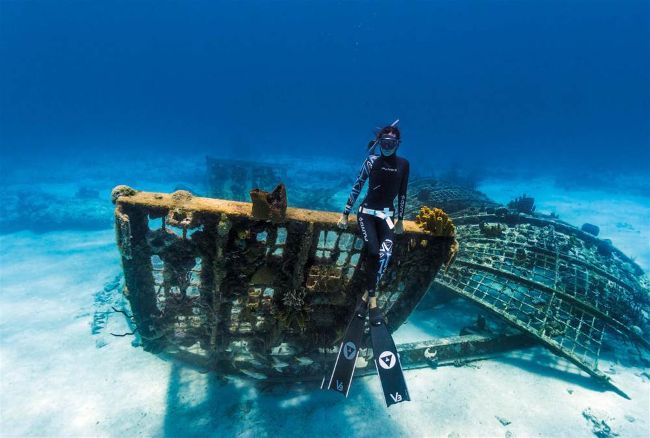
ABOVE: Chilling underwater at the famous Thunderdome dive site, Northwest Point, Turks & Caicos
ALL PHOTOS: AGILE LEVIN – VISITTCI
As I slip into the water, I take my final breath before starting my journey into the deep. Time stops. It’s just me and the ocean, nothing else matters. Sensations in my body urge my lungs to take a breath, but I convince my mind that I still have a lot of air left and down I go. I enter a meditative state, where I can only hear my heartbeat – the ocean’s healing vibes echoing in the deepest part of my soul. The exhilarating feeling of simultaneous discomfort and peace keeps me going beyond my comfort zone.
When I am ready, I turn around and reach for the surface. Once out of the water, I take that first full breath of air and feel reborn.
What is freediving?
Freediving is one of the oldest forms of diving – practised for centuries by the Bajau people in Indonesia and the Ama divers in Japan, who earn their living gathering sea pearls and abalone. This ancient art has since grown into a sport. Anybody can learn to freedive, regardless of age, experience or fitness level, and it requires little in the way of equipment – just a mask, a snorkel, fins and lungs that allow you to hold your breath for as long as possible.
There are myriad reasons people freedive: to improve their breathing and find healing; to challenge themselves physically and mentally; to take amazing underwater pictures; to enable them to surf big waves safely; or simply as a recreational activity to explore the ocean.
Freediving generates several physiological responses. When our face meets cold water, it triggers our body’s mammalian diving response. We share this reflex with the likes of whales and dolphins and it has a profound effect on our cardiovascular system. While holding our breath, we experience a sense of calm, our heart rate drops, our spleen releases a stream of red blood cells, which rush to the core parts of our body – lungs, heart and brain – until we achieve complete relaxation.