15 Common Ailments
Learn about these disorders of backyard birds and how to prevent them.
BY SARAH E. COLEMAN
ЕЛЕНА КОСИНОВА/
STOCK.ADOBE.COM
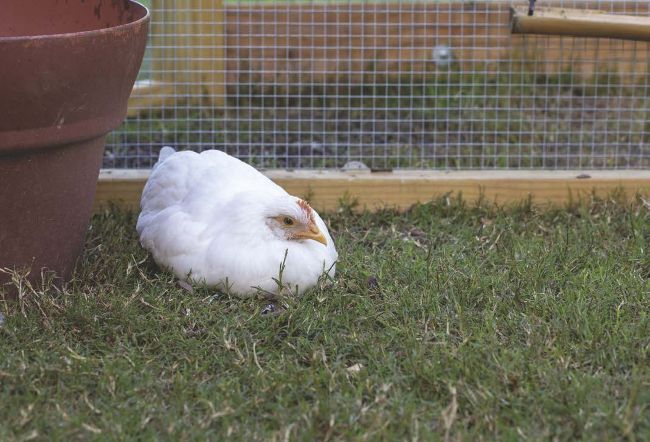
When you have a sick hen, isolate her in a quarantine area that is quiet, warm and protected from predators and other animals.
CHAD ROBERTSON/
STOCK.ADOBE.COM
While a magic recipe for keeping backyard chickens healthy doesn’t exist, diligent attention to their care and wellbeing will alert you to impeding illness. Birds are prey animals, so early signs of illness may be subtle and difficult to discern. Early signs of illness, injury or other issue can include the following.
• changes in food and water intake
• depression, lethargy or other changes in behavior
• discharge around eyes or nostrils
• dull feathers or dirty feathers around vent, eyes, nostrils or shoulders
• abnormal manure
• lameness
The following 15 ailments are ones that backyard chickens may experience, and I’ve included some ways to prevent them.
NO. 1: OBESITY
Overfeeding backyard birds is easy to do; as humans, we often show our love for all our critters in the form of feed and treats.
The combination of fatty feed, too many treats and table scraps, and limited exercise can rapidly take its toll, especially on hens. Hens retain more fat on their livers than their male counterparts; “fatty liver” can occur when a hen is obese. It can lead to liver rupture and death if not dealt with in a timely manner.
Afflicted hens often experience a sudden drop in egg production; they also may have pale combs and wattles and combs that are covered in dandruff. Their toenails may grow rapidly. Fat hens may also have trouble breathing and struggle more in warmer weather.
The best treatment of obesity is prevention: Don’t kill your flock with kindness. Feed a balanced diet, limit the treats and consider free-ranging your flock to encourage exercise. Weighing your hens to track weight gain is also not out of the question.
NO. 2. CANNIBALISM
Cannibalism in chickens is often triggered by poor management. Stressed chickens may pick at the feathers, comb, toes or vent of another bird to the point where blood is drawn. Cannibalism can be difficult to control, which is why it’s imperative that it’s caught early and that changes in management style are enacted.
Birds can turn cannibalistic if they are overcrowded, experience excessive heat or light, have unbalanced diets or if they must fight for feed and water. Ill or injured birds left in the flock can also encourage cannibalistic behaviors. Changes to the bird’s environment and the introduction of new flock members may also cause birds to become cannibals.