ROTTEN EGGS
Even your best hen can’t lay the best egg every time, so when is an egg not right for consumption?
ARTICLE BY MOIRA K. MCGHEE

PHOTOS BY MOIRA K. MCGHEE
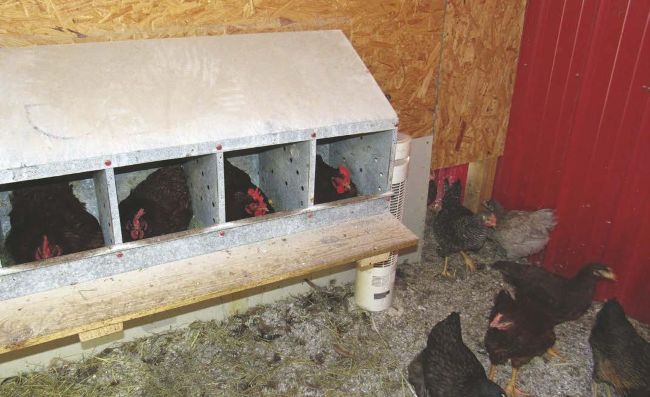
Laying hens nest at Jill Momchilovich Baker’s farm in Carl Junction, Missouri.
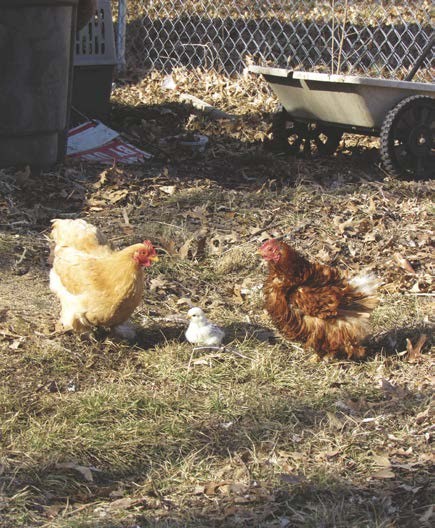
A surprise chick hatched from a hidden stash of eggs from Amanda Ryan’s backyard flock in Carthage, Missouri.
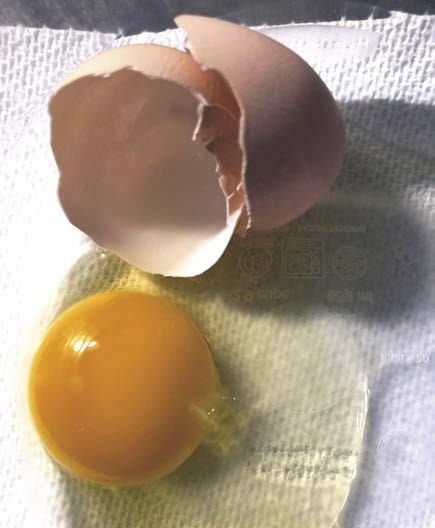
Nothing beats a farm-fresh egg except maybe a whisk.
Nothing beats farm-fresh eggs, except when you end up with a not-sofresh egg. Various factors can impact whether an egg is edible, with the occasional complaint from a chicken producer that a hen laid an egg that was rotten on day one. Though rare, laying a rotten or soon-to-be rotten egg can occur under the right circumstances. As we crack open the mystery behind hens that lay rotten eggs, prepare to learn what contributes to the presence of eggs that have run afoul of conventional standards.
WHAT IS SO ROTTEN
If you’ve ever cracked open an egg with a putrid smell, you’re likely already quite familiar with the concept of rotten eggs. As a poultry farmer, you may have even developed various tricks to catch rotten eggs before you crack them open to avoid the stench.
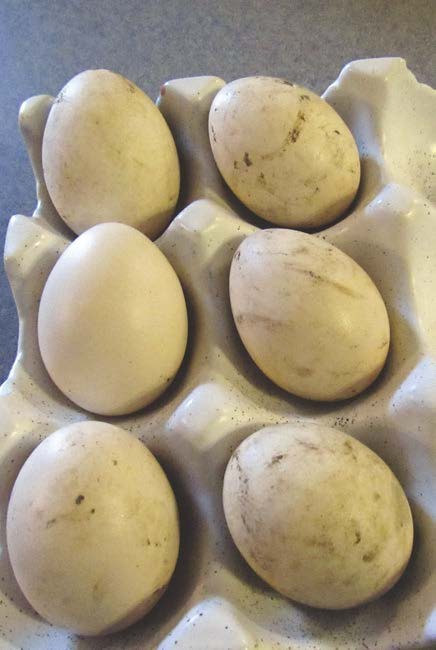
Amanda Ryan in Carthage, Missouri, keeps her unwashed eggs on the counter.
Richard A. Blatchford is an associate professor of extension for small to large scale poultry in the department of animal science of the Center for Animal Welfare at the University of California, Davis. “A rotten egg is one in which there was a mold or bacterial invasion,” he says. “This typically happens after the egg is laid, and the microbes invade the egg from the environment. The appearance and smell of the rotten egg can vary based on the organism that invaded the egg.”
Blatchford specializes in the husbandry, behavior and welfare of poultry. He works with broilers, layers and backyard flocks as an extension specialist. One of his primary roles is to provide the latest scientific information to stakeholders in poultry and talk with producers about how to adopt housing or best manage behavioral issues in backyard flocks.