CLASSIC ALBUM
THE PLEASURE PRINCIPLE
GARY NUMAN
THE TUBEWAY ARMY FRONTMAN GOES SOLO AND PRE-EMPTS THE SOUND OF THE NEXT DECADE WITH A NO.1 RECORD THAT REMAINS A COMPELLING DOCUMENT OF ITS TIME AND CONTINUES TO INSPIRE GREAT POP MUSIC TODAY
FELIX ROWE
It’s an enduring image: a young, besuited man behind a desk, fixated on the throbbing red glow of a translucent pyramid object. His face, while almost expressionless, nonetheless carries a degree of reticence and suspicion at the mysterious, futuristic form before him. But clearly he’s curious, too, enthralled by its untapped potential. Like a portal into another dimension, the future has literally manifested itself before his eyes, and it’s his for the taking.
This is, of course, the iconic imagery that adorns the front cover of Gary Numan’s debut solo record, The Pleasure Principle. Over 40 years later, we now know just how prescient it turned out to be. Numan seized that metaphorical prism with both hands and used it to help shape the future of pop. The Pleasure Principle is the centrepiece of three UK No.1 studio albums in succession – his extremely successful ‘Machine’ phase, that spawned two chart-topping singles and continues to resonate today. Its influence has spread far and wide, extending beyond pure pop into hip-hop, dance, reggae and even industrial metal.
Pick any of the countless ‘Best of 80s Pop’ compilations at design. Like many synth-pop heroes, Numan’s musical journey began on six strings, delivering scrappy three-chord punk. Tubeway Army’s debut single That’s Too Bad has more in common with Buzzcocks than Kraftwerk. The band were signed off the back of the punk explosion a good year or so before they even discovered synths. They stumbled upon them (almost literally) in the studio while recording their eponymous 1978 debut album. While that record documents their first dabblings in the dark arts of electronics, it essentially remained a more conventional band effort.
Equally, the androgenous, robotic cyborg look – somewhere between the crisp, clinical and ordered Kraftwerk and Bowie’s Thin White Duke – was, at least partially, another happy accident. Numan has since admitted its genesis was a matter of pragmatism, when the BBC’s make-up department slapped on a load of white foundation and eyeliner to hide his acne shortly before a Top Of The Pops appearance. Likewise, his cold, detached performances that became key to the android persona he attributed to stage random, and there’s a good chance that it features either Cars or its predecessor Are ‘Friends’ Electric? After all, both are so completely representative of the 80s – in sound and aesthetic – despite actually belonging to the previous decade.
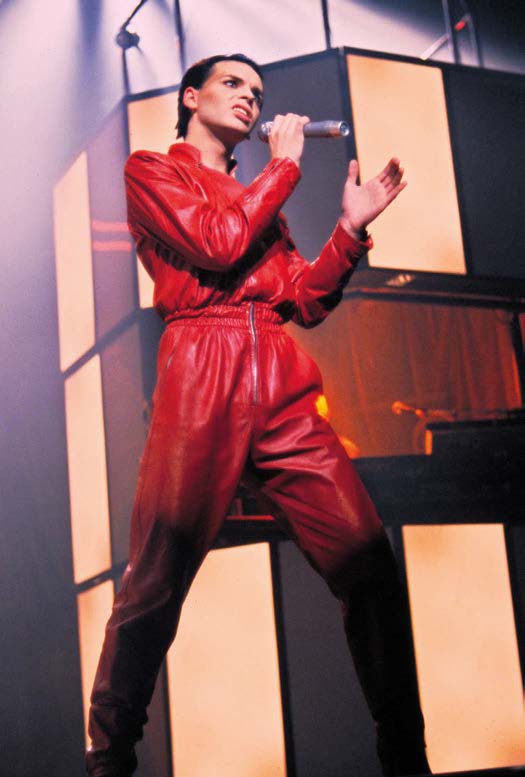
Gary Numan onstage at the Warfield Theater in San Francisco, March 1980, during The Touring Principle world tour
© Getty
WHEN NUMAN FIRST ARRIVED, HE DID SO FULLY FORMED – LIKE AN ANDROID BEAMED DOWN FROM SPACE, SENT TO TEACH US EARTHLINGS HOW TO GROOVE