ALBUM BY ALBUM
DAVID SYLVIAN
IN A CAREER SPANNING MORE THAN FIVE DECADES, DAVID SYLVIAN’S SOLO WORKS HAVE ENCOMPASSED POP, JAZZ, AMBIENT AND FREE IMPROVISATION
ANTHONY REYNOLDS
© Simon Gargette
JAPAN WERE DEEPLY MISSED AND MUCH OF THEIR AUDIENCE IN MOURNING BOUGHT BRILLIANT TREES
Iwas fishing in the dark,” Sylvian has said of his debut solo album. “I didn’t know what was going to happen.” Released in June 1984 and peaking at No.4 on the UK Albums Chart, Sylvian obviously landed a prize catch. Recording had begun at Berlin’s Hansa studios in May 1983. Sylvian was only 25 but already had five studio albums behind him recorded with his alma mater, Japan. He was still young enough to appeal to the pop market yet experienced enough to hold his own in the studio with such leftfield music legends as Can’s Holger Czukay and trumpet player Jon Hassell. Indeed, the album utilises a cast of astonishing pedigree.
As well as featuring the aforementioned – both one-time students of German wunderkind composer Karlheinz Stockhausen – Sylvian employed Danny Thompson (Pentangle, John Martyn) on double bass, session legend Phil Palmer (Bowie, Scott Walker) on acoustic guitar, ex-Japan personnel Steve Jansen and Richard Barbieri on drums/ percussion and keyboards respectively as well as Ryuichi Sakamoto on piano. There was also the thrilling addition of NYC funk players Ronny Drayton on guitar and bassist Wayne Brathwaite.
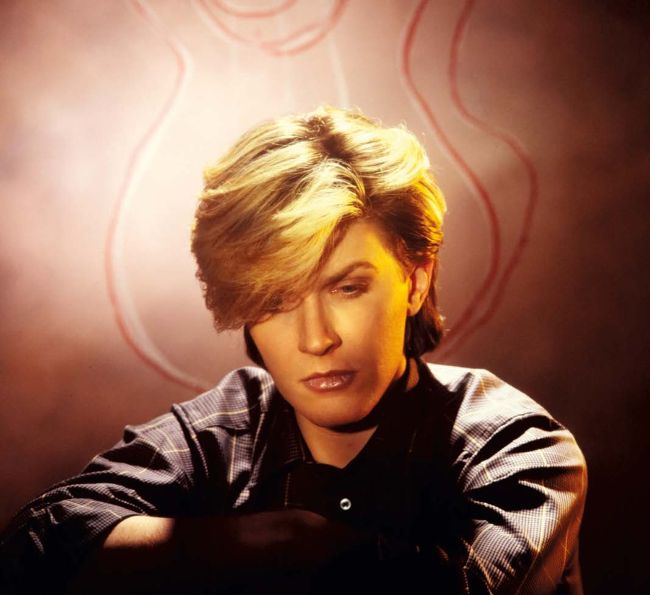
The casting alone is genius. It’s hard to think of another early-80s pop pin-up having the sensibility to encompass such a broad range of top-tier and eclectic talent on an album. And in 1984, David Sylvian still was a proper pop star; his perfectly made-up and coiffured visage peering out from everything from Smash Hits to The Sunday Times.
Sylvian’s songwriting and voice had also found a new confidence; the album is a beautiful fusion of pop and jazz. Japan were deeply missed and much of their audience in mourning bought Brilliant Trees.
They found themselves listening to much more challenging material than usual, camouflaged as ‘pop music’. In a sense, Brilliant Trees was Sylvian saying, “Hello. I must be going”. Those who followed were richly rewarded. The album birthed two Top 40 singles in the UK, Red Guitar and The Ink In The Well, both accompanied by brilliant Anton Corbijn videos.
And the album’s title? “It’s meant to appertain to the highest point human beings can reach,” explained Sylvian.
BRILLIANT TREES
Released 1984
Label Virgin
Producers David Sylvian/Steve Nye
SYLVIAN HIMSELF WOULD REFER TO THIS PURELY INSTRUMENTAL WORK TO HIS DEBUT ALBUM
Sylvian had planned to collaborate with Ryuichi Sakamoto on an album as the follow-up to Brilliant Trees. When Sakamoto withdrew, Sylvian was temporarily at a loss. In the meantime, he accepted Paul Morley’s invitation to briefly help out Propaganda on their A Secret Wish album and joined Thomas Dolby for a quickly abandoned attempt at co-writing. He also temporarily rekindled his relationship with one-time Japan support band Sandii & The Sunsetz by writing and performing on This Is Not Enough, a song that would turn up on their 1986 La La La La Love – Banzai Baby album.