THE CLASSIC ROCK INTERVIEW
ANDY SUMMERS
The unfeasibly young-looking 80-year-old talks about conquering the world alongside “two total arseholes” in The Police, his ‘apprenticeship’ with Zoot Money and others, life after The Police, the reunion, his long-time passion for photography, and much more.
Interview: Paul Rees
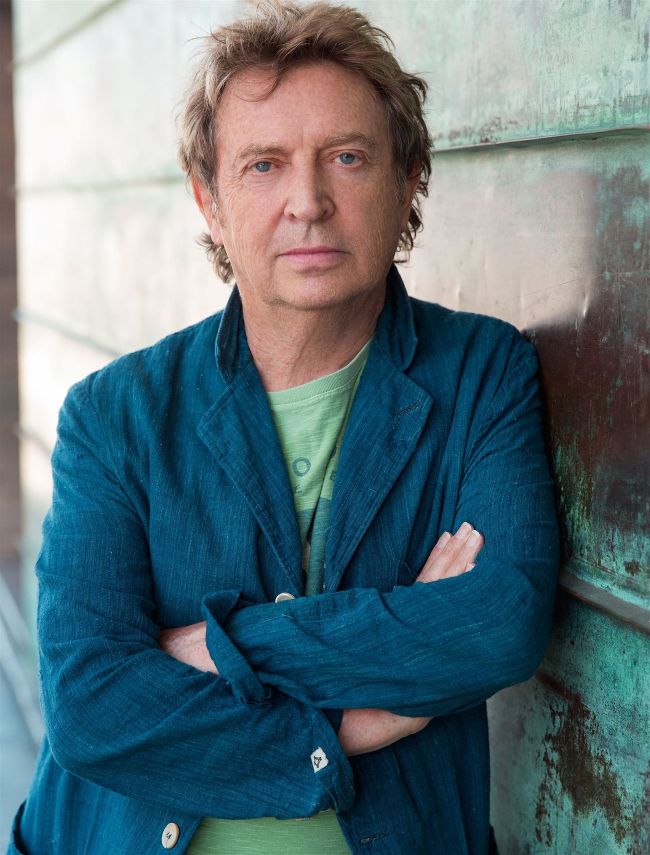
MAIN: © COPYRIGHT MO SUMMERS; INSET: GETTY
By his own judgement, Andy Summers does not like to be idle. Isn’t suited to a life of leisure. The late-March morning when we talk is a case in point. Only just returned to his home in Los Angeles from playing a run of shows in Brazil with his Police tribute band Call The Police, he was up early editing the file of photographs he took on the trip. Photography is Summers’s other great passion, seriously so. His black-and-white portraits are handsome and enigmatic. Rumpled hotel rooms and nocturnal ephemera are a speciality, the locations the exotic preserve of the globe-trotting rock superstar.
Now a spry 80-year-old, Summers has been famous for six decades as one third of The Police alongside Sting and Stewart Copeland. The band have sold 80 million records and counting, their run of hits beginning with Roxanne in April 1979. They’ve broken up twice, in 1985 and then again in 2008, rancorously on both occasions. Ten years older than both of his erstwhile bandmates, Summers was well-established as a guitarist before The Police and has continued to plough his own furrow apart from the band.
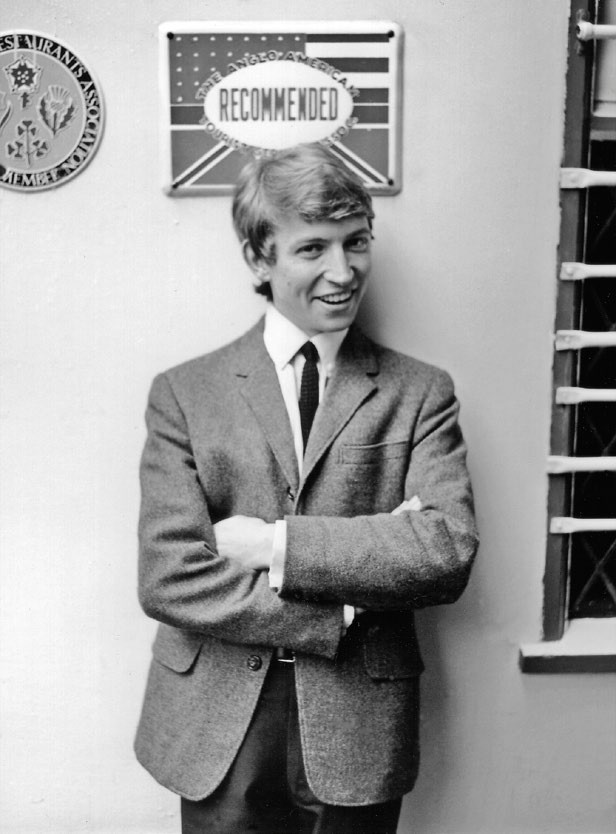
Born in the Lancashire market town of Poulton-le-Fylde on New Year’s Eve, 1942, he grew up in Bournemouth, and took piano lessons before picking up the guitar. At 19 he relocated to London with his friend Zoot Money. Operating as Zoot Money’s Big Roll Band, they gained a foothold on the capital’s then blossoming R&B club scene. By London’s Summer of Love in 1967, he and Money were garbed in white robes and kaftans and playing psychedelic rock with the short-lived Dantalian’s Chariot. Afterwards, Summers passed through the line-ups of Soft Machine and Eric Burdon And The Animals, before moving to LA for five years, where he studied classical guitar and composition at California State University.
Returning to London in 1972, he soon established himself as a regular on the session circuit. On October 26, 1975, he filled in for Mike Oldfield to perform Tubular Bells with the Northern Concert Orchestra at Newcastle City Hall. Opening the show that night was local band Last Exit, whose singer and bassist was Sting. Eighteen months later, Summers joined ex-Gong bassist Mike Howlett’s Strontium 90, which also included Sting and Curved Air’s American former drummer Stewart Copeland. Sting and Copeland, along with Corsican guitarist Henry Padovani, were already operating as The Police, and invited Summers to join. After a very brief spell as a four-piece, Summers supplanted the barely competent Padovani in The Police and within six years they were the biggest band in the world.
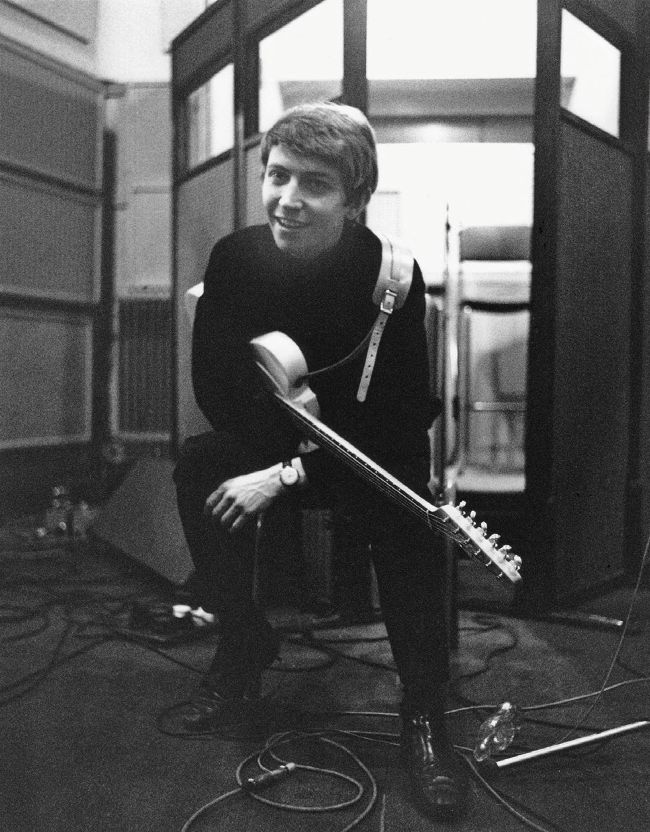
When will I be famous: Summers in the studio and (left) on a photo shoot with Zoot Money’s Big Roll Band in the mid-60s.
GETTY x2
Tomorrow Summers flies to London, where he will open his latest photography show, Harmonics Of The Night/A Series Of Glances, at the Leica Gallery in Mayfair. Previously he has exhibited in the US, Japan, Australia, Canada, France and Spain. He has a tie-in book being published, too, also titled A Series Of Glances.
He answers the phone sounding interrupted, somewhat grumpy, but he warms up talking about his photography. “‘Passion’ is actually the wrong word for it,” he says. “And it’s not a mere hobby, but a whole other part of my life.”
When did you start taking photographs seriously?
In 1979, when I was relentlessly on tour with The Police. We were surrounded by photographers all the time. Pretty much all of them women. I started to get interested in their cameras and gear. It was all very groovy and hip. They’d all turn up dressed in black, shouting instructions. I started when we arrived in New York. It gave me something to do.
Even at that point, I told myself: “I’m going to get good at this.” I had no idea I’d any talent for it, but I became quite fanatical. It’s like playing music, you get better at it if you do it a lot and if you study. I was very lucky, I was in New York a great deal and I became friends with probably the world’s greatest photographer, Ralph Gibson. He mentored me, and because of my friendship with him I got very deep into the inner circle of photography at the time.