bloody hell
Write some songs, get into studio, come out with an album. It worked before. But when it came to making the follow-up to Vol. 4, Black Sabbath couldn’t even get started. “We’d spend all day farting about and end up with nothing usable.” This is the story of Sabbath Bloody Sabbath.
Words: Mick Wall
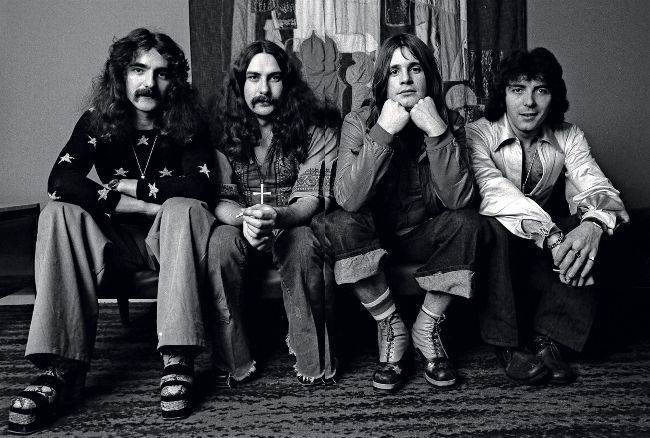
PHOTO: PETER MAZEL / AVALON
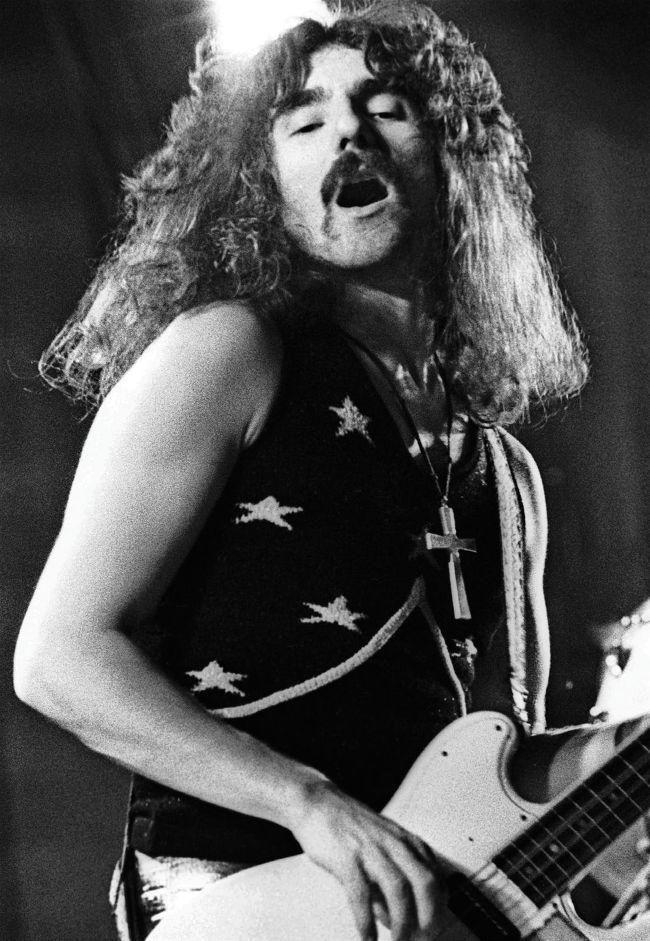
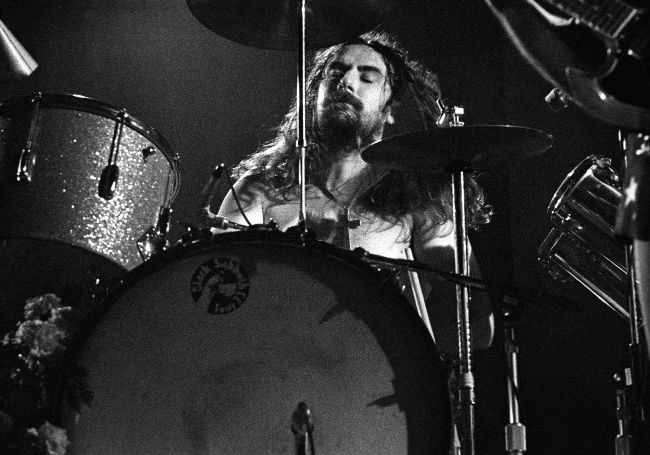
Sabbath at The Rainbow Theatre in London, March 16, 1973
Geezer Butler, Bill Ward
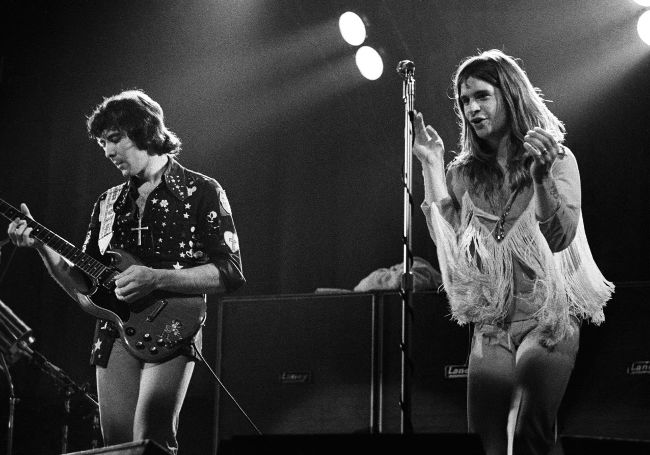
Ozzy Osbourne
Tony Iommi.
GETTY x3
March 17, 1973. Black Sabbath play The Rainbow Theatre in London’s Finsbury Park. It’s the twenty-fourth of 25 shows across Britain and Europe that they have completed in a 32-day period. Everyone is exhausted, propped up on speed, coke, dope, acid – anything they can get their hands on to keep going. It’s the band’s second of two shows at The Rainbow, their last night in London, and there will be a big party afterwards. The following day they will lie comatose, flopped across the tiny seats of a small propeller plane as it bundles them north to Newcastle for the tour’s final show, at the City Hall.
Right now, though, Ozzy Osbourne, Sabbath’s 24-year-old officially ‘loony’ singer, knows only the Rainbow spotlight and what it’s doing to his head. Grabbing onto the mic stand with both hands, to stop himself from falling, he yells into the darkness: “Are you high?” The audience, almost exclusively male, greatcoated and long-haired, respond with a muted: “Yeaahhh…” Ozzy tries again. “I said are you high?” Same response, only a little louder this time. Ozzy stares at them forlornly. “Are you high?!” he screams at the top of his voice.
This time the place erupts. “Good!” he tells them. “Cos so am I!” Tony Iommi swipes at his guitar, and the ugly, tormented riff to Snowblind detonates, bassist Geezer Butler and drummer and Bill Ward thrumming as the building shudders. This is what it’s all about in 1973, man. Not all that glam stuff you see on TV, but the fully loaded realisation of what rock music has become: hard, vicious, undeniable. And completely critic-proof.
“It was a whole new era for us. We felt really open on that album. It was a great atmosphere, good time.”
Geezer Butler
What no one knows is that a few days after the Rainbow show there’ll be a phone call that quietly cancels what should have been Sabbath’s next US tour. Promoters will be furious. But eight months on the road has nearly killed them. Now all Iommi wants is to get back into the studio and produce the masterpiece that will, finally, he is determined, prove that Black Sabbath are as important, as worthy of serious consideration, as the bands they have been outselling, like the Stones and Deep Purple; like anyone you would care to name, with the sole exception of Led Zeppelin, who are now outselling everybody.
The other members of Sabbath want it too, but not nearly as much as Iommi does. The others still feel more comfortable sitting at the back of the class, sneering at teacher. Not Iommi. He wants Sabbath to carve out their own hallowed place in the pantheon, and for the name Tony Iommi to be up there, where he feels it belongs, alongside those of Jimmy Page and Ritchie Blackmore, Jeff Beck and Eric Clapton.
As he complained in an NME interview that year: “On drawing power and album sales we can compare with groups like Zeppelin and The Who, although we seldom get recognition for the fact.” He wasn’t just a heavy rock guitarist, he complained. “I’ve got a few tapes of Deep Purple in the car, but I prefer to listen to things like Peter Paul And Mary, Sinatra, the Moody Blues and The Carpenters.” He was an artist. People didn’t understand. “I want to move to a bigger house,” he said. To get away from everybody so he could work undisturbed, the Phantom Of The Rock Opera.