MICHAEL MONROE
From Black Sabbath awakening to jam band to Hanoi Rocks to decades-straddling solo artist, via Finland, London, NYC and beyond, he’s been up, down and up again, through thrills, spills, triumph and tragedy. You could say he’s really lived the rock’n’roll life, but that would be an understatement.
Interview: Ian Fortnam
Energetic to the brink of hyperactivity, Michael Monroe, the artist formerly known as Matti Antero Kristian Fagerholm, was born on June 17, 1962. An appropriate juncture for one who’s come to inhabit, if not define, a place where rock’n’roll and glamour intersect. Monroe, a blond who’s clearly still having way more fun than is strictly decent: all Bambi-in-the-headlights eyes, rapid-fire wit, wardrobe set to ‘stun’ and instinctive charisma marks out his time of birth as “the same year that the Rolling Stones were born and two months before Marilyn Monroe died”.
A Swedish-speaking Finn whose anecdote-spattered, mid-Atlantic chat is laced with more than a little gor-blimey-guvnor Tooting Bec wreckage, Monroe grew up as the youngest of three brothers to parents entrenched in the Scandinavian media. No stranger to celebrity, his childhood was comfortable and, as with many of his generation, relatively monochrome and unremarkable until a televisual encounter with an irresistible emissary of rock’n’roll. After setting his eyes upon Ozzy Osbourne, nothing would ever be quite the same for him again.
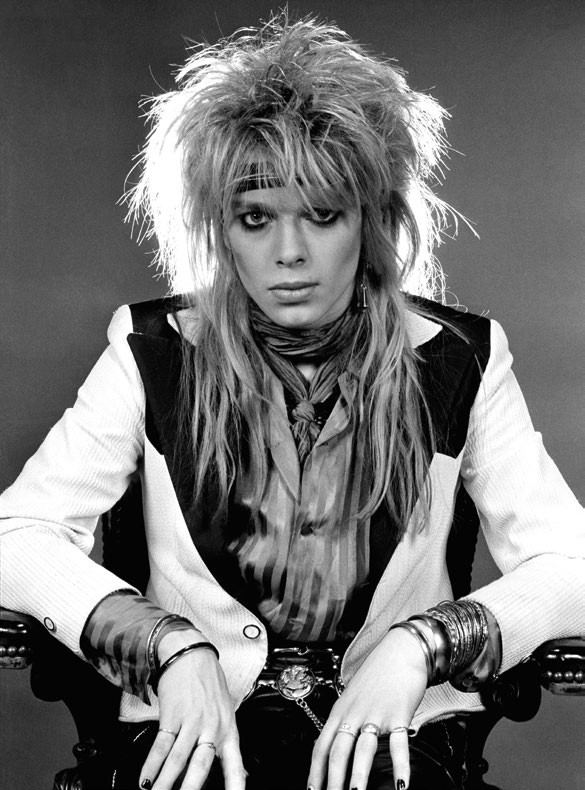
MAIN: JANSON BULPIN/PRESS; INSET: ANDRE CSILLAG/SHUTTERSTOCK
He re-immersed himself in piano lessons, taught himself to play the guitar, even studied classical flute for a year (it helped him forge an enduring relationship with the saxophone he later perfected by “sucking and blowing” along with Little Richard and Coasters records).
Graduating through Madness, an unremarkable jam band, he initially hooked up with Andy McCoy, guitarist with the punk band Briard, in their shared rehearsal room in the crypt of a church in Helsinki. Monroe revealed his plans to be a frontman, they exchanged numbers, and before you could say ‘Bangkok shocks’…
Hanoi Rocks. Hanoi Rocks were a perfect five-piece distillation of 30 years of rock insurrection: they effortlessly matched a flamboyant classic rock sensibility with a no-fucks-given punk attitude. They provided a flawless, if chaotic, template for GN’R excess to come but, tragically, the fates intervened. As Michael Monroe prepares to unleash Outerstellar, the thirteenth full-length album in a 40-year solo career that only ever seems to border on its unprecedented climax, our subject settles down to reveal what a long, strange trip it’s been.
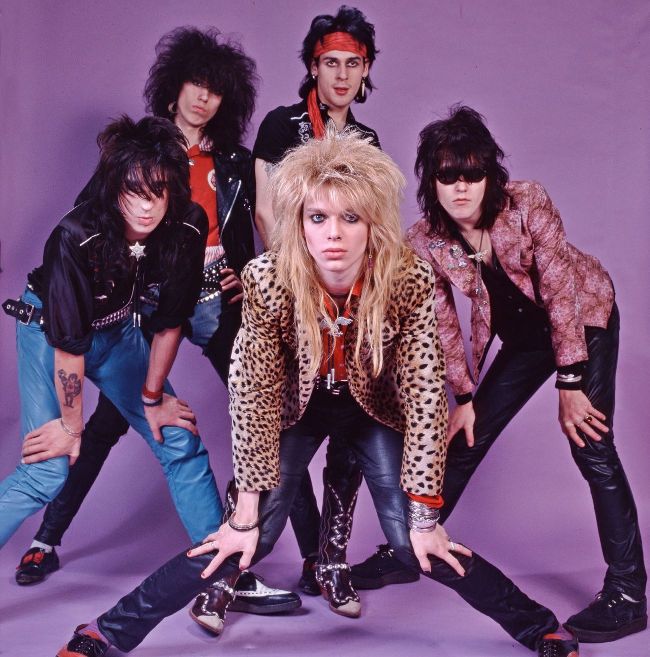
Hanoi Rocks, September 1982: (l-r) Razzle, Sami Yaffa, Andy McCoy, Michael Monroe, Nasty Suicide.
GEORGE CHIN/ICONICPIX
The fact that you took piano lessons as a child suggests you come from a musical family and that there was always music in the house while you were growing up.
Yeah, classical music. I had piano lessons when I was about five. I learned how to read music, but it was always easier for me to play by ear than read the notes.
Then, when I was eight, I saw Black Sabbath on TV, discovered that I could also play rock’n’roll on the piano, and asked my mom if I could take some more lessons. So at first I only heard classical music, but then I heard this powerful sound, saw this singer with long hair basically going crazy on stage, and I was like, wow, if I could just do that, and make a living from it… What a dream.
You grew up with a certain degree of celebrity because your dad was a well-known radio broadcaster in your native Finland?
Yeah, my dad was a radio announcer. Very soft-spoken, old-school and respected. Pretty much everybody knew him. My mother worked in radio too. She started out as a recording engineer for radio plays. That’s where my mother and father met. Sometimes when a play needed kids’ voices they’d use me and my brothers. We were in some TV commercials as well. When we first started Hanoi Rocks I was known for being my dad’s son,