COVER FEATURE
UNBLOCK WEBSITES with a... VPN
VPNs are soaring in popularity, but which services can you actually trust? Robert Irvine recommends the best paid-for and free VPNs for accessing anything you want online
WHAT YOU CAN DO
• Trick UK websites that you’re visiting them from overseas
• Watch US streaming services and regional TV and film libraries
• Stay anonymous when your VPN connection drops unavailable in your region.
• Use split tunnelling to encrypt data for specific apps
• Double your encryption by connecting to two VPN servers
• Ensure your VPN isn’t leaking your real location
Virtual private networks (VPNs) have been around since 1996, when their primary purpose was to let remote workers connect securely to corporate networks. Since then they’ve become an essential tool for protecting your privacy online and unblocking web content that’s For reasons we explain on the opposite page, VPNs have recently seen a huge surge in popularity in the UK. As we reported in Issue 716 (page 7), VPNs have become the most popular free apps in the Apple App Store and Google Play Store. The Swiss privacy company Proton claimed it saw a 1,800-per-cent increase in sign-ups for its VPN in just one weekend (www.snipca.com/55890).
There are loads of VPNs to choose from, but sadly not all can be trusted to keep your activities private and unblock restricted sites. With VPNs undergoing a boom in usage, it’s important to choose a service that won’t compromise your data and identity.
In this feature, we review the best and most trustworthy VPNs we think are worth paying for – and why. We also explain why you should be wary of installing free VPNs and recommend the top freemium services that won’t put you at risk. Additionally, we reveal how to unblock content when your VPN itself is blocked.
WHY A VPN IS MORE IMPORTANT THAN EVER
As of 25 July, when the Online Safety Act (www.snipca.com/55824) came into force in the UK, websites and apps that host adult and harmful content have been required by law to verify the age of their users. This means it’s no longer possible to access such services merely by clicking an ‘I am over 18’ button, ticking a box or entering a date of birth.
Instead, you now need to prove your age using a method such as a facial scan, photo ID (see screenshot right) or bank-account check. The Government says these measures will make it “much harder for under-18s to accidentally or intentionally access harmful content” (www.snipca.com/55826)
How does this involve VPNs?
The introduction of the Online Safety Act has significantly boosted the popularity of VPNs in the UK. Many over-18s who access adult content on their PCs and mobile devices resent now having to pass mandatory identity checks to do so.
Not only are these extra steps regarded as an inconvenience, but also a privacy concern, because they involve sharing a photo of your face and other personal data, with websites and apps. Although the Government says age-verification systems “must confirm your age without collecting or storing personal data, unless absolutely necessary”, there are valid fears about data breaches.
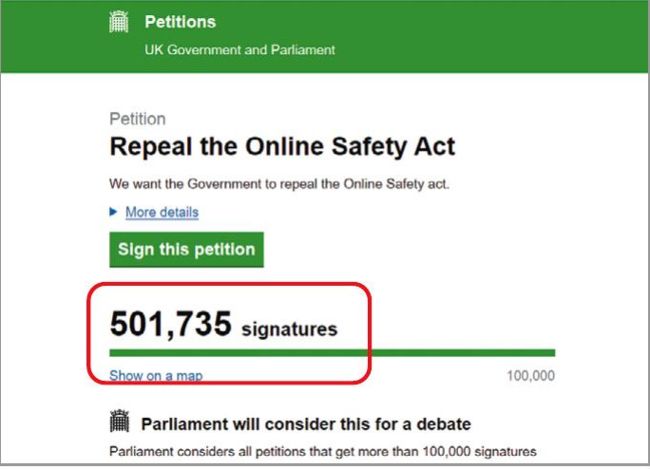
Over 500,000 people have signed a petition to repeal the Online Safety Act
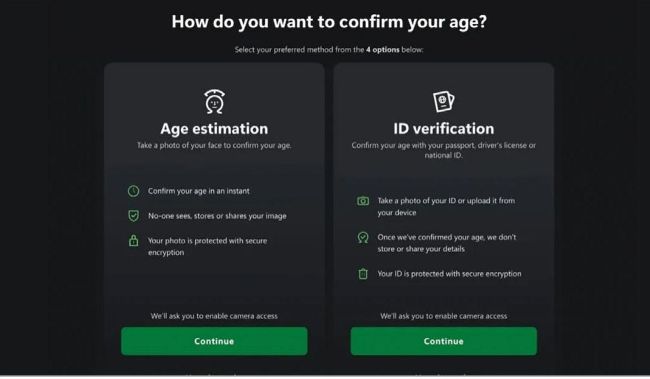
Websites and apps are using various methods to verify the age of their users including facial scans and ID uploads
Another complaint is that the new law doesn’t only affect adult sites, but any otherwise ‘safe’ service that may host content deemed harmful to children. This includes social networks, streaming services, gaming platforms, dating apps and online forums. A petition on the ‘UK Government and Parliament’ website to ‘Repeal the Online Safety Act’ (www. snipca.com/55829), which has attracted over half a million signatures (see screenshot below), specifically mentions hobby forums. It wants the Government to introduce “proportionate legislation rather than risking clamping down on civil society talking about trains, football, video games or even hamsters because it can’t deal with individual bad faith actors”.
A VPN solves these problems by making you appear to be outside the UK and the remit of the Online Safety Act. This means sites and apps won’t ask you to prove your age. While we can’t condone using VPNs to bypass the new law, they still have plenty of other valid uses.
Which ‘safe’ services have complied with the new law?
The social networks X (formerly Twitter), Reddit and Bluesky have complied with the Online Safety Act by introducing age-verification checks for UK users. With the first two, you’ll only be asked to prove your age to access adult content, such as Reddit’s NSFW (not safe for work) sub-reddits. Bluesky has gone further by disabling its direct-messaging feature until you prove you’re an adult.