NIGHT OF THE LIVING DEAD
This month, Dead & Company begin a 24-date residency at the The Sphere in Las Vegas, adding another twist to the long, strange afterlife of the GRATEFUL DEAD. To celebrate this run of shows, we look back at 20 classic live Dead shows in the company of bandmates, associates and Deadheads – from the countercultural highs of the Acid Tests, through their ’70s imperial phase to their post-Jerry iterations and beyond. “We found adventure in music,” Bob Weir tells Rob Hughes. “That was all we needed, the rest of it came naturally.”
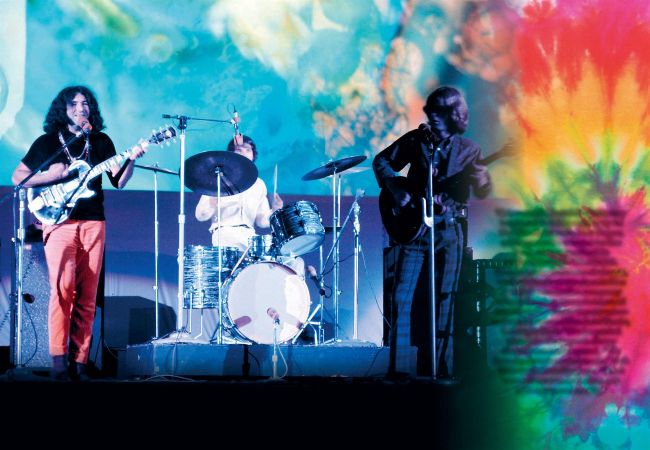
Young and Grateful: the Dead at the Hollywood Bowl, 1967
ZUMAPRESS,INC. ALAMYSTOCKPHOTO;YINYANGGETTYIMAGES
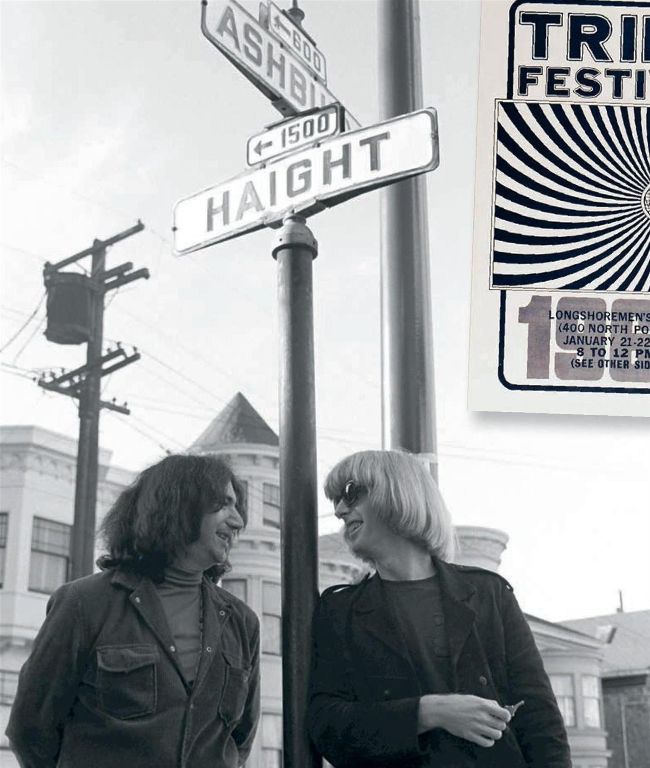
JerryGarcia andPhilLesh onthecorner ofHaightand Ashbury,San Francisco,1966
TEDSTRESHINSKY/CORBIS/CORBISVIAGETTYIMAGES
IT’S been a remarkable journey by any standards. Beginning in the early summer of 1965, Grateful Dead – Jerry Garcia, Bob Weir, Phil Lesh, Ron ‘Pigpen’
McKernan, Bill Kreutzmann and, later, Mickey Hart – played over 2,300 shows across the following 30 years. Their studio albums
could be spectacular, but the band’s creative worth was best measured on the road, where songs morphed into intense, lengthy explorations of sound, rhythm and texture.
“The studio was a clinical environment, and we didn’t have the ready response that we got from our live audiences,” Weir explains to Uncut. “It wasn’t the MO of popular music, but we listened to a lot of jazz musicians and their approach seemed like a lot of fun to us. We were going to find more adventure in that approach.”
No two gigs were the same. The absence of setlists meant that anything could – and invariably did – happen on any given night. Spontaneity was key, the Dead alchemising rock, blues, jazz, folk, psychedelia and country into their own movable design. Such variety and prolificacy has spawned an entire side industry of bootlegs and official live albums (93 and counting), alongside archival series like Road Trips, Dick’s Picks and, most recently, Dave’s Picks, courtesy of current archivist David Lemieux.
The Dead enjoyed a number of strongholds down the decades. At home in San Francisco, the Carousel, Fillmore Auditorium and the Avalon Ballroom were early favourites, superseded by Winterland during the ’70s. East Coast forays often took them to Fillmore East and, later, Nassau Coliseum and Madison Square Garden. In between were regular stop-offs at places like Maryland’s Capital Centre, Hampton Coliseum in Virginia and Philadelphia’s Spectrum.
And so it continues. Despite Grateful Dead disbanding after Garcia’s death in 1995, the remaining members have pressed on in various forms. For the past nine years, Dead & Company – Weir, Hart and Kreutzmann, plus John Mayer, Jeff Chimenti and Oteil Burbridge – have been expertly curating the legacy on tour. The sextet’s ultimate destination is Sphere, the immersive Las Vegas arena where they’re currently embarking on a 24-show weekend residency.
As Grateful Dead’s 60th anniversary looms, it’s possible to draw a through-line from the sensory overload of Ken Kesey’s formative Acid Tests to the haptic technology and 4D effects of the Sphere shows. What better time to chart this longest and strangest of trips than by highlighting 20 essential stops along the way, with the help of band members and close associates.
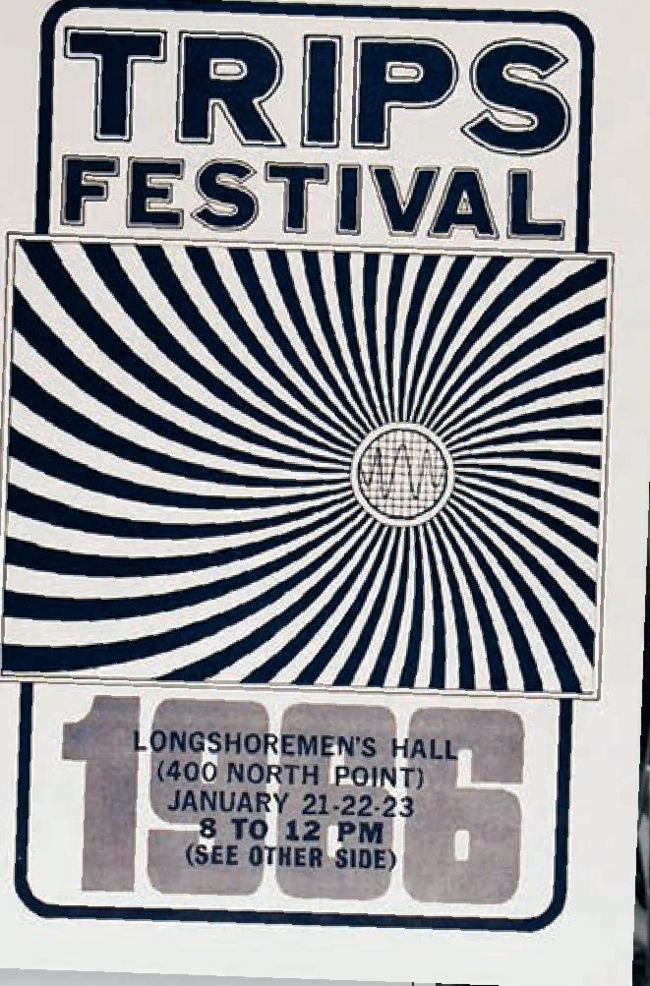
TRIPS FESTIVAL, LONGSHOREMEN’S HALL, SAN FRANCISCO
JANUARY 22 – 23, 1966
Thousands of Bay Area freaks flock to the Merry Pranksters’ latest and biggest Acid Test, an experience further heightened by strobes, giant film projections, poetry, dancing and house band the Grateful Dead.
DENISE KAUFMAN (Prankster): The Grateful Dead were very much part of the upwelling that was the Acid Tests, playing with whatever was going on in the room at the time. I think they were as much consciousness explorers as everybody else. Ken Kesey talked about the Grateful Dead being warriors.
CAROLYN GARCIA (Prankster, and Jerry’s former wife): The Grateful Dead went on for hours and hours. They’d play for alittle while, stop, then start up again. It definitely suited Jerry and Phil and Bill. I think Pigpen and Bob Weir were alittle taken aback by some of the stuff that was going on, but they bravely lasted.
I think that beautifully dressed dancing girls kind of helped.
BOB WEIR (guitar/vocals): There’s atelepathic link that happens between any group of musicians that are playing together. We became aware of that during the Acid Tests. That sort of came to the fore, so it just became one of the colours in our palette, one of the places you go when you’re fishing for something. We were able to plumb each other’s minds, telepathically.
WAVY GRAVY (Prankster): The magnificence was the love affair between the band and their audience. The Grateful Dead would create this ball of love and just bounce it out into the audience. They would take it in, double it and bounce it back into the band. So it went on. If you were in an altered state, you could actually see this transpire.
(l–r) Jerry Garcia, Pigpen, Phil Lesh, Bill Kreutzmann and Bob Weir at Cafe Au Go Go, NYC, June 8, 1967
060-068 FEATURE Grateful Dead js m in. Looking back, the repertoire was limited but wildly adventurous. Every show we played had two extended jams which were our mainstays: “St Stephen/The Eleven/Love Light”, “Alligator/ Caution” and any number of “Dark Star”s. BOB WEIR: It became apparent that we were up to something a little different than most musical ensembles were trying to achieve. We took a lot of direction early on from the John Coltrane Quartet and from Miles Davis, those kinds of outfits which relied heavily on improvisation – but also on listening closely to each other and working off what the other band members were saying.