REDISCOVERED
VARIOUS ARTISTS
Sam Cooke’s SAR Records Story 1959-1965
Looking back on Sam Cooke’s short-lived gospel-pop label
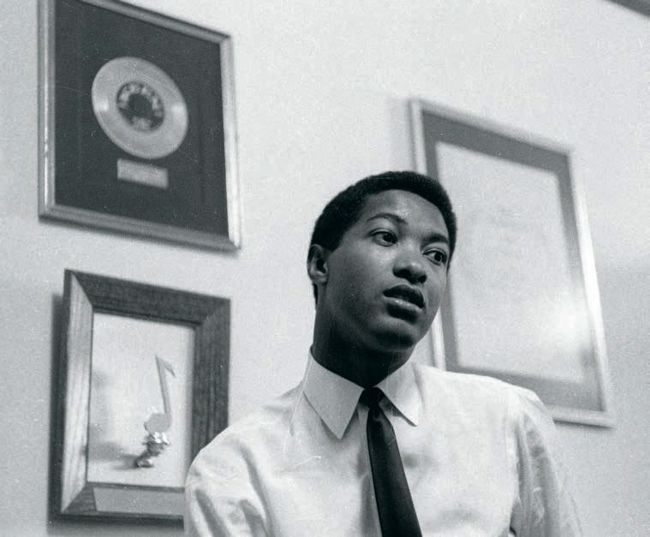
Sam Cooke inhisoffice at SAR Records, 6425Hollywood Boulevard circa1961
JESSRAND MICHAELOCHSARCHIVES GETTYIMAGES
ABKCO
8/10
AT the beginning of their 1964 single “Looking Back”, The Soul Stirrers let loose a glorious fanfare of gospel harmonies, but they’ve barely settled into the song when Sam Cooke – formerly the group’s singer and now their producer and head of their record label – interrupts them. They start again, with Jimmy Outler delivering an anguished “ooooh” before Cooke again stops the tape and asks for “a little more air between that ‘oh’ and ‘looking back’, Jimmy. Just take your time.” Later, he stops them again to explain the idea of each life having a slate across which our experiences are written. The false starts culminate in the full version of “Looking Back”, a lush hymn to regret that sets their vocals against folksy guitar strums and a curious flute. Like so much of SAR Records’ output, it’s smooth and sophisticated, yet loose and casual.
A 4LP reissue of the 2CD compilation from 1994, Sam Cooke’s SAR Records Story 1959-1965 includes many similar studio moments: bits of between-take chatter to introduce the song and to underscore the labour and sweat that went into each SAR single. These moments also show how closely Cooke worked with all of his artists, pushing them to realise his vision of pop and gospel in the era of rock.


With his friend and mentor JW Alexander, Cooke co-founded SAR in 1959, the same year Berry Gordy Jr started up Motown in Detroit and Jim Stewart established the first iteration of Stax in rural Tennessee. Initially he signed small harmony groups rather than big choirs or solo singers, and while there are only a handful of artists on the roster, each had its own personality, its own style and approach. The Soul Stirrers emphasise smooth, clear harmonies and emotional restraint, which lends unexpected power to “Oh Mary Don’t You Weep No More”. By contrast, The Womack Brothers sound grittier and more urgent, thanks to Bobby Womack’s charismatic performances on “Couldn’t Hear Nobody Pray”.