Best of the best.
LASAGNE
No shortcuts. No cheat ingredients. Our best of the best series takes the view that if something’s worth doing, it’s worth doing right. Each month we take a deep-dive into a classic dish, delving into the processes and analysing why it tastes so good, then we’ll give you our ultimate recipe. This month: Pollyanna Coupland peels back the layers of lasagne
RECIPE AND FOOD STYLING POLLYANNA COUPLAND
PHOTOGRAPHS INDIA WHILEY-MORTON
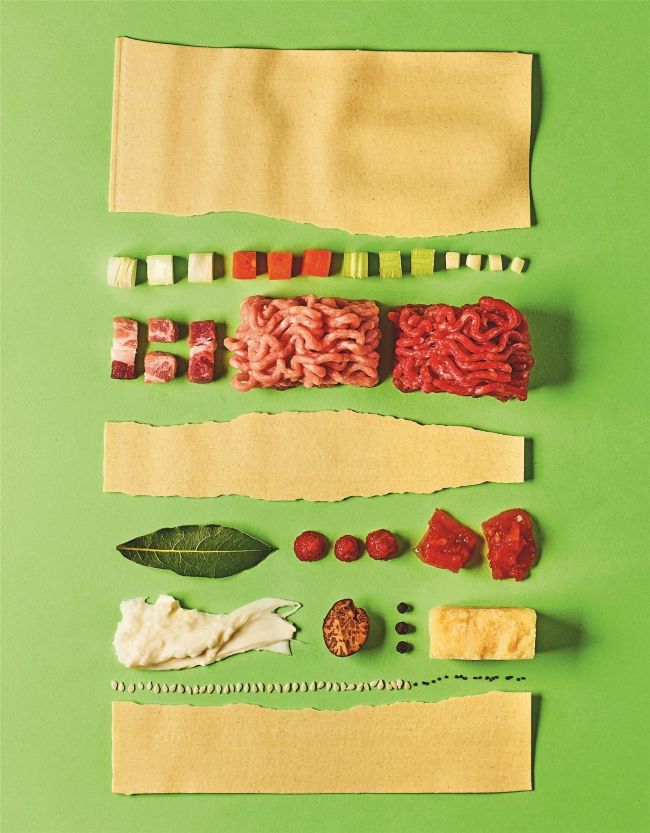
Is there anything more comforting than a big slab of lasagne? I don’t think so. The classic layered pasta dish comes from Emilia-Romagna, that magical region of Italy responsible for parmesan, balsamic vinegar and more, but lasagne is now world famous, having made its way onto British restaurant menus and weekly shopping lists. It’s also a dish that (for better or worse) is open to interpretation. As long as you’re layering up sauce and sheets of pasta then baking it, a recipe tends to fall into the lasagne category. While I’m not veering from the original concept of lasagne (meat ragù, bechamel and pasta), I certainly can’t claim that my recipe is ‘authentic’. But in my opinion, this is the best version of that dish: sturdy, rich, balanced and the perfect culinary ballast against the chill of winter.
DON’T RUSH YOUR RAGÙ
Any good lasagne lives or dies on the quality of its ragù. The meat sauce is where your flavour comes from; the pasta itself is really there for structural integrity, while the bechamel adds creamy richness and glues everything together. As the Italians often do, I’ve opted for a half beef mince, half pork mince approach. Pork mince is fattier and more tender than beef, resulting in a softer texture and a more flavourful filling. Cook the mince in a large pan over a high heat, ladling out any liquid released by the meat so it gets a good caramelisation – it’s ready when it’s properly brown, rather than a dull grey.