Take me to THE WATER
New Brunswick, on Canada’s east coast, is the historical land of the Acadians, early French settlers of North America. It’s a place of big skies, blue ocean and peaceful rivers, and those waters teem with wonderfully pure seafood. Hugh Thompson hits the Trans-Canada Highway and tries it all, from the workaday (smelts and mackerel) to the luxurious (caviar and lobster). Around here they like to eat it fresh… Very fresh
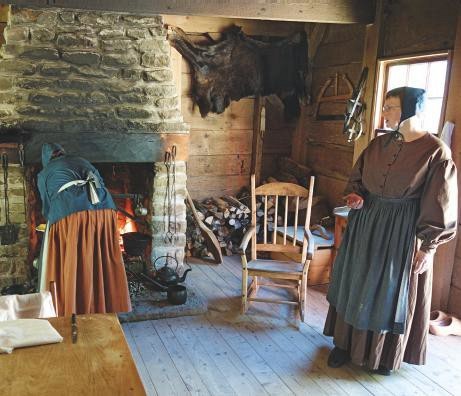
Beware moose on the Trans-Canada Highway; at the Fils du Roy distillery, time waits on the whisky; fresh crab for sale in the fishing town of Caraquet; 18th-century life in the Historic Acadian Village
hungry traveller.
I’d come to New Brunswick to learn about Canada’s first settlers, the Acadians, and how they survived the brutal winters, but arriving in July I was pleasantly surprised to be motoring along an empty Trans-Canada Highway in a balmy 25°C with the biggest bluest skies above me.
First stop was Moncton, a busy transport hub. In the Tide & Boar (tideandboar.com) microbrewery and gastro pub, I met owner Chad Steeves, who offered me a Sour Otis Strawberry Pie ale – named after his grandad and brewed with wild strawberries and pie crust. Like the beer, Tide & Boar’s menu had plenty of creative touches. Chad’s chefs do a lot of pickling, smoking and curing of fish and meat in-house. Oysters are a big thing in New Brunswick so Chad shucked a few local ones for me and explained about oyster ‘terroir’. Blue pearl oysters from the muddy Northumberland strait, were roundish and tasted sweet and earthy; oysters from the Bay of Fundy, washed by the strong Pacific tides, were bigger and more saline. The next day chef Pierre Richard (see recipe, p120), who creates exquisite dishes at one of Moncton’s smartest restaurants Little Louis’ Oyster Bar (littlelouis.ca), took me to see oyster farmer Donald Caissie. Donald has 2 million blue pearl oysters in 800 cages bobbing just below the surface of the sea. We helped flip over some of the heavy cages to let the sunlight kill off algae and mussels growing on the shells, giving the oysters the clean look loved by restaurants.
Pierre and Donald talked about how foraging in the sea and on the seashore helped keep the Acadians alive. It’s part of their history and still a popular activity. As if to prove it, Donald brought out fishing rods to troll for mackerel on the way back. On shore, in the car park, Pierre opened up the boot of his car for an impromptu tailgate picnic. He deftly filleted a couple of the mackerel we’d caught and, with a splash of lemon juice and a scattering of pickled radishes and sea salads, he’d soon created a beautiful plate of food. The mackerel was so tender and fresh-tasting. Donald opened a few of the oysters and Pierre added a dash of cocktail sauce spiked with kimchi – juicy, salty, with a sweet note and then a hit of heat. It was a beautiful feast but I did find myself longing for something cooked…