Best of the best.
CAESAR SALAD
No shortcuts. No cheat ingredients. Our new series takes the view that if something’s worth doing, it’s worth doing right. Each month we’ll take a deep-dive into a classic dish, delving into the processes and analysing why it tastes so good, then we’ll give you our ultimate recipe. First up: Pollyanna Coupland restores the reputation of her favourite salad
RECIPE AND FOOD STYLING POLLYANNA COUPLAND
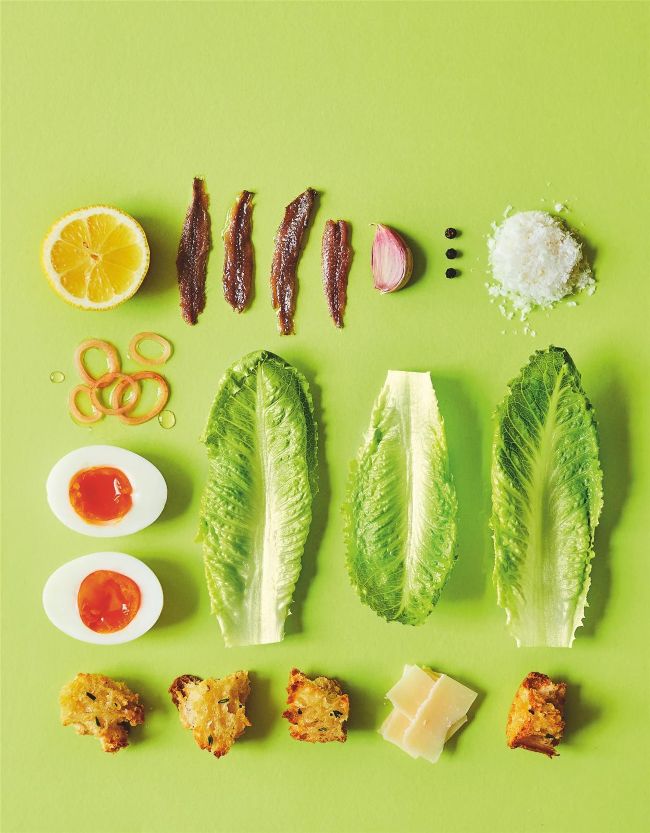
PHOTOGRAPHS INDIA WHILEY-MORTON
Probably the world’s most famous salad (and, in my opinion, the world’s best), the caesar throws up many questions when in search of the perfect recipe. Worcestershire sauce or anchovies? What about mustard? How should the parmesan be added? What else can you throw in there before it becomes a different salad altogether?
I’m not going to insult you (or the salad’s original creator, Caesar Cardini) by incorporating dairy into the dressing, nor am I afan of the unnecessary addition of pallid slices of chicken breast. Done properly, caesar dressing is perfectly creamy and flavourful enough to turn humble leaves and old bits of bread into something wondrous.
As with many classic dishes, caesar salad was invented by mistake. It’s also a relatively recent creation. In 1924, Mr Cardini, an Italian chef working in Tijuana, Mexico, was running low on ingredients and needed to knock something together with what was left in the fridge. A made-up-on-the-spot dressing for a handful of leaves and croutons was given flair by mixing everything together tableside. Within a decade, it was appearing on restaurant menus throughout the US. Nearly 100 years later, it reigns supreme in the salad charts.