Welcome to your spring kitchen
RECIPES, FOOD STYLING AND STYLING GILL MELLER PHOTOGRAPHS ANDREW MONTGOMERY
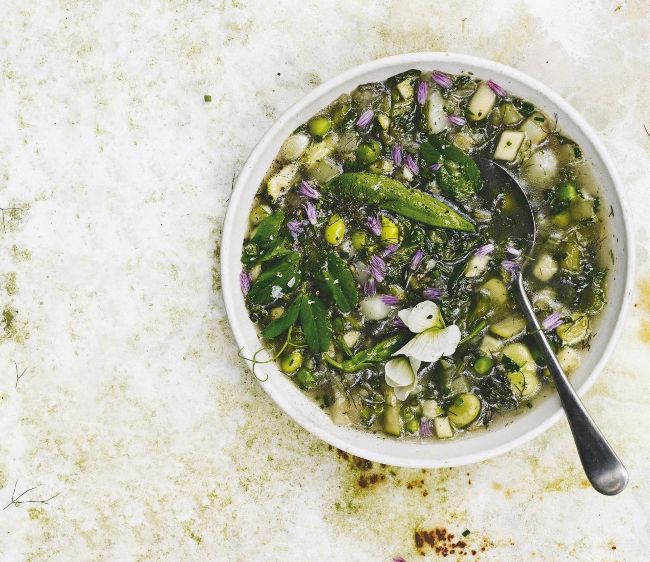
GILL’S SPRING SOUP Artistry from nature’s palette
The last few months have been incredibly painful for everyone, but it’s clear that if we pull together, we can make a massive difference. Since the lockdown I’ve begun to feel more engaged with life and the things that grow than I ever have before. There used to be so many things I simply didn’t notice that now have real importance. For the most part, it’s simple stuff, like the taste of water, the differences between trees or the sound of the birds singing. I’ve learnt, through all this, that even the simplest things in life can make us happy and the smallest gestures of kindness are so important.
Root Stem Leaf Flower is a book for anyone who enjoys cooking and eating good food but it’s also a book for people who are interested in connecting with the environment, who understand the global challenges we’re facing and who want to do their own bit to help.
I believe the recipes in this book can help you do that, simply by inspiring you to cook more seasonal fruit and veg every day. The changes we make now, no matter how small, will create a brighter, greener future for everyone because the food we eat, and how it’s produced, is intrinsically linked to the state of the natural world
Wild garlic pesto
MAKES ABOUT 600G. HANDS-ON TIME 10 MIN
MAKE AHEAD
Keep the pesto in a sealed sterilised jar in the fridge for up to 2 weeks. For how to sterilise a jar visit deliciousmagazine.co.uk/how-to-sterilise-jars.
FOOD TEAM’S TIP
Wild garlic grows wild from late March to May (or see Gill’s advice, above – use a generous bunch each of basil and parsley).
• 100g hazelnuts
• 350g wild garlic leaves (see tip)
• 100g hard sheep’s cheese, finely grated (vegetarian if necessary)
• 150ml extra-virgin olive oil, plus extra to seal
YOU’LL ALSO NEED…
• Clean cotton cloth or tea towel; food processor
1 Toast the hazelnuts in a small dry pan set over a medium heat for 3-4 minutes, shaking the pan every so often so they brown evenly. Tip out onto the cotton cloth or tea towel, fold over the corners to enclose the hazelnuts, then rub vigorously to loosen the skins. Set aside.
2 Put the wild garlic leaves in the bowl of the food processor and pulse briefly to break them down. Once the leaves are coarsely chopped, add the peeled toasted hazelnuts and pulse again. Now add the cheese and the olive oil and pulse again until you reach the desired texture. Season the pesto generously with salt and pepper and adjust the consistency with more olive oil, if you like.
3 Use a rubber spatula to scrape the pesto out into a large sterilised jar (see Make Ahead). Tap the jar on a work surface to help settle the pesto, then trickle a thin layer of olive oil on top to seal. Seal and store the pesto in the fridge, where it will keep for up to 2 weeks.
PER 50G SERVING 153kcals, 15.3g fat (2.9g saturated), 3.4g protein, 0.6g carbs (0.3g sugars), 0.1g salt, 0.7g fibre
The first shoots of wild garlic usually appear in March and look like brilliant-green spear tips piercing the land. When I see them, I know spring is really here. Wild garlic, or ramsons, as they’re also known, grow well around the edges of woods or down by streams where the light is often dappled and gentle and the earth is damp. If you get a chance to gather some garlic leaves they make an intense pesto, but if you can’t get out for a forage, you can make an equally delicious pesto using a mixture of fresh basil and flatleaf parsley with a crushed garlic clove.