Photo Active
10 things you can shoot, edit and create this month, from bluebells and boats to film noir and steam locomotives
PART 5 OF 6
Part 6in issue 282, on sale 24 May
1 | LANDSCAPES
Get creative with these compositional tricks
More tips for top scenics by Mark Bauer and Ross Hoddinott
In addition to the rules of composition – though perhaps they are better thought of as general guidelines – there are a number of other compositional tricks you can use to organise the frame and draw attention to the main subject. These are the use of frames within frames, movement and texture, and shapes and patterns.
Frames within frames
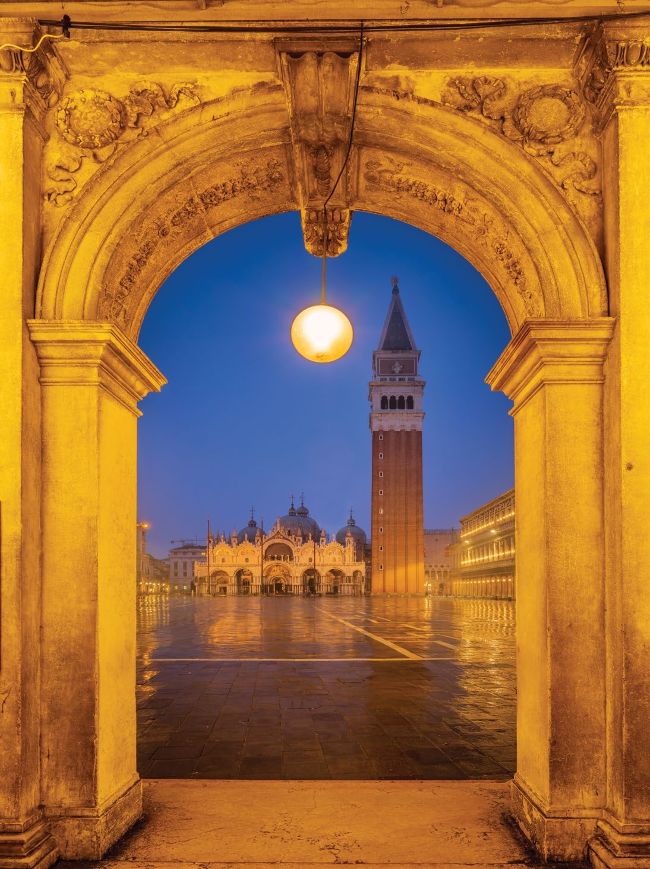
One way to keep a composition tight and focus attention on the main subject is to use a natural frame, such as an overhanging branch, archway or other object, to frame the principal subject. This technique is popular with landscape and architectural photographers and has become something of a cliché but in the right circumstances, it can still be effective.
By framing the scene, attention is focused inwards to the main part of the picture. Rock formations, archways, branches and leaves make excellent natural frames. It’s best to be bold when using such frames for your landscapes. It’s also effective to partially frame a view, perhaps with an arrangement of rocks at the bottom of the frame (see image at the bottom of page 47 in the book). This works particularly well if there is a strong sky above the landscape, which frames the top of the picture.
Movement and texture
Although it isn’t always strictly necessary, landscape compositions often work best when they have a strong centre of interest. The other elements in the picture should direct or lead the eye to that centre of interest. This can be achieved by using lead-in lines (see pages 46-47 in the book) or by employing objects that point into the frame. One way to create lines and pointers is to use movement.
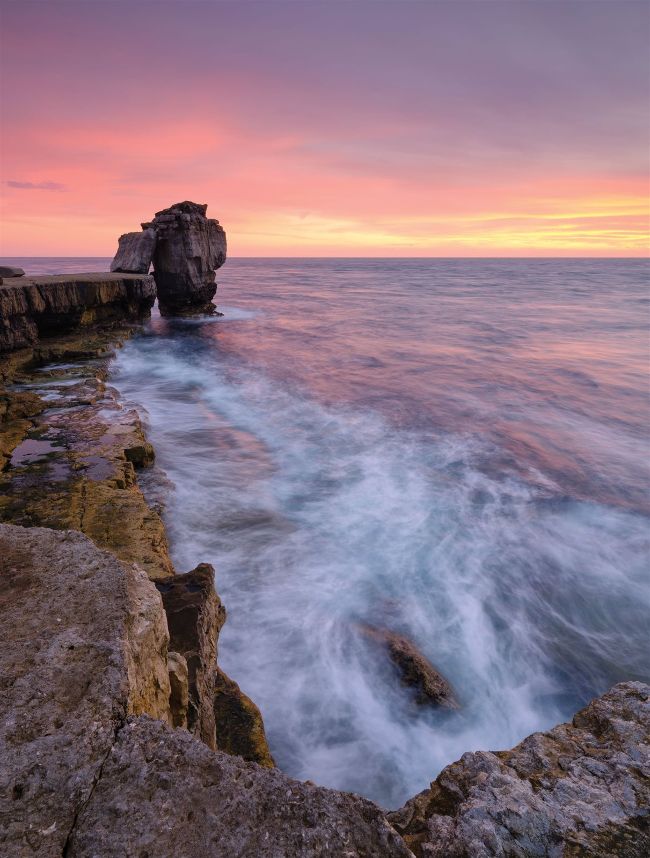
If you use solid neutral density (ND) filters to extend exposure times (see pages 81–82 in the book), you can create lines and pointers from the resulting patterns of movement –for example, the ‘S’ curve created by a wave breaking on the shore.
In macro (extreme close-up) shots, texture can be a subject in itself, but in a landscape, texture can make an effective foreground. Used well, it can make the viewer want to reach out and touch it, pulling them into the picture. Contrasting textures, such as hard and soft, can also be used to create tension within a composition.
Mark Bauer and Ross Hoddinott
Archway This archway, lit with the golden light, makes an excellent frame for a slightly different take on a well-known view.
Camera settings: Fujifilm GFX 50S, 23mm, 7 secs at f/16, ISO 100.
Mark Bauer and Ross Hoddinott
Rocky ledges Shooting with a long exposure as the waves wash over the ledges adds texture to the foreground. The waves act as strong lead-in lines, guiding the eye to the focal point in the image.
Camera settings: Fujifilm GFX 50S, 23mm, 3 secs at f/16, ISO 100, two-stop med ND grad, four-stop ND
Shapes and patterns
We have a predisposition towards finding a natural order in scenes, even in chaotic environments. When we look at a scene, we will try to impose order by picking out shapes and patterns. For example, if we see three trees in the landscape, we will tend to see them as a triangle, even if the spacing is uneven. Photographers can help the viewer in this search for order by picking out shapes and repeating shapes or patterns.
Different shapes have different aesthetic properties. Squares and rectangles are static and tend to block a view. Circles are calming. Triangles are dynamic, leading the eye into a picture and making good pointers for highlighting subjects. Atriangle suggests stability with its base at the bottom of a picture, or imbalance and precariousness with its apex at the bottom.
Mark Bauer and Ross Hoddinott
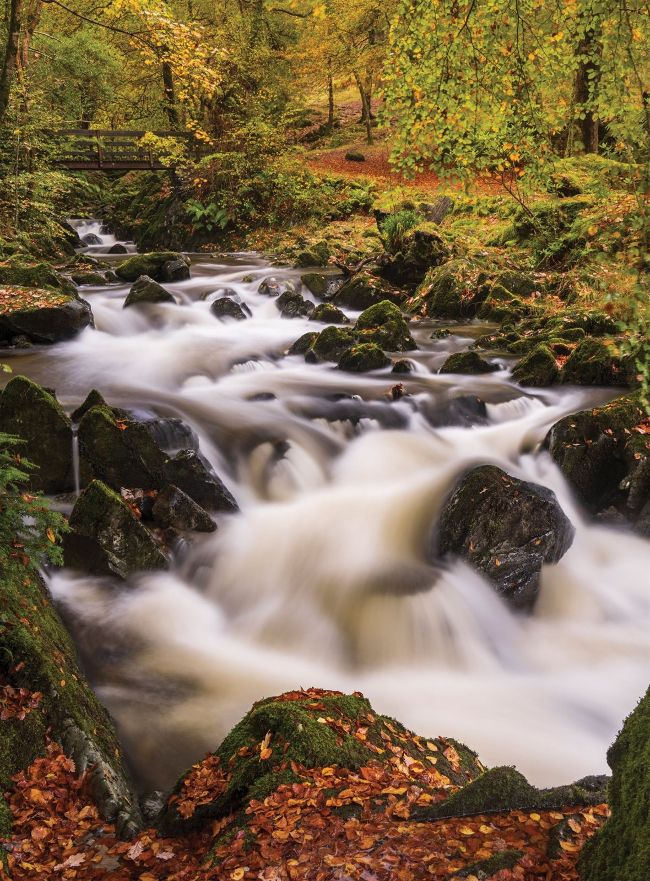
Cascading water The water cascading over the foreground rocks in this river scene creates patterns that help lead the eye into the frame.
Camera settings: Nikon Z 7II, 24-200mm (at 34mm), 10 secs at f/11, ISO 64, polariser
BUY THE BOOK
The Landscape Photography Workshop by Mark Bauer and Ross Hoddinott is published by Ammonite Press, priced £16.99/$26.95. www.ammonite press.com
Next issue: Breaking the rules
Once you have learned the rules of landscape composition, there’s nothing to stop you from breaking them, if what you are doing makes for a great image. In the next issue, discover how to break the rules. See part 6 in in issue 282, on sale 24 May.
2 | PORTRAITS
Film noir
Wendy Evans opens an office on the wrong side of town and investigates the dark stylings of classic American crime melodrama
Wendy Evans
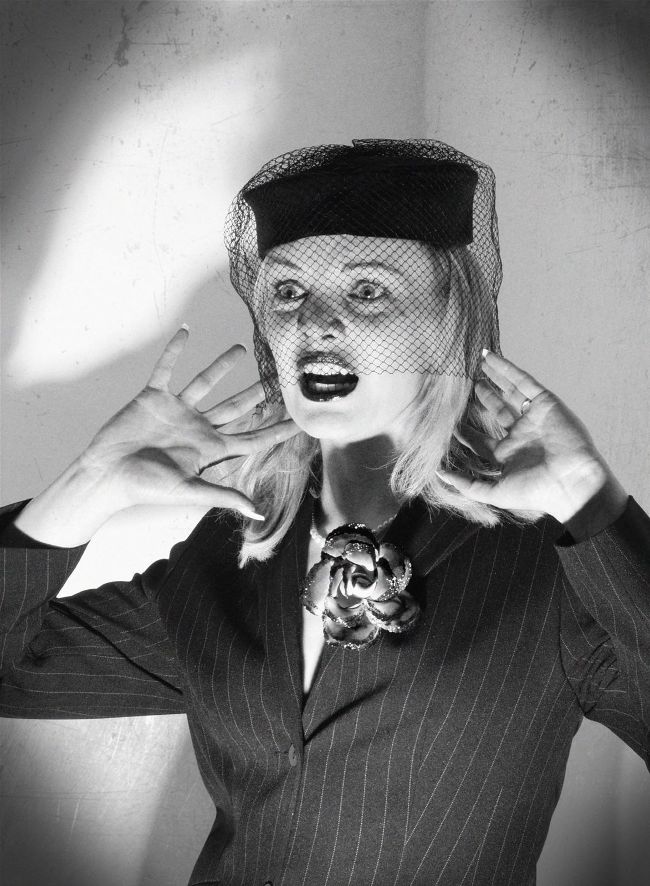
The double crosses, deep-rooted cynicism, tangled plots and flashbacks are all classic traits of the 1940s and 50s film noir era. However, it’s the unflattering camera angles, the deep shadows and dramatic lighting that differentiate film noir from just another detective story. To bring this aesthetic to your portraits is easier than you think and can be achieved without specialist lighting equipment.