Will Burrard-Lucas
INTERVIEW
Graeme Green meets a wildlife photographer who’s always ready to go the extra mile

Will Burrard-Lucas
Will Burrard- Lucas
Wildlife photographer
Will Burrard-Lucas’s work has appeared in The New York Times,The Guardian, National Geographic and more. He has been recognised with awards in GDT European Wildlife Photographer of the Year, Sony World Photography Awards and Travel Photographer of the Year. His other books include Land of Giants, about Kenya’s tusker elephants, and The Ethiopian Wolf.
Will created the BeetleCam, a remotecontrolled buggy camera, in 2010, and has developed camera traps for photographing rare and nocturnal animals. He’s the founder of Camtraptions (www. camtraptions.com), a company specialising in products for remote and camera trap photography, and WildlifePhoto.com, an online resource for nature photographers.
Will has worked with conservation groups including WWF, African Parks, Tsavo Trust and the Ethiopian Wolf Conservation Programme. He’s also one of the photographers supporting the New Big 5 project (www.newbig5.com).
www.willbl.com
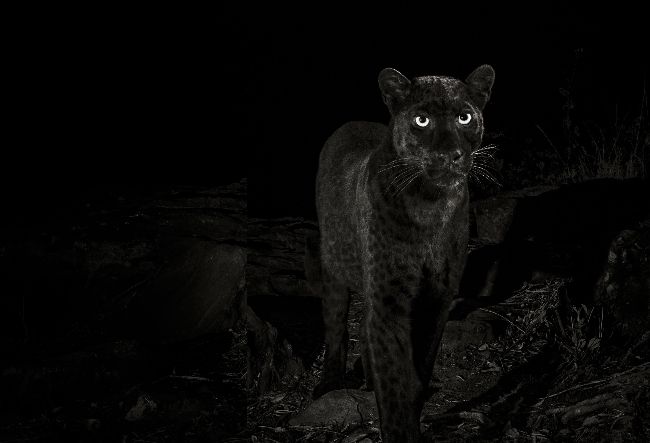
Will’s last photographof the black leopard, Laikipia County, Kenya, January 2019.
D etermination is essential to taking outstanding wildlife photos, but Will Burrard-Lucas takes determination to the next level. Not only does he work on long-term projects, often photographing rare and endangered species, but he has also produced his own equipment for that task, including camera trap systems and the BeetleCam Bagheera]. But I never met anyoneBagheera]. But I never met anyoneremotecontrolled buggy camera. “You just have to go as far as it takes to get the photos you have in mind,” he says.
Will’s most recent project saw him go to even greater lengths: he spent over two years searching for and photographing a rare black leopard in Kenya’s Laikipia County. The stuff of myth and legend, black leopards (also referred to as black panthers) get their striking colouration from an excess of the dark pigment melanin, a recessive genetic variation (melanism) that’s the opposite of albinism.
Will’s leopard photos and story are brought together in his new book The Black Leopard, along with photos of other animals, from wild dogs to rhinos, and a memoir of his life so far, including his childhood in Tanzania, his technological inventions and his work with conservation organisations. Here, he talks about his black leopard quest, the tech innovations of the future, and putting his photography to good use in the fight to protect the world’s wildlife.