TECHNIQUES
LANDSCAPE EDITING MASTERCLASS
Discover the editing secrets behind the most popular multiple exposure landscape photography techniques
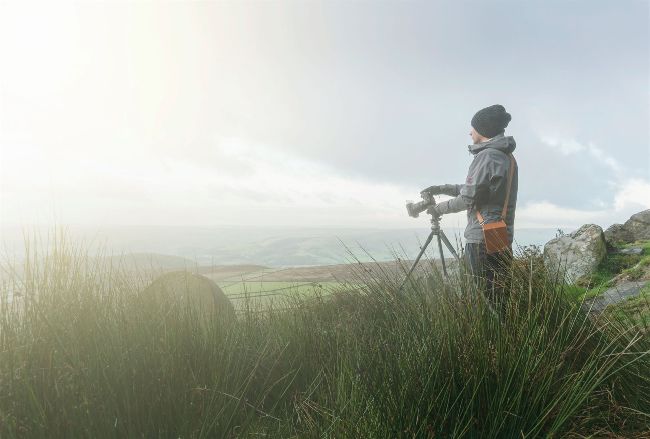
Balancing act As photographers, we’re often inclined to put more effort into the shooting side of the image-making process, but editing is just as important
All images © James Abbot
Just like football, photography is a game of two halves. On the one hand, you have shooting, where we aim to get everything as close to perfect as possible in-camera to help achieve the best image quality; while on the other there’s editing, where we intend to make our images look their very best – the icing on the cake.
Some purists believe that shooting JPEGs is the most faithful approach to photography because editing hasn’t been applied, but this is untrue because JPEGs are processed incamera according to the picture style set. So, it’s always better to take full control yourself rather than leaving image processing to an engineer working for a camera manufacturer.
There are some landscape photography techniques where the shooting and editing stages go hand in hand – the two are inextricably linked – and these techniques are heavily dependent on editing because they involve shooting multiple exposures to ultimately improve and increase detail in several different ways.
Focus stacking, HDR photography, panoramas and HDR panoramas are four such landscape techniques. We’re going to explain how to shoot each with tutorials on how to process images for the techniques to achieve the most natural results possible. By the end of the tutorials, you’ll be able to shoot these techniques individually or combine them to take the level of detail in your landscape shots to new heights, ultimately, giving your shooting and editing skills the shot in the arm they deserve.
James Abbott
James Abbott is a professional photographer and photography journalist specialising in shooting and editing techniques. His first book was recently released and covers professional image editing skills in both Adobe Photoshop and Affinity Photo.
To see more of James’ work, visit: @jamesaphoto www.jamesaphoto.co.uk
Master focus stacking
Capture exquisite levels of sharpness in your landscapes from the front of the scene to the back
Capturing landscapes that are pin-sharp from just centimetres in front of the camera all the way to the distant horizon may sound like the stuff of dreams, but it’s a technique you can use right now to make your landscapes the sharpest they can be.
Focus stacking is a technique that’s much more commonly associated with macro photography because it overcomes the problem of an extremely shallow depth of field, even when shooting with a macro lens stopped down to f/11, for instance.
With landscape photography, the foreground interest may be less than a metre away from the lens, while the horizon is several miles away. And the problem with stopping down the aperture to f/22 to achieve a large depth of field is that diffraction becomes a problem, which is basically a loss of overall image sharpness.