Melody Maker
Highlights of Dudley Simpson’s Doctor Who scores offer an insight into the prolific composer’s technique and reveal some of his musical influences…
FEATURE BY DAVID HUCKVALE; ILLUSTRATION BY SEAN COLEMAN
Melody Maker
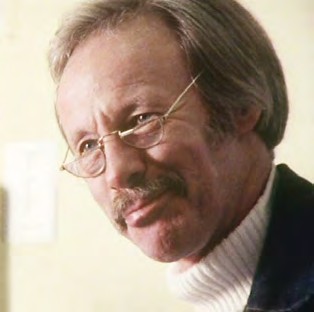
Dudley Simpson, pictured in the 1977 documentary Whose Doctor Who.
It took a while for Dudley Simpson’s famous style to emerge, but we can hear its development across his long and remarkably prolific association with Doctor Who.
Back in the early days of the series, budgets were tight and the score was the last thing to be considered. Musical resources were limited, but Simpson made a virtue out of a necessity. His first Doctor Who music – for 1964’s Planet of the Giants – used a chamber ensemble rather in the manner of Stravinsky’s choreographic recitation, L’Histoire du soldat, which is orchestrated for only seven instruments. The Planet of Giants music sounds uncannily like Stravinsky’s piece, while Simpson’s use of wind instruments, horns, piano and percussion also gave it the ‘dry’ sound associated with the French composers of the 1920s, known as ‘Les Six’.
Simpson’s limited palette transforms what is actually very simple musical material into highly dramatic cues.
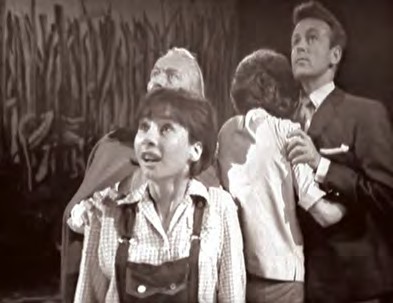
The Doctor (William Hartnell), Susan (Carole Ann Ford), Barbara (Jaqueline Hill) and Ian (William Russell) see a huge cat in Planet of Giants (1964).
The way Simpson used this limited palette transforms what is actually very simple musical material into highly dramatic, though often very short cues; but he also had access to a few strings and made use of them in highly effective ways. At the end of the first episode, for example, the rising and falling solo string glissando, used to suggest the terror of the Doctor’s miniaturised companions on encountering a giant cat, had admittedly been used by James Bernard, who called for many more string players in his scores for Hammer’s Quatermass and Dracula films, but it’s no less effective for that.
When Ian (William Russell) and Barbara (Jacqueline Hill) first try to climb down into a giant sink to meet up with the Doctor (William Hartnell), Simpson uses a reverberant piano and tam-tam (orchestral gong) in a very short cue; the tam-tam would become an important part of his later musical palette. The second attempt at sink-climbing is coloured by wood-blocks and snare drum, alongside jerky motifs in the wind. Though most of the cues in this story are short, we do have a fairly long one based on a four-note motif, during the Doctor’s attempts to lift a giant telephone receiver in the third episode, again featuring wood-blocks and snare.
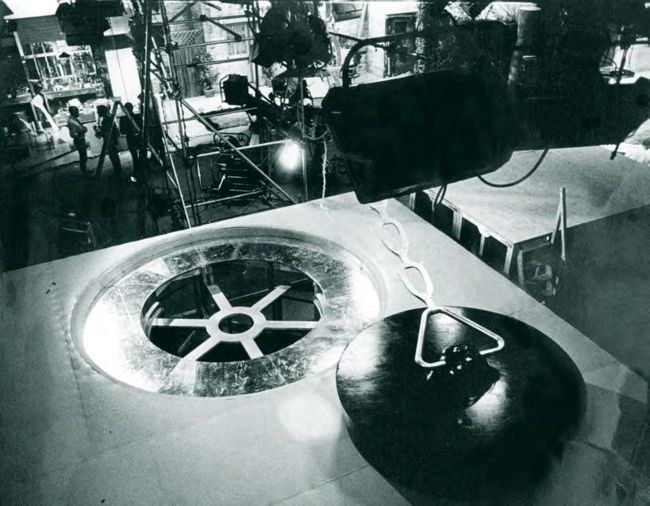
The laboratory sink set in Planet of Giants.
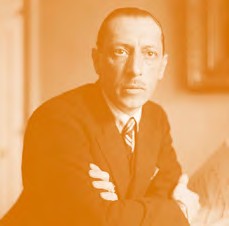
Russian composer Igor Stravinsky. Simpson’s music for Planet of Giants recalled some of Stravinky’s chamber ensemble textures.