THE STUFF OF LEGEND
In 1986 Jeremy Bentham earned a place among Doctor Who’s gamechanging authors with a book that featured unprecedented analysis of the William Hartnell era.
THE DWM INTERVIEW
INTERVIEW BY ANDREW PIXLEY

Jeremy Bentham at the party to celebrate DWM’s 400th issue in 2008. Photo © Peter Ware.
In the late 1970s there were three authors who proved inspirational where the chronicling of television and radio was concerned. BBC studio technician Roger Wilmut mixed fun and facts in The Goon Show Companion (Robson Books, 1976). Screenwriter Gary Gerani assembled incredible data for the first major telefantasy volume, Fantastic Television (Harmony, 1977). And the by-line of IBM techno-wiz Jeremy Bentham became a guarantee of wisdom and information via the Doctor Who Appreciation Society in the same period. His subsequent book, Doctor Who: The Early Years (WH Allen, 1986), proved a major step forward in Doctor Who publishing, taking what was already a rather specialist field to a whole new level.
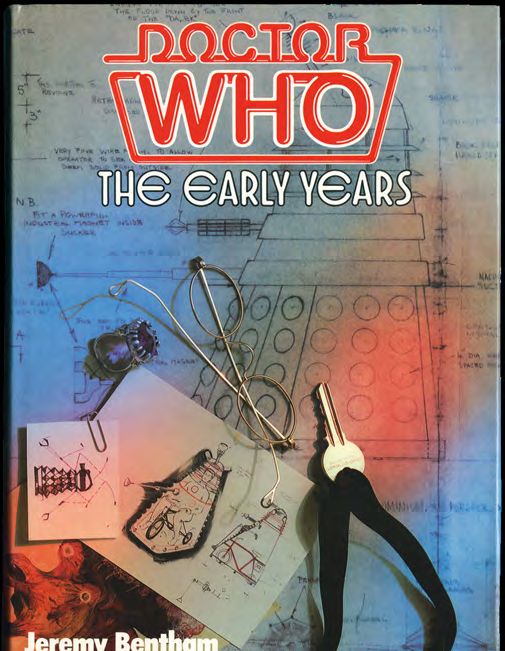
Jeremy’s Doctor Who: The Early Years (1986) was unprecedented in its analysis of the William Hartnell episodes.
Gary Gerani’s Fantastic Television (1977) was the first major non-fiction book about telefantasy.
Mark Harris’ Doctor Who Technical Manual (1983) was an early example of an ersatz guide.
In terms of large-format books, there had been junior behind-the-scenes stuff (Doctor Who: The Making of a Television Series by Alan Road; André Deutsch, 1982), ersatz scientific guides (The Doctor Who Technical Manual by Mark Harris; Severn House, 1983) and text-light visual feasts ( John Nathan-Turner and Andrew Skilleter’s Doctor Who: The TARDIS Inside Out; Piccadilly Press, 1985). WH Allen, meanwhile – having taken over the Target novelisation line from Tandem in 1976 – diverged into large-format hardback Doctor Who gift books with autumn releases ideal for the Christmas market. These began in September 1983 with Peter Haining’s Doctor Who: A Celebration, a lavish overview of the series’ first 20 years. It sold well and prompted sequels with a similar remit.