FULL CIRCLE
Why Revolution Software is returning to its most famous game, remastering the original Broken Sword for a new era
By Lewis Packwood
Charles Cecil was just as shocked as everyone else by the recent closure of award-winning studios Tango Gameworks and Roll7. The Revolution Software co-founder is certain that the independent York-based developer would no longer be around today if it had been snapped up by a big publisher in the past. “Absolutely no question,” he says.
Instead, as Revolution celebrates its 35th anniversary, Cecil reflects with horror on the mismanagement that has led to acclaimed studios being thrown onto the bonfire. “The problem with all of this is the huge spike that happened during lockdown,” he says, referring to the boom in game sales during the COVID pandemic. “It was inevitable that it was going to come back down again, and anybody who couldn’t see that has no vision whatsoever. And it would seem that all of these business leaders – who almost certainly don’t play games and probably don’t respect the medium as an incredible art form – just see it purely as a business, and they follow the curves without looking ahead. I mean, it just seems unbelievable.”
He notes that the problem is made worse in the UK because many of the British publishing labels established in the ’80s and ’90s are in the hands of foreign owners today. “Our publishers just sold out to the Americans, it’s as simple as that,” he says. “And that leaves the developers very vulnerable, because when times get tough, the first thing that these companies do is close down their far-flung development studios. So, if you’re based in America, you’re going to close down a UK development studio well before you close down an American studio.”
Noirin Carmody, who co-founded Revolution along with Cecil, Tony Warriner and David Sykes in 1989, adds that there’s a fundamental problem at the heart of the system. “Many people in companies were increasing their numbers because the investment would climb,” she says. “But they soon discovered that, once the game ships, you don’t need those numbers because you go back to basics and you start creating again. You don’t need large teams when you’re creating the initial [concept]. So they have to shed these people because they can’t afford to pay them until they need them.” Discussion moves to former PlayStation US chief Shawn Layden’s suggestion that the videogame industry should move towards a movie-style system, where crews are hired on short-term contracts to work on specific titles. “Which is what we’ve been doing right from the start,” Cecil says.
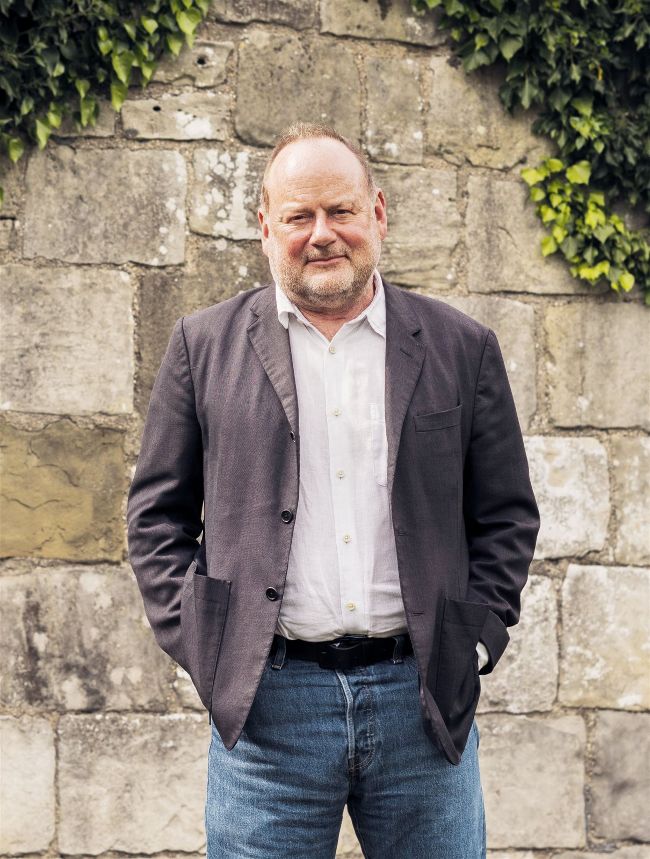
Revolution Software co-founder Charles Cecil in York’s Museum Gardens. Ever the history enthusiast, he points out the civil-war damage on the city walls
Photography Andy Kelly
The Revolution of 2024 is a trim operation of just eight full-time employees, although, as they gear up to release Broken Sword: Shadow Of The Templars Reforged – a remake of the first point-and-click adventure in the studio’s most popular series – 20 contractors are working on animation and layout colouring, with a further five on additional duties. It’s in contrast to the studio’s peak headcount during the making of Broken Sword II in the 1990s, when Revolution employed 40 people, with a further 30 working freelance. But that was also a time when Revolution relied heavily on publishers for funding and distribution, and Cecil has no shortage of horror stories about such relationships from those days.
He recalls a trip to see the president of Virgin Interactive in Orange County in the 1990s, when he was informed that Virgin didn’t want to fund another Broken Sword game. Instead, the president sang the praises of the interactive movie The Daedalus Encounter, starring Tia Carrere. “He basically said, ‘This is the future’,” Cecil recalls. “And then he said, ‘And the reason I make such great decisions on what projects to license is because I’ve never played a videogame in my life’. And I think that a lot of what’s happening now is exactly the same. I think industry leaders have a contempt for the medium.”
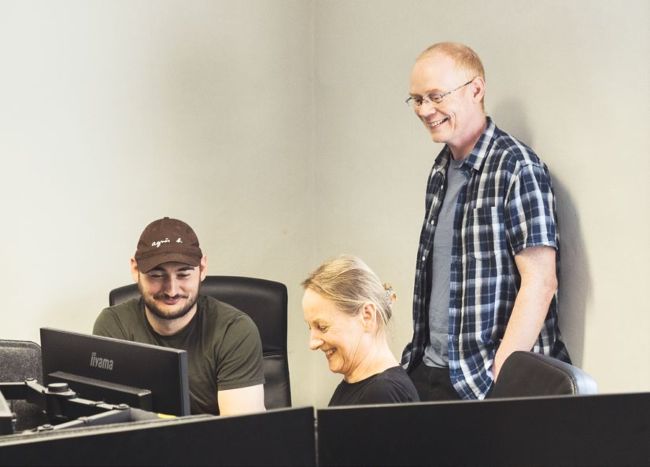
1 (L–R) Senior game designer David Cecil, co-founder Noirin Carmody and design director Andrew Boskett in Revolution’s tiny but historic office.