A NEW PEAK
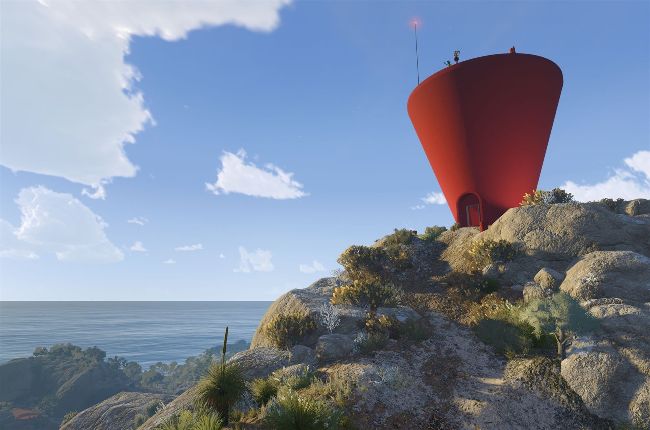
Game Big Walk Developer House House Publisher Panic Format PC Release 2025
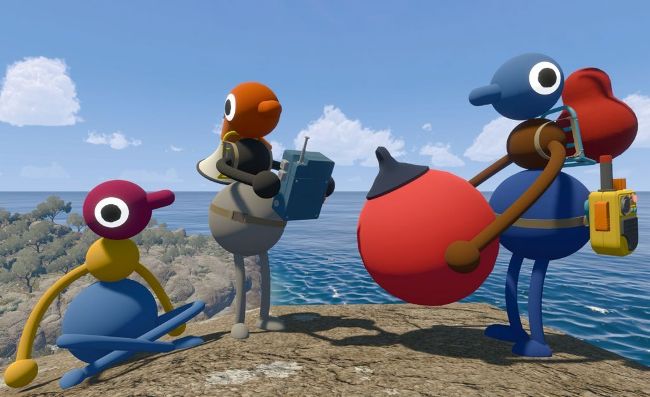
A fully equipped trio (note the backpacks) ready for adventure. As in Scouting, it pays to be prepared
You surely don’t need to be told that 2019’s Untitled Goose Game was a surprise hit for its developer, House House. Nor, most likely, do we need to describe how that game managed to perfectly capture the essence of an English village, in its hedgerow-delineated serenity and simmering resentments alike. But did you know that its creators were adapting this place from the far side of the globe, in Melbourne?
House House’s followup, Big Walk, brings the developer back home – specifically, to Wilsons Promontory, a national park at the southernmost tip of mainland Australia. “It’s a big granite isthmus that sticks out into the ocean, so it’s got quite a unique biosphere,” says Jake Strasser. His full explanation includes terms such as “Lower Devonian granite”, underlining just how seriously House House takes its silliness.
The developer has recreated Wilsons Prom (as the locals call it) at a 1:20 scale using lidar scans of the real place, and populated it with authentic flora based on photographs the team have taken on research trips. Now we find ourselves on a field trip of our own, being guided through this virtual recreation by its four primary architects.
Strasser delivers his geography lecture from a thin bench on one side of a train, his legs dangling precariously as scenery whizzes past. Wilsons Prom has personal significance to all four developers, who grew up a couple of hours’ drive away, but to Strasser in particular. He gestures to a point on the coast, revealing – somewhat shyly – that this is where his partner proposed to him.
“It just has a real magic to it,” Strasser concludes. Meaning, of course, the actual Wilsons Prom. But looking around us – at the mountains towering overhead and the granite-studded slopes that melt gradually into the sea, not to mention the brightly coloured architecture dotted across the landscape – we’d say the same thing about this virtual version too.

An early concept by Jake Strasser, setting bold colours against a realistic landscape.
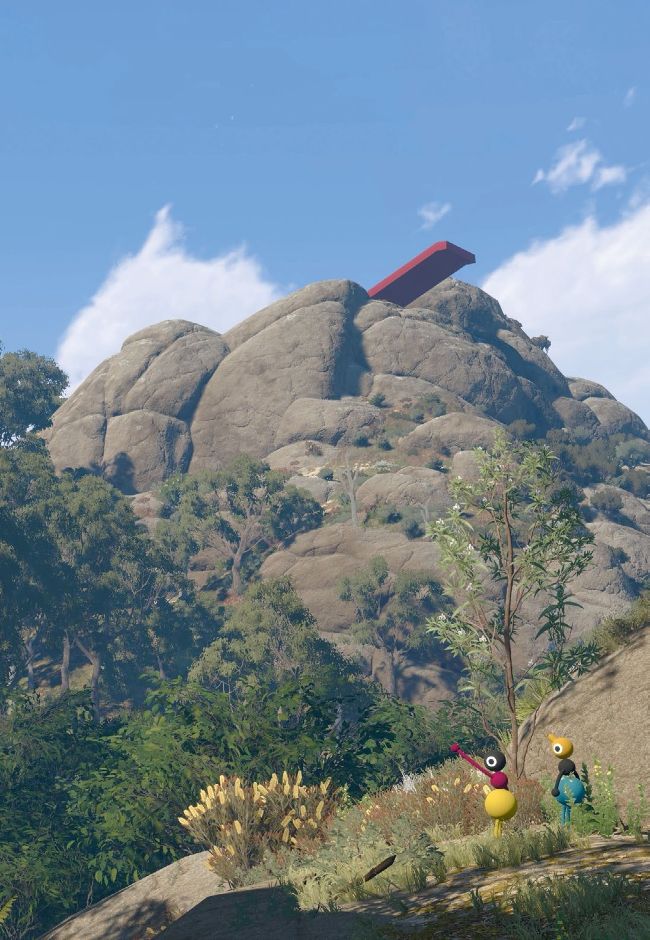
The characters, environs and architecture as they’ll appear in the final game
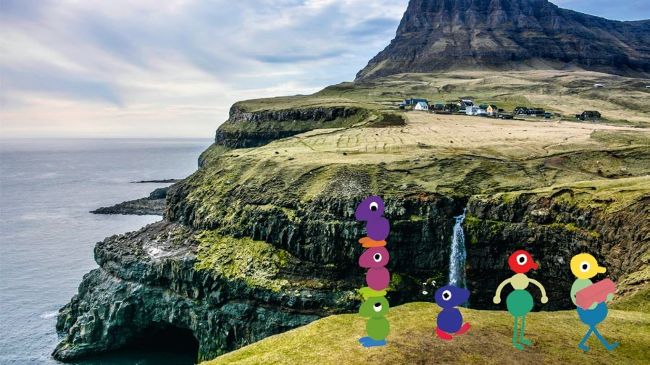
Michael McMaster: “The little characters on the left were my first pitch for who you might play as, but we thought they were a bit too animal-ish for a firstperson game. So I drew the characters on the right, and” – after modelling them in 3D using Blender – “they stuck.”
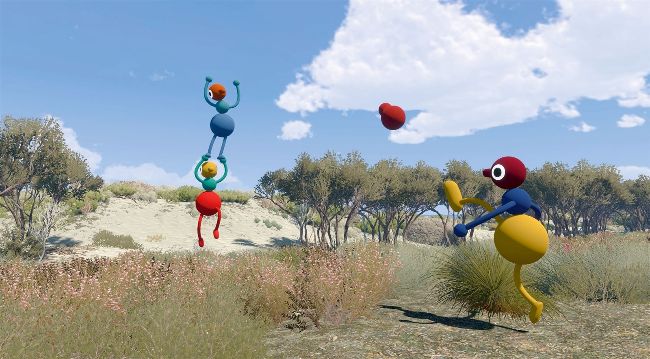
While
Big Walk
features plenty of authored challenges to keep you busy, its systems are loose enough to let players create their own fun.
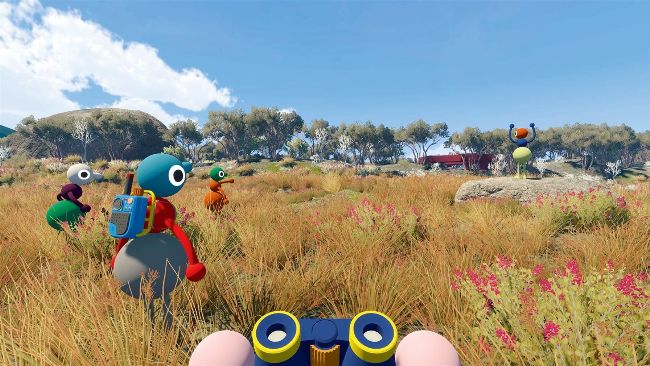
Each player can carry a single item at a time (such as these binoculars). This requires strategising over what you’ll need, who’ll carry it, and what can be left behind. Gaining the extra storage of a backpack has the thrill of finding an upgrade in a Metroidvania.
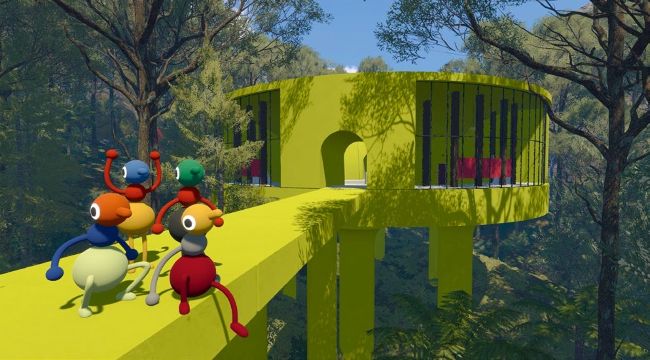
The game’s colourful, blocky structures recall Squid Game – or, perhaps more accurately, the postmodern architecture that inspired its set design.
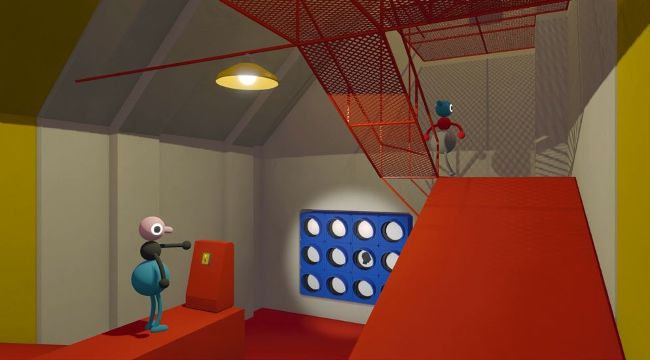
Disseldorp says challenges are intended as “a mirror of what we liked about the open-world structure,” finding ways to explore voice chat and social dynamics. It was after beginning to add them that the team realised “we could make this an actual videogame, as big as the world it’s placed in”
It’s at this point that one of our tour guides hits the train’s brake button, bringing us to a sudden halt. Another scoops up a glowing ball, pulls back one leg and holds it there, quivering. We have just enough time to identify the owner of this leg as Nico Disseldorp (our guides have helpfully colour-coded their avatars, with dark charcoal ‘uniforms’ and a single pop of colour up top – Disseldorp’s is a pale pink) before he releases. “I just kicked that as a goal,” he declares, pointing downhill at the ball’s soft red light tumbling into the bush. Disseldorp then leaps from the train, and everyone follows, sliding down the hill on our backsides.
This is far from the last conversation we have in Big Walk that takes a turn towards the deep and meaningful before being suddenly interrupted: by the accidental firing of a flare gun, or one party sliding off a cliff edge, or someone activating a turnstile that traps them inside a puzzle chamber. Moments of gentle beauty that crash headlong into something raucous and goofy – such collisions are Big Walk’s stock-intrade, and we can’t get enough of them.
This developer-led tour, we should note, isn’t actually our first time inside Big Walk. Let’s hop back in time to a few days earlier, when a group consisting of half a dozen players from the Edge extended family are set loose on the island, without any chaperones or explanation of what we’re supposed to be doing. (We’re the first group to do so totally unmonitored, Disseldorp will later, rather nervously, explain – prior to this, only the playtesters, and the developers themselves, had wandered through these builds.)
The results are chaotic. The sole guidance we’ve been given is that we should try to reach “the red tower”, something we’re told generally takes about an hour. After the best part of ten minutes, we’ve yet to leave the lobby area all players spawn into at the beginning of a session.