Once Upon A Katamari
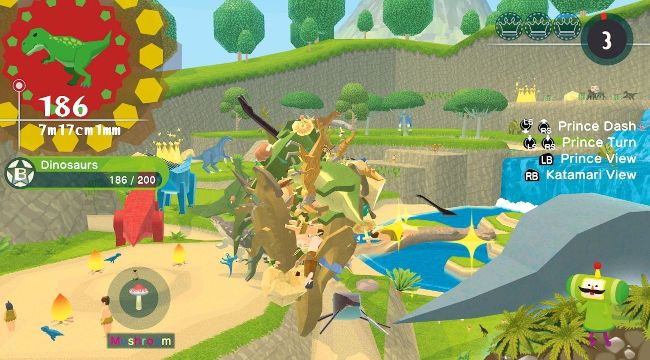
The best levels are the most straightforward ones, without any gimmicks or additional mechanics, when you have a generous time limit and the simple goal of rolling a huge katamari from things littering the world around you
Fittingly, each stage in Once Upon A Katamari takes place in the past. In the time since the original Katamari Damacy, now 21 years old, was released, very few of the series’ core mechanics or visual idiosyncrasies have been changed – here, even the King’s jokes and quips are lifted, often verbatim, from the Katamari games of yesteryear. To an extent, that familiarity works in its favour. The trademark rolling, frantic level design and madcap humour are all still here, meaning that, for complete newcomers, the game is likely to feel just as bizarre and distinctive as its progenitor did back in 2004. If, on the other hand, you’re a long-time Katamari fan, and what you want is more of it, then be assured that developer Rengame sticks mostly to the formula. Cousins, costumes, Kuru Kuru Rock – check, check, check. But Once Upon A Katamari also feels like it’s trapped between two warring designs. Although it’s authentic to series tradition, after so many years and so many games, the jokes and the premise are starting to wear a little thin. Conversely, whenever an extra mechanic or some kind of single-level gimmick is added on top of the core rolling action to try to imbue things with a little fresh energy, Once Upon A Katamari becomes overcomplicated and fussy. Take the magnet power-up, for instance. This drags in nearby objects that then stick to your katamari, the idea being that you’ll save it for when you reach an area that is rich in rollables and can hoover them up. But you can only hold one power-up at a time, meaning if you find the rocket booster, say, and want to use that immediately, your only option is to activate the magnet and wait for the timer to run down, wasting it in the process.