THE MAKING OF . . .
FINAL FANTASY VII: REBIRTH
Remaking an iconic game was daunting enough – then the developers faced the difficult second entry
BY SIMON PARKIN
Format
PS5
Developer/publisher
Square Enix (Creative Business Unit I)
Origin
Japan
Release
2024
Nothing in the world is permanent: this is the message of the seventh and possibly most beloved Final Fantasy, the 1997 game in which we contend with the loss of protagonist Cloud Strife’s vocation, his memory, his would-be lover, and, potentially, his entire planet. Everything is in flux; everything is fragile. You must adapt or risk becoming obsolete. It’s a message with fresh relevance for the Japanese development team charged with bringing this game, built for a different time and different world, into the blazing present day, with its new rules, parameters and expectations. Yes, the original’s blocky, PlayStation-era character models have a certain vintage appeal in today’s indie marketplace, but that is not a scale at which this remake could make commercial sense. Rather, this resurrection, a splicing of the original game’s story arc into three separate, 40-odd-hour games, needed to be of blockbuster proportions, capable of competing with the open-world big hitters of an industry that often changes faster than the pace of development.
The first game in the trilogy, 2020’s Final Fantasy VII: Remake, was broadly considered a success by fans and critics alike. It transposed the original’s memorable opening act to modern technologies and practices, while managing to preserve its vivid spirit, tone and even its ditzy humour in a way that did not alienate the millions of players for whom Final Fantasy VII is, essentially, a sacred text.
Undeniably, the team
developing the remake benefitted from the original game’s pacy, memorable introductory sections. The story begins in the thick of the action, following a group of eco activists as they sabotage a reactor plant that looms above the slums of the world’s capital city, Midgar. It’s one of the medium’s classic openings, rich in both action and melancholic oomph, assets which made the task of remaking it a little more straightforward. Even while working on
Remake,
though, the team nursed the uneasy knowledge that, soon enough, they would have to start work on
Final Fantasy VII: Rebirth
– and the second entry is the structurally saggy middle section of any trilogy.
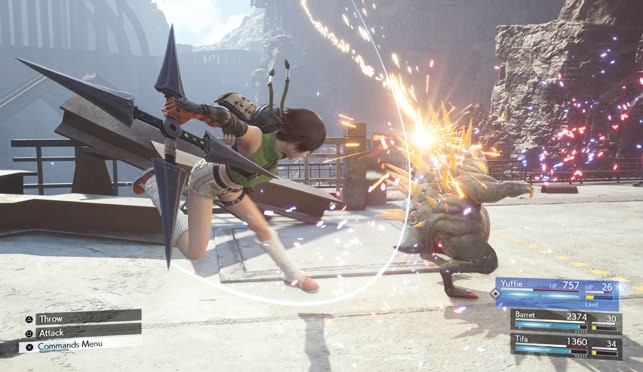
For Hamaguchi, the shift in emphasis to a more freeform approach to play presented a “very tough and long road”