CHRONOS TRIGGER
Why Supergiant Games’ betwitching sequel is a hell of a way to kill time
By Chris Schilling
Game Hades II Developer/publisher Supergiant Games Format PC Release Out now (Early Access)
Surprise is one of the foundational principles of any good Roguelike. The potential of procedural chaos is the tradeoff for surrendering a degree of authorial craft – the heart of this genre, after all, is found in those moments when systems combine in unexpected ways to produce unanticipated results. More simply, every Roguelike run should be in some way notably distinct from the last. Which, particularly with the announcement of Slay The Spire 2 fresh in our minds, naturally raises a few questions when it comes to making sequels in this genre. When your audience already knows what to expect, how do you recapture that all-important element of surprise – particularly when you’re an established studio that has never actually made a sequel to one of its games before?
ONE OF THE FIRST QUESTIONS THE STUDIO ASKED WAS: WHAT DEFINES THIS SERIES? DOES IT HAVE TO BE ABOUT ZAGREUS?
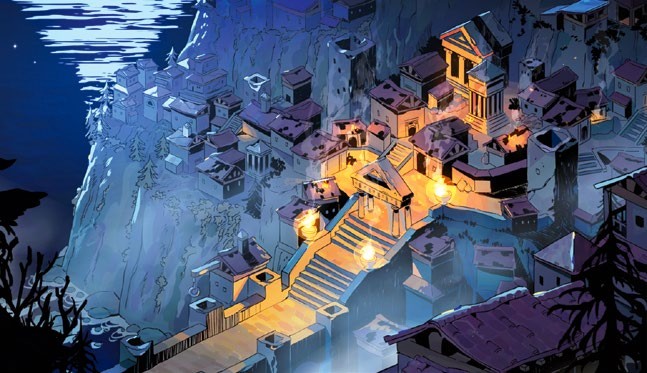
Ephyra is structured differently: you’ll have a choice of areas from the central square, wherein you must smash containers of Shades to remove the blockade lying between you and the area boss.
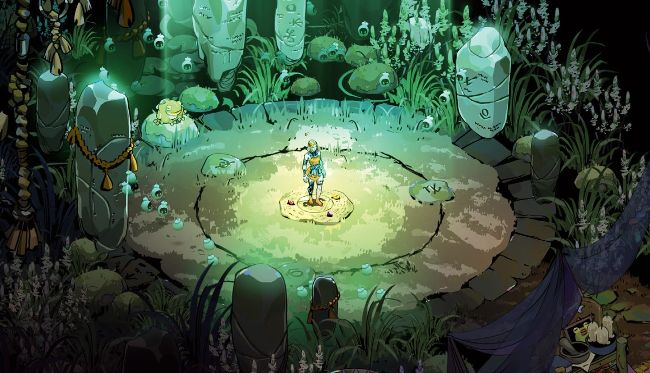
Pet frog Frinos becomes a useful familiar, boosting max health and absorbing ranged shots.
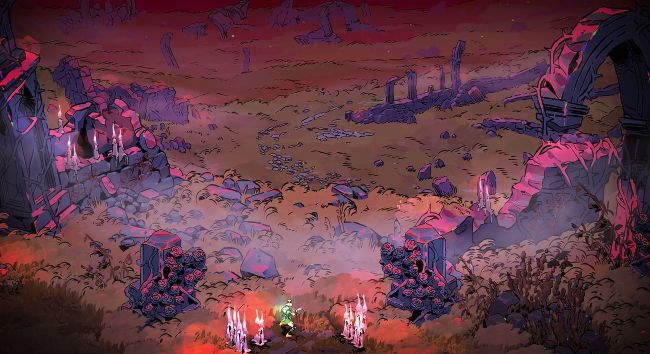
Glowing boughs light the way in the desolate Mourning Fields
Chewing over its next move after making its most critically acclaimed and commercially successful game to date required a good deal of soul-searching on Supergiant Games’ part. Not that this was the first time the studio had been moved to consider making a followup. Its debut release, 2011’s Bastion, was a big enough hit that, as creative director Greg Kasavin points out, the most obvious next step would have been to simply make Bastion 2. Instead, it opted to develop the similarly isometric but otherwise almost wholly distinct Transistor, an action RPG of a very different stripe.
“We gave it considerable thought,” Kasavin tells us, noting that the second entry in any series represents a significant moment in its evolution. “Two points form a line, right? It’s like that second game signals how similar or different a new instalment can be.” Rather than looking to indie peers for inspiration, Kasavin instead – perhaps understandably, given Hades’ success – found the model of a much bigger, extremely long-running series most inspiring. “In Final Fantasy, it’s expected that they reboot almost everything, right?” he says. “The world and characters and almost everything about it, even the battle system, can be completely different. From one to the next, it’s more like a feel – there are some things you have to keep in common from one to the next, but they have licence to change a lot.
“On the other hand, you have some series where the degree of change from one instalment to the next can be pretty narrow. And then if, in the third or fourth game, they try to introduce a new character or something, it’s like, ‘Whoa!’ You know, the player community may not be so welcoming of that.” As Supergiant’s first sequel, then, Hades II represents an opportunity to define just how similar – or how different – the series can be, from one game to the next.
Thirty-plus hours in, it turns out that Kasavin and company’s response is: a bit of both. One of the first questions the studio’s 25-strong staff asked themselves was: what defines this series? Does it have to be about Zagreus? Well, of course not. With such a broad mythology to explore, why would you ever restrict it to a single character? Hades, after all, does not simply describe a man – or, rather, a god – but a place. “It has to be about the underworld,” Kasavin says. “It has to have a particular tone and style to it. Like, if we change the game to the whole triple-A, slow-walk thing, that wouldn’t really feel like Hades either. I think there’s a certain expectation of fast, responsive action on the gameplay side.”
Expectation is, of course, an important consideration. When a nascent version of Hades launched in late 2018, it was off the back of Supergiant’s least successful game, the unfairly ignored Pyre. Its Early Access release was also a first for the studio – and, being an Epic Games Store exclusive, its audience was relatively limited. No one, in other words, expected a great deal from Hades. Which only made its belated emergence – as with Zag reaching the surface for the first time after so many unsuccessful runs – all the more triumphant. It would be impossible to repeat that trick. Hence the desire to tell a new story, albeit one with a degree of connective tissue to the original. This is a sequel, after all, and one expectation of sequels is a sense of continuity.